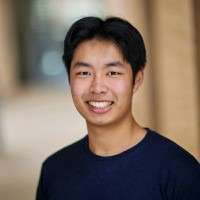
A pivot written in building codes
Raymond Zhao spends his days teaching a computer to do something most people assume only a seasoned engineer can: look at a 100-page set of construction drawings, cross-reference it against 2,000 pages of building regulations, and quietly point out everywhere the two disagree. His company, Structured AI, calls this an "AI workforce for construction design engineering." Engineers call it the part of the job they dread. Zhao calls it a business.
He is the co-founder and CEO, 23 years old, running the company out of New York after a stint living and working out of a San Francisco Airbnb whose living room the team converted into an office, complete with extra monitors and desks crammed against the walls. Structured AI is part of Y Combinator's Fall 2025 batch. It has raised roughly a million dollars in pre-seed money and, more recently, a $4.2 million seed round. The product trains a vision model on thousands of engineering symbols so its agents can read a plan the way an expert reads a plan, then flags the clashes, the inconsistencies, and the small mistakes that, left alone, turn into expensive change orders once concrete is poured.
"Many of the great AI companies of the next decade are being built right now, and I want to be a part of that."
That is the company. The more interesting thing is how Zhao got to the point of building it, because not long ago he wanted something entirely different, and he wanted it badly.
Goldman Sachs, and one month of clarity
Zhao moved from Australia to the United Kingdom in 2021 to read mathematics and statistics at the University of Oxford. Like a lot of numerically gifted students who fall in with the right campus societies, he drifted toward finance. Goldman Sachs became the goal - prestigious, mathematical, the kind of name that makes a CV gleam. He ran the gauntlet that the bank is famous for: an online test, a virtual interview, a superday, a follow-up. He came out the other side with a summer 2024 analyst position in London.
Then he actually did the job. The hours stretched to midnight and sometimes into the weekend, which he had braced for. What he had not braced for was the quiet realization that he did not care about the work itself. The other interns spent their free time reading market research for fun. He did not. The gap between his enthusiasm and theirs was the tell.
"Working at Goldman Sachs was my dream, but I quickly realized it wasn't for me when I interned there as an analyst. AI, on the other hand, feels exciting."
When the internship ended he did the sensible thing for someone with no idea what to do next: he went travelling through Southeast Asia and thought about it. He returned to Oxford in late 2024 for his Master's with the finance dream quietly retired.
Three societies, three founders
The company assembled itself out of Oxford's extracurricular life. Through the university's venture capital society he met Issy Greenslade, who graduated top of her year in Economics and Management and had done investment banking at Greenhill and venture work at Future Planet Capital; she became COO. Through the AI society he met Brandon Abreu Smith, a physicist with a first-authored NeurIPS paper to his name, who became CTO.
Smith brought the problem. He had been building AI tools for the construction and engineering industry for six years - a path that started, improbably, with a viral YouTube video he made at 17 showing a fighter jet trained by deep reinforcement learning to dodge missiles. That video got him scouted by a US contractor to apply the same optimization to routing pipes through buildings. By the time he met Zhao, he had seen up close how much of preconstruction engineering is repetitive, text-heavy, error-prone work begging to be automated.
For Zhao there was a symmetry to it that he has not been shy about pointing out. At 18, before Oxford, he had done work experience at an architecture firm and seriously considered the profession - until junior architects warned him off, describing the manual grunt work that filled their days. That warning is part of why he switched to maths in the first place. Now his company exists to delete exactly that grunt work. He calls it a full-circle moment.
A fundraise he didn't plan
In June 2025, in his final week at Oxford, Zhao flew to San Francisco for an AI startup conference. He was not there to raise money. Founder friends nudged him to talk to investors anyway, and almost on a lark he started having those conversations. He left with roughly $500,000 in commitments - enough to make the company suddenly, concretely real.
Y Combinator said no the first time, rejecting the team from its Summer 2025 cohort. The team kept talking to customers and building pipeline, reapplied, and got into the Fall 2025 batch, where they raised another $500,000 and crossed the million-dollar mark in pre-seed. The seed round of $4.2 million followed. Along the way the story drew coverage from Business Insider, the Wall Street Journal, Forbes, and the trade press that actually serves his customers, including AEC Magazine, plus a spot on BuiltWorlds' list of AEC solutions to watch in 2026.
"The biggest risk nowadays is not taking one."
Life at YC was, by his own account, relentless. The team woke somewhere between four and nine in the morning, worked through the day, attended conferences and evening events, and he slept about six hours a night - two short of the eight he prefers. His near-term goal then was a strong Demo Day. His longer goal is plainer and larger: build something massive.
Reading plans like an expert
Structured AI's pitch rests on a number that makes engineers wince. The industry's reliance on manual spot-checking for design errors, the company says, costs around $177 billion a year to fix mistakes caught too late, while senior engineers can spend up to half their time cross-referencing drawing sets against building codes by hand. The agents automate QA and QC across mechanical, electrical, and structural work, learn a firm's standards, run cross-trade checks across documents, drawings, and Revit models, and let teams write custom checks in plain English. The claim is 100 times faster review, catching meaningfully more errors, before a single clash makes it to the field.
Zhao's own contribution to the founding story is less about the vision model and more about operations. Before any of this, he built automation at Goldman Sachs and the London Stock Exchange, and he implemented an AI system at a billion-pound venture firm that, the team says, multiplied its deal flow twentyfold. The thread running through all of it - finance automation, VC tooling, now construction QA - is the same: find the tedious, high-stakes, manual checking that nobody enjoys, and hand it to a machine that does not get bored at page 1,400.
It is a young company with a young founder, and the honest version of the story includes the rejections, the six-hour nights, and the fact that the biggest chapters are presumably still unwritten. But the shape of Raymond Zhao is already clear. He is someone who got the thing he wanted, looked at it closely, and traded it for the thing he actually wanted - and who now spends his time making sure other people never have to do the grunt work that once scared him out of a career.