Before Raul Henriquez built a wealth management business, he and his cousin built a business around coffee. Their advantage was knowledge of the market, and their instrument was the futures contract. It is a pleasingly practical beginning for a career in finance: something people actually drink, followed by the considerably more complicated business of managing what they save.
Henriquez had recently finished at Wharton. The company he co-founded in 1985, Hencorp, would become part of the ancestry of Insigneo, where he is now chairman and CEO. Four decades separate the coffee desk from a platform supporting $37 billion in client assets as of June 1, 2026. The products have multiplied. His interest in the connection between Latin America and international capital has proved rather durable.
There is an appealing continuity here. Financial firms change names, technology changes habits, and acquisitions change the seating plan. Henriquez keeps returning to a familiar question: how do you make a substantial financial institution feel useful to the particular person sitting across from you?
A coffee desk with room to grow
Born in El Salvador, Henriquez has lived in Miami since 1979. He earned a finance degree at the University of Florida and completed his Wharton MBA in 1984. His working geography would run north and south, with Miami providing a base from which to understand both.
The early commodities business grew from coffee expertise into emerging capital markets and general securities. By 1995, the group was managing Refco Emerging Markets out of Miami through joint ventures. In a 1998 account of the business, combined net revenues for Refco Emerging Markets and Hencorp Becstone exceeded $35 million for the preceding year; trading volume exceeded $20 billion. Those were operating figures from that period, a glimpse of the enterprise long before Insigneo's present form.
Yet the detail that survives most vividly is his description of the relationship he wanted with institutional customers. He wanted the operation to work almost as an extension of their own, with customers feeling that his colleagues belonged to their team. Even amid futures desks and trading volumes, he was talking about belonging.
“We want our clients to feel like we are a part of their team.”
Raul Henriquez, 1998
That is a useful ambition for a broker. A client rarely wakes up longing to admire an institution's internal arrangements. They want someone to understand the task and help accomplish it. Henriquez's early language suggests he had already settled on which side of the desk deserved his attention.
When the banks left a chair empty
Insigneo took shape under its present name in 2017, bringing together businesses that included Global Investor Services, Hencorp operations and Northeast Securities. Its structure gave independent investment professionals a place to conduct international business with institutional support. The adviser could retain a distinct practice while drawing on shared capabilities.
The timing mattered. Large American banks were reducing or restricting parts of their Latin American wealth management business. A client relationship that remained valuable to an adviser could become less attractive within a bank's changing priorities. That created room for a different arrangement, and Henriquez was prepared to occupy it.
By August 2023, the platform's ecosystem had more than $20 billion in assets under management, up from less than $3 billion six years earlier. Staff had tripled. Henriquez described an opening in a well-established industry with a degree of surprise rather than claiming to have personally arranged the weather.
The practical offer was broad: technology, compliance support, portfolio models and other services that advisers had previously accessed inside larger firms. His colleague Javier Rivero described reproducing those capabilities in a simpler form, with the benefit of shared scale. Independence, in this arrangement, came with colleagues and plumbing.
For a founder whose earlier business had served Latin American institutions, this was a new version of familiar work. The customer could be an independent adviser rather than an institutional trading desk, but the underlying attraction remained access: to capabilities, markets and people who understood the business being brought to them.
The chairman takes the daily brief
In June 2021, Henriquez became interim CEO. His appointment was confirmed that October, alongside his continuing executive chairmanship. The founder was taking direct responsibility for the next stage of the business, with an established management team around him.
At the time of the confirmation, Insigneo's operating subsidiaries served more than 200 financial advisers and brokers and supported 25 advisory firms. More than 50 new advisers had joined since the start of that year. The leadership assignment therefore involved a moving organisation, with new people arriving as the company refined its ambitions.
His response to the appointment stressed responsibility for executing the strategy and the assistance of experienced senior colleagues. It was consistent with that older preference for being part of a team. Titles fit neatly on a business card; execution generally requires a longer table.
Buying the ability to say yes
In June 2022, Bain Capital Credit and J.C. Flowers, with private investors participating, agreed to a $100 million minority investment in Insigneo. The stated purpose was growth and expansion. Bain Capital Credit also provided debt financing for the announced acquisition of Citi's international businesses in Puerto Rico and Uruguay.
The investment connected Henriquez's plans with partners whose own business was evaluating financial opportunities. June Huang of Bain Capital Credit and Richard Carrión of J.C. Flowers spoke about the platform and demand for wealth services. For Henriquez, external capital supplied resources to extend an operation he had spent years developing.
The transactions followed a recognisable map. Insigneo integrated Citi's international businesses in Puerto Rico and Uruguay in 2022. PNC's offshore accounts serving Mexican clients followed in 2023. These additions brought existing relationships into the platform, making integration as consequential as the announcement itself.
- 2022Citi international businesses
Puerto Rico + Uruguay - 2023PNC offshore accounts
Serving Mexican clients - 2026VectorGlobal client accounts
Across the Americas
VectorGlobal added another chapter. The agreement was announced in October 2025; completion of the client-account integration was announced on June 3, 2026. Nearly $4 billion in client assets joined Insigneo, bringing total supported client assets to $37 billion. The transition also established a Canadian footprint through Insigneo Canada ULC.
More than 100 investment professionals and support personnel joined through the transaction. That gives the deal a human dimension beyond its asset total: people with established working methods and clients expecting continuity. A transfer succeeds in the ordinary details of the following working day.
Client assets supported by Insigneo following the VectorGlobal integration.
A firm-level measure, distinct from personal wealth or company valuation.A machine for making more time
Shared infrastructure eventually needs a common workspace. Insigneo introduced Alia in November 2022 as a web-based system for customer relationships, portfolio visibility and onboarding. Alia 2.0 arrived in September 2025, bringing more of the adviser's daily work into one environment.
The platform connects tools including Salesforce, Orion, Luma and InEx Trade. Account opening, compliance, service tracking and reporting are among its functions. For anyone who has watched a working day disappear into separate logins, the attraction requires little poetry.
Henriquez's argument for technology is grounded in productivity. More capability in the same working hour leaves room for the relationships on which his business depends. He calls his preferred model assisted independence: advisers gain support without having to build every institutional function for themselves.
In September 2026, Alia 2.0 won the technology category for broker-dealers with fewer than 1,000 advisers at the Wealth Management Industry Awards. The platform's development was led by chief technology officer Vikas Saxena and his team. The distinction belonged to the company and the people doing that work; Henriquez's role was to lead the organisation investing in it.
That division of responsibility matters in a founder's story. An enterprise becomes more substantial as the list of things its founder must personally do becomes more selective. The technology award offered a concrete example of specialised colleagues carrying an important part of the plan.
His professional commitments have also extended beyond the executive office. He has served on the Salvadoran Stock Exchange board, on the board of FUSADES, and at Ransom Everglades School in Coconut Grove, including its investment committee. His private equity work includes advisory committees at Sun Capital Partners, Pine Tree Equity Partners and Alpha Capital Management. Those roles place another set of institutions alongside the companies he helped build. They also give the career a broader geography: an enduring connection to El Salvador, a working base in Miami, and investment relationships extending beyond either place.
Still looking south, with a wider map
Henriquez's ambitions remain regional and practical. In August 2026, he discussed further consolidation and the possibility of serving additional client segments with technology. He also described the care needed to integrate acquisitions across different locations. The ambition includes expansion; the work includes making the joins hold.
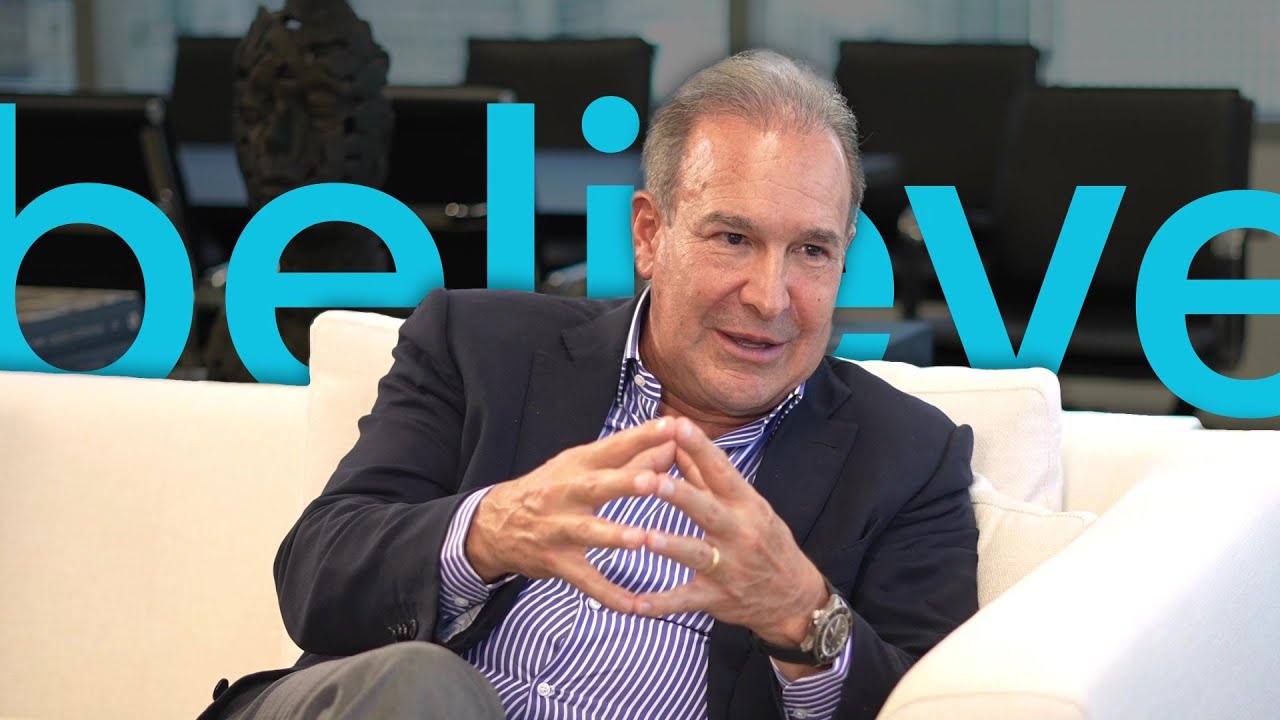
His language about teamwork can be unexpectedly cinematic. Discussing four decades of building businesses, he reached for Forrest Gump's run: people have to believe in the direction and join you. It is a warmer image than the usual executive diagram, and considerably easier to remember.
The comparison suits a career that began with a cousin, a commodities business and knowledge of coffee. Henriquez now presides over a much larger gathering of advisers, specialists and institutions. His continuing challenge is to keep their combined resources close enough to the client to be felt. The scale has changed. The invitation to join the team is still recognisable.