The suggestion was modest: make a YouTube channel to market the startup. Ranveer Allahbadia had finished engineering and wanted to build a fitness business. A prospective investor thought video might help people find it. So he started filming. The original business never became the center of the story. BeerBiceps did.
That early twist still explains much of his career. Allahbadia, born and based in Mumbai, has repeatedly turned one project’s supporting act into the next project’s main event. A channel meant to promote a product became a full-time occupation. A college friend who helped negotiate brand deals became a co-founder. A series of conversations with other creators became The Ranveer Show. More recently, the workings of those businesses have become material for BeerBiceps Skillhouse, which teaches skills to people who want to make content and work in media.
His online name sounds like a dare invented at a college party. The career behind it has required rather less improvisation than the name suggests. Allahbadia trained as an engineer at Dwarkadas J. Sanghvi College of Engineering, graduating in 2015, and worked as a trainer to pay for his videos. He says he was trying to start a business, not audition for a life in front of a camera. By 2016, the audience for the channel had made the planned startup look like the harder path.
The thing built to sell the thing
The first BeerBiceps videos lived in the practical world of fitness and cooking. As the audience grew, the topics widened into style, grooming, work and self-improvement. The shift was a bet that viewers returned for the person explaining the subject as much as for the subject itself. It gave Allahbadia room to move when a single niche no longer held his interest.
There was another boundary to cross: language. Allahbadia has written that his friend, creator Prajakta Koli, urged him to try Hindi videos. He was uneasy about his Hindi on camera. He tried filming episodes for months and abandoned attempts. Comedian Zakir Khan offered advice and suggested reading Javed Akhtar’s Tarkash. Eventually Allahbadia began a Hindi channel under his own name. He later said the Hindi channel reached one million subscribers faster than the English one had. The detail matters because the move did not begin as an obvious exercise in scale. It began with a person unsure how he would sound.
The English and Hindi channels also revealed a practical lesson about media. The same host can be familiar to one audience and almost unknown to another. Translation was only part of the task; pacing, confidence and the habit of speaking naturally had to be learned again. In Allahbadia’s account, Hindi opened a wider audience, then provided a route for a second version of the podcast. The original question, “Will people watch?” had become “Who else could this reach?”
Allahbadia tells the Hindi story with a spiritual dimension, too. In his own account, he went to a RadhaKrishna temple during the period when the filming attempts kept failing. He left with renewed confidence and recorded several videos that night. He allows that a change in attitude could explain the result, while saying his faith in Krishna helped him move. The point is revealing even for a viewer who would tell the story differently: he does not describe the eventual channel as a clean strategy slide. He remembers doubt, encouragement from friends, a visit to a temple and then the ordinary work of switching on the camera again.
A college friend and a cold email
By the time the channel had an audience, brands wanted to talk. Viraj Sheth, a friend from engineering college who was two years younger, began handling those conversations. Sheth later recalled sending cold emails, often to the wrong people, before learning how marketing decisions were actually made. He was representing one creator, someone he already knew, and testing whether the work could sustain itself.
The arrangement became Monk Entertainment, founded by the pair around 2018. It began with talent representation and grew into influencer marketing, social media work and video production. Sheth brought the commercial machinery; Allahbadia brought experience of being the creator on the other side of the deal. The partnership had a useful asymmetry. One knew how a channel was made, the other was learning how that channel could become a business.
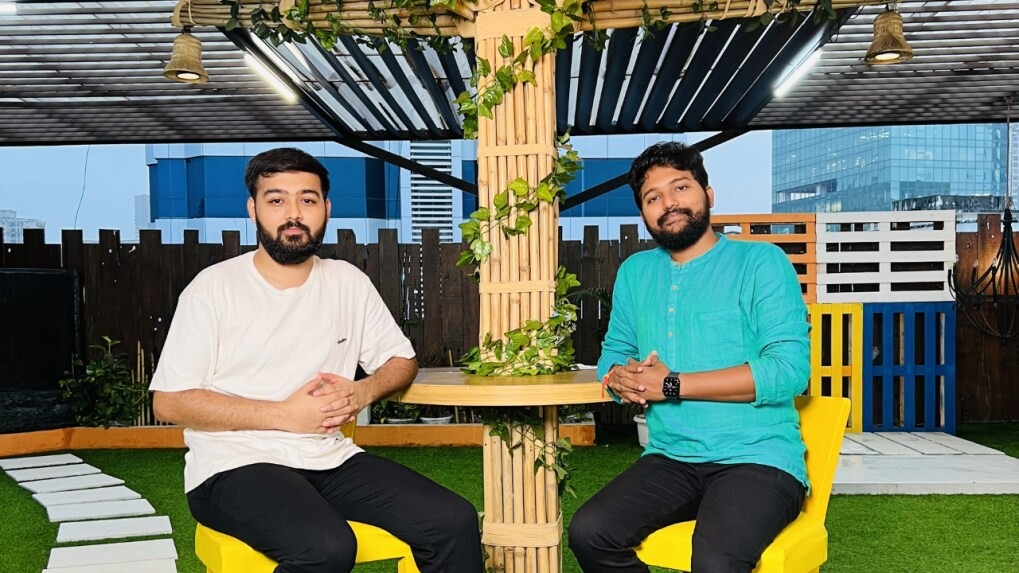
Sheth’s account of the early days is unusually plain: unanswered messages, experimental pitches, and clients who needed help understanding creators. It is a less glamorous picture than the finished company, and a more useful one. Monk did not spring from an abstract prediction about the creator economy. It grew from the daily inconvenience of booking work for a person who had built an audience before the business around that audience existed.
Allahbadia and Sheth appeared together on the first episode of The Ranveer Show in 2019. The subject was their own startup. This is a charmingly economical pilot: invite the person who knows the backstory and ask him to help tell it. It also marked a change in format. Allahbadia had been explaining things directly to viewers. Now he could ask someone else how their life and work had unfolded, and let a longer conversation do some of the explaining.
The chair across the table
The Ranveer Show expanded from creator biographies to conversations with actors, founders, public figures and people working in other fields. Guests have included Priyanka Chopra, Ayushmann Khurrana, Gaur Gopal Das and Arnold Schwarzenegger. The format gave Allahbadia a new kind of presence: the host who asks the next question rather than the presenter who already has the answer. A long interview can be loose, earnest, surprising or all three in the same hour. Its appeal depends on the particular person across the table.
That chair brought public recognition. Allahbadia and Sheth appeared on Forbes’ 30 Under 30 Asia list in 2022 for Monk Entertainment. In 2024 Allahbadia received the Disruptor of the Year award at India’s inaugural National Creators Award. Neither honor explains the daily mechanics of making an interview or running a company. Together, they show how far a homegrown YouTube identity had traveled into the established language of business and culture.
The show also exposed the limits of a host’s judgment. In February 2025, a sexual remark Allahbadia made while appearing on comedian Samay Raina’s India’s Got Latent drew widespread criticism, police complaints and a court case. Allahbadia apologized. The Supreme Court allowed him to resume publishing The Ranveer Show in March, subject to conditions. The episode was a public rupture for someone whose business is partly built on trust and on the ability to keep a conversation in bounds.
In a 2026 interview, Allahbadia said he had stopped revisiting the moment endlessly and was concentrating on current work. He also said his friendship with Raina remained. Those statements are his account of what followed, rather than a verdict on the incident. The lasting question for a host is how his choices sound when a microphone is still live and millions may hear them.
After the camera stops
BeerBiceps Skillhouse is the clearest sign of where Allahbadia wants to take the operation. It offers training in content creation, podcasting, video editing and related skills. In 2026, he described a broader ambition to help young Indians develop communication and professional abilities. He told an interviewer that content creation had once taken nearly all his working time; the share was now closer to 60 or 70 percent because he was spending more time building businesses.
This is a different promise from “watch my next episode.” It asks what the production team has learned, what can be taught, and whether an audience can become a group of people making work of their own. It also changes the measure of success. A view count belongs to a video. A course, a new editor’s job, or a company that can keep operating without its founder on screen belongs to a longer timescale.
The shift suits a person who says media changes every five or six years. In a September 2026 interview in Hyderabad, Allahbadia observed that there are now so many podcasts that audiences may be tiring of the format. A podcast host saying this about podcasts is either brave, commercially alert, or both. He spoke there about the importance of creating jobs in India and described discipline as repetition: doing things again and again until they hold.
The same conversation contained a smaller, more human ambition. Allahbadia said he hoped to have free time once he had a family, and that the hope made him work hard now. He also confessed to making Hyderabadi biryani in Mumbai with ingredients flown in. The two remarks sit well together. One looks toward a life beyond constant production; the other suggests that a man trained by the internet still knows how to make an unnecessary project out of dinner.
For now, the camera remains. So do the businesses around it: the channels, the interview show, Monk Entertainment and Skillhouse. The next chapter will be judged less by the cleverness of another pivot than by what these institutions allow other people to do. Allahbadia began with a channel meant to sell a different idea. He has spent a decade finding out what else a channel can make possible.