Ralph Cavallaro's first startup accelerator involved soap, buckets and the hot Miami sun. In 1990, the punk band Quit needed cash to press its debut album. Crowdfunding did not yet have a name, let alone a cheerful progress bar. The group asked neighbors to invest and washed cars from Kendall to Key Biscayne. Cavallaro, a University of Miami music-business student who had appointed himself the band's manager, made sure some of the proceeds covered a less photogenic expense: his phone bill.
He had assembled a list of college radio stations and called until programmers played the record. The campaign helped Earlier Thoughts climb to number 30 on the CMJ college-radio chart. Addison Burns, Quit's singer, later remembered the method with delighted accuracy: they washed a lot of cars to pay for Ralph's calls. It was promotion by abrasion, a human algorithm with no unsubscribe button.
The anecdote is funny because the tools are antique. It is useful because the operating logic is current. Cavallaro identified a bottleneck, built a list, found financing, worked the channel and kept going until the work moved. His career since then has unfolded inside music's changing machinery - recording studios, label databases, retailer systems, digital platforms, chart archives and now artificial intelligence. The software keeps becoming more impressive. The work remains stubbornly social.
A textbook met a feedback pedal
Quit had formed in 1988 around Miami's skate and punk scene. The members were teenagers. Cavallaro met them after a show and announced, in essence, that they needed a manager. Burns described him as a go-getter who arrived with an “ultra-pro, textbook” approach. The contrast was productive: four young musicians with velocity, and one student who liked their music enough to invent a business around it.
Cavallaro was also a partner at Sync Studios in Miami Beach. He brought Quit in during available hours, which meant a week of sessions running from midnight until sunrise. He produced Earlier Thoughts; Frank “Rat Bastard” Falestra served as executive producer. The initial run included cassettes, compact discs and vinyl. This was not a hobby dressed in startup vocabulary. It was manufacturing, inventory, radio promotion and touring, conducted by people young enough to regard a car wash as a capital market.
“Ralph got a list of every college radio station in the country and bugged the hell out of them until they played us.”Addison Burns, remembering Quit's campaign
The studio also placed Cavallaro near a peculiar hinge in South Florida music history. In 1991 he and Falestra compiled The Funnel Zone, a limited-run collection of industrial bands. It included two early tracks by Marilyn Manson and the Spooky Kids and became one of the group's earliest compact-disc appearances. Cavallaro's credit is backstage, where much of his later work would live: curating, recording, organizing and giving unruly material a format in which it could travel.
He was not merely adjacent to the music. He hosted a local-music show and worked as production director at University of Miami station WVUM. Years later he played electric guitar on a live recording by Vessy Mink. His record-listener's brain is public, too. On a 2022 podcast, he explained how Led Zeppelin IV traveled from a foundational record of his youth to a bloated, uncool object in college, then back to one of his favorites. Taste, sensibly, was allowed to change its mind.
When the music business became a systems problem
By 1993, a Miami scene columnist reported that Cavallaro was heading to New York to make what the writer called “music-biz computer thingies.” The phrase was teasing and neatly predictive. Cavallaro worked as a senior business analyst at EMI Capitol Records, then as a project manager in Universal Studios' information-technology group. In 1998 he was appointed director of information resources and technologies at MCA Records.
The timing matters. Record companies were discovering that the internet was not only a new storefront. It was an organizational x-ray. Catalog information lived in one place, cover art in another, publicity assets somewhere else, and retailer communication in the accumulated folklore of a large company. Putting the business online required more than a web page. Somebody had to map how releases actually moved.
The recurring Cavallaro interface
assets
operations
auditable
In 2000, Cavallaro was MCA Records' vice president of IT and a key member of the steering committee for Universal Music and Video Distribution's business extranet. The launch brought digitized liner notes, graphics and other assets for more than 3,100 albums into a retailer-facing system. The larger catalog exceeded 14,000 albums. To define the platform, a project team spent three months inside the company, tracing processes across art, publicity, sales, international operations and distribution.
That is a wonderfully uncinematic description of digital transformation. No garage. No black turtleneck. Just patient observation across departments, followed by software. The result connected release information, catalog searches, publicity materials, tours, point-of-purchase inventory and sales communication. It made the label's internal complexity useful to someone outside the building.
Around the same period, Cavallaro helped evaluate StarTracker, a music-marketing and data service. His verdict was practical: “There are so many features we liked ... that we didn't want to rebuild.” Operators know this as maturity - the exhilarating discovery that owning every line of code is not a personality.
WVUM, Sync Studios, Quit and The Funnel Zone in Miami.
MCA Records technology leadership and Universal's retailer extranet.
Digital initiatives at UMG and operations leadership at Music.com.
New Reach AI Consulting, with an emphasis on governed enterprise agents.
His later résumé continued along that seam: vice president of digital initiatives at Universal Music Group, chief operating officer of Music.com, Chief AI Officer at Joel Whitburn's Record Research and principal partner at New Reach Services. Each role sits somewhere between culture and its supporting database. A song may be three minutes long; the information required to sell, license, track and preserve it has a more expansive sense of time.
The agent needs a receipt
Cavallaro's current chapter is New Reach AI Consulting. In 2025, he completed a 70-hour MIT Professional Education program in Applied Agentic AI for Organizational Transformation. The course covered multi-agent architectures, workflow design, enterprise infrastructure and governance. His public reflection on it did not read like a man collecting a fashionable badge. It read like an operator locating the missing control panel.
“AI isn't a wave to ride,” he wrote. “It's a fundamental shift in how organizations operate.” He was especially interested in the tension between agent autonomy and oversight. Written rules can advise a model. They do not necessarily enforce behavior. If the same party controls both the action and its audit trail, verification becomes a matter of trust precisely when trust is being tested.
The glamorous object sits on top of an unglamorous system. The record needs metadata. The agent needs a receipt.
While studying, Cavallaro said he was also building a production system intended to address that problem: structural governance and an independently verifiable account of what an agent did. He has not publicly introduced the system in full, so the interesting fact is the question itself. It is the kind of question that appears after the demo, once legal, compliance, operations and ordinary human judgment enter the room and ask where the evidence lives.
Follow the handoff. Cavallaro's work repeatedly begins where one group creates something and another group must use, distribute or verify it. The handoff is where the real product often hides.
The continuity with his music career is clearer than it first appears. A young band can make a brilliant record and still fail to finance the pressing, reach radio or survive the gap between rehearsal room and audience. A record company can own thousands of albums and still struggle to deliver clean information to retailers. An enterprise can deploy an intelligent agent and still lack a credible account of its behavior. Creation is only the first half of the system.
Cavallaro has spent more than three decades working on the second half. His colleagues describe a person able to assemble technical pieces while keeping business requirements legible to everyone involved. That may be the quiet craft beneath the varied titles: producer, manager, analyst, IT executive, COO, consultant. They all require translation without condescension.
The record keeps spinning
There is a temptation to divide a career like this into a charming analog youth and a serious digital adulthood. The evidence is less tidy and more appealing. The student with the radio-station list was already designing a system. The enterprise executive remained a guitarist and record obsessive. The AI consultant still approaches technology from inside an industry where art, ownership, metadata and human taste are forever stepping on one another's cables.
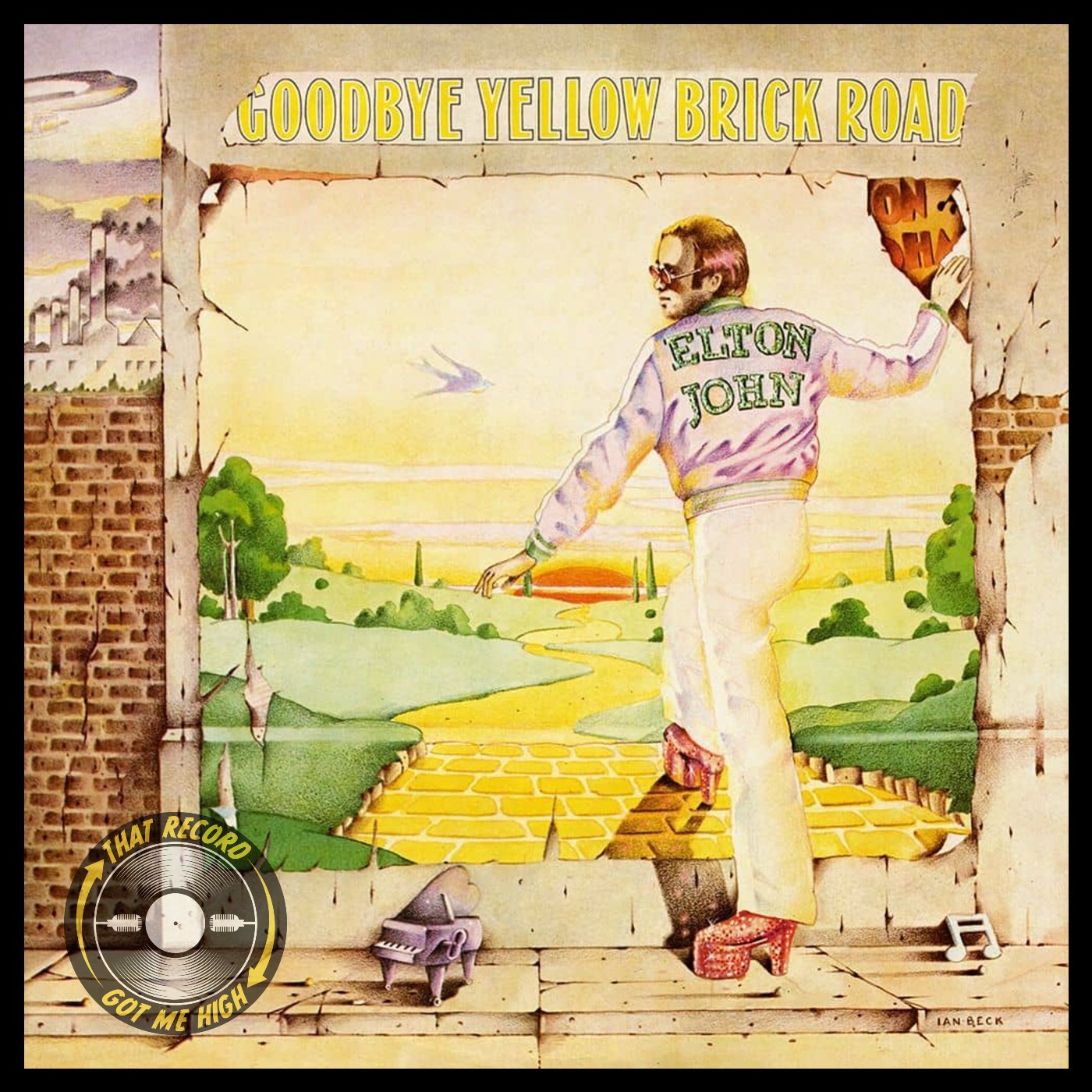
His recent return to long-form record conversation makes the point. In September 2025, he discussed Elton John's Goodbye Yellow Brick Road, moving through the double album track by track. A person who has spent decades compressing complex operations into usable tools still makes time for side two. Efficiency has limits; sometimes the whole point is listening all the way through.
In 1990, reaching an audience meant wet sneakers, a stack of station numbers and persistence. In 2000, it meant catalog data, digitized art and months of process mapping. In 2026, it may mean giving autonomous software boundaries it cannot politely ignore and records it cannot quietly rewrite. The implements have improved. The essential question remains plain: what must happen between making something and trusting it?
Ralph Cavallaro keeps choosing that space in between. It is not always where the spotlight lands. It is where the work gets through.