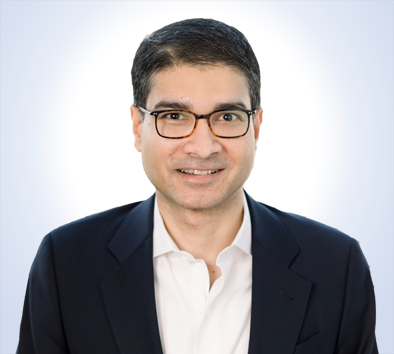
The First-Principles CEO
He came to Robertson Stephens as an investor. That detail matters. Most CEOs inherit a company - Raj Bhattacharyya chose this one with his own capital before anyone handed him the keys. He joined in 2019 as a board member and minority investor. A year later, he became CEO. The sequence is unusual enough to signal something about how he thinks: understand what you're buying before you agree to run it.
Robertson Stephens in 2020 had roughly $1.5 billion in assets under management. By the end of 2024, that number was $7.1 billion - a 45% annual growth rate that earned the firm simultaneous recognition from Forbes, Barron's, and USA Today as a top RIA firm. Five acquisitions closed in 2024 alone. The office count went from six locations to twenty-four, spanning fourteen states from California to Connecticut, Colorado to Florida.
None of it surprises Bhattacharyya. He was building toward a specific thesis: that sophisticated high-net-worth clients want independent, unbiased advice combined with institutional-quality investment resources - and that the only way to deliver both is at scale.
Sophisticated clients demand independent, unbiased advice and need a range of products and services, which require scale to produce.
- Raj Bhattacharyya, CEO, Robertson StephensThree Desks, Three Decades
Bhattacharyya's career reads like a deliberate tour of Wall Street's most technically demanding corners. Harvard, with a degree in computer science and engineering. Then Goldman Sachs, three years in quantitative and fixed income research. Then Merrill Lynch, five years in fixed income derivatives and derivative sales. Then Deutsche Bank, where he spent seventeen years across New York and London - running FX franchise in the Americas, Latin American markets and banking, debt capital markets, and treasury solutions across Western Europe.
That's not a career of someone who got comfortable. That's a career of someone building a specific toolkit: quantitative rigor, global markets intuition, institutional-scale relationship management. By the time he founded YY Capital - his early-stage fintech investment vehicle - he had an unusually clear view of both the technology's potential and the finance industry's structural resistance to it.
The Tech Stack That Won an Award
Most wealth managers pick an integrated platform and live with its limitations. Bhattacharyya went the other direction - a deliberate "best-of-breed" approach that industry observers called unusual and then, when it worked, award-worthy. Robertson Stephens won the 2021 Family Wealth Report Best Tech Stack Award. Three years later, he was still defending the architecture on podcasts.
His logic is direct: "If you choose best in class, you settle for less than 100% integration." He knows the trade-off. He made it intentionally, betting that the client experience delivered by superior individual tools outweighs the operational friction of connecting them. Salesforce as the operational hub - heavily customized. Addepar AND Tamarac for portfolio management. eMoney for planning. Stratify for risk analytics. Canoe Intelligence for alternatives. An internal AI chatbot named "Ask Robbie."
The chatbot name is either the best or worst pun in wealth management, depending on your tolerance for it. "It would be embarrassing if we didn't care about tech or if we got tech wrong," he said. The stack suggests they haven't.
Robertson Stephens' proprietary technology includes a mobile-first client portal, an internal AI assistant, and a multi-platform architecture built around Salesforce as the operational core - unusual in an industry that defaults to single-vendor integration.
AUM Growth: 2018 to 2024
The M&A Discipline
Five acquisitions in a single year is not a rollup strategy. Or rather, it is, but Bhattacharyya objects to how the term gets used. He talks about M&A the way a surgeon talks about a procedure: deliberate, sequenced, with a clear definition of success before you start.
"If you can nail down exactly why you're doing a deal and where you want to take the business, you can structure the deal to help you get there." This sounds obvious stated plainly. It's apparently not obvious in practice - the RIA sector is littered with firms that acquired for AUM and discovered they'd also acquired culture conflicts, technology debt, and advisors who left six months after the close.
We don't believe in growth for growth's sake. We believe growth is a vehicle to furthering the mission of Robertson Stephens.
- Raj BhattacharyyaThe "mission" language is deliberate. Robertson Stephens positions itself as a fiduciary platform where every advisor and senior executive holds equity. The ownership structure is the incentive structure. "We want everyone to feel like a true partner," he said. Whether you believe that framing depends on how often you've heard it from firms that didn't mean it. At Robertson Stephens, it at least explains the retention numbers and the growth trajectory.
Beyond the Firm
Bhattacharyya sits on the Dean's Cabinet at Harvard's School of Engineering and Applied Sciences. He is a partner at Tribeca Early Stage Partners. He mentors at Entrepreneurs Roundtable Accelerator. He serves on the board of Strive for College, a nonprofit focused on college access for underserved students.
The pattern suggests someone who doesn't compartmentalize sharply between finance, technology, and civic obligation. His Harvard CS background wasn't incidental to his Wall Street career - it was the foundation of his analytical approach. His fintech investing isn't a side hustle - it's the same thesis applied at a different stage. The mentorship work connects back to the equity-ownership culture he's building at Robertson Stephens: people perform differently when they have skin in the game and someone who believed in them.
He lives in New York with his wife and two college-age children, commuting in both directions to a firm headquartered in San Francisco. The bicoastal arrangement is maybe the most Wall Street thing about him: physically present wherever the conversation requires it.
On Agentic AI
His April 2026 appearance on WealthTech Today (Episode 338) produced the headline most people will remember: he called agentic AI "the biggest revolution in technology since the dawn of the internet." That's a large claim from someone who has watched technology cycles from Goldman's quantitative research desks through Deutsche Bank's FX infrastructure through the build-out of a national RIA platform.
The context matters: he was talking specifically about advisor productivity. Agentic AI systems that can handle research, client communication prep, compliance review, and portfolio monitoring workflows could, in his view, dramatically change the advisor-to-client ratio that defines the economics of wealth management. For a firm that's building organically alongside its acquisition strategy, that's not a philosophical statement. It's a business model calculation.
What He's Said
"Client expectations will continue to rise, and it is our job as private wealth managers to meet the challenge."
"It would be embarrassing if we didn't care about tech or if we got tech wrong."
"Organic growth allows us to attract future clients who will benefit from that differentiated client experience."
"Every advisor and senior executive is an equity owner - we want everyone to feel like a true partner."