Quinn Slack’s first software customer paid ten dollars and expected a season’s worth of maintenance. The customer was his father. The software was a website for the Pirates, his older brother’s Little League team. At nine, Slack had discovered both the pleasure of making something useful and a contractual ambiguity familiar to considerably older programmers.
The site put schedules and lineups online so parents could stop calling the family phone. There were fifteen players, their families, and an immediate reason to get the details right. For a child sitting in the bleachers, keeping everyone pointed toward the correct baseball field was a way to belong.
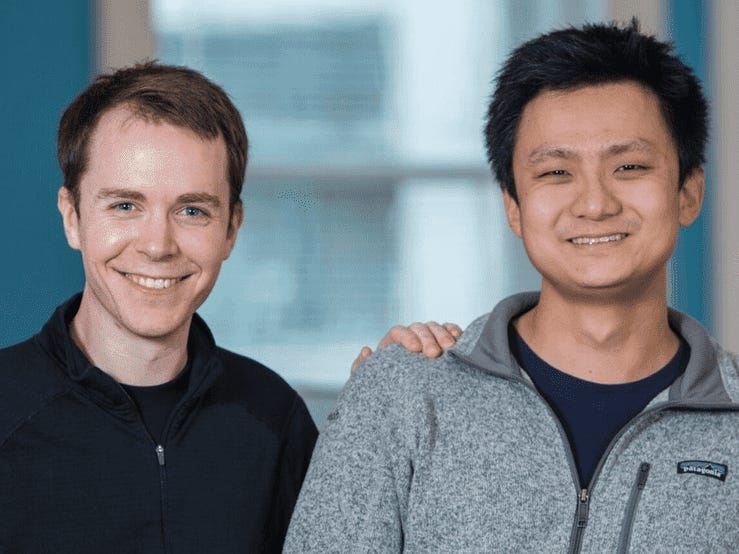
Nearly three decades later, Slack is still working on the distance between wanting something done and getting a computer to do it. He co-founded Sourcegraph with Beyang Liu in 2013. Today he leads Amp, the coding-agent company, while remaining on Sourcegraph’s board. The audience has changed. The satisfaction of a useful result remains recognisable.
A whole season of updates.
A programmer who kept the customer in view
Before Sourcegraph, Slack’s work took him through several kinds of software business. He was the first employee and engineer at Bleacher Report, studied computer science at Stanford, worked at Palantir, and co-founded the lending-technology company Blend. The sequence matters because his later preoccupation with software made for other programmers came after seeing software used elsewhere.
At Palantir, he built technology to help two of the five largest American banks recover from the housing crisis. That is a setting where an unfamiliar codebase is part of someone’s working day, with consequences beyond the editor window. A programmer has to understand a system before confidently changing it. Finding the relevant piece can be a substantial part of the job.
Slack’s interests also reach below application software. He is a co-author of RFC 8548, published in May 2019, which specifies tcpcrypt, an experimental protocol for encrypting TCP streams. It addresses such practical difficulties as starting encrypted connections without excessive delay and accommodating equipment that alters network traffic. The document supplies a quieter entry on his résumé: painstaking collaborative engineering, with no launch confetti required.
The useful part of being doubted
In November 2013, during Sourcegraph’s first year, Slack gave a Berkeley Entrepreneurship Week keynote about a problem that rarely fits neatly into a founder biography: deciding which criticism deserves obedience.
He described the tension between faith in an idea and attention to feedback. His proposed exercise was to look for an ambitious idea that people rejected for the same specific reason, then examine whether you had a credible way to overcome that obstacle. Rejection alone proved very little. The interesting information lay in the objection’s shape.
This was an argument being made while the outcome was unresolved. Sourcegraph still had to make its code analysis work across unfamiliar projects. Slack acknowledged that some users would encounter shortcomings and that the company would decline some requests. A product could attract legitimate criticism while making progress.
Reading that early argument alongside the later company history reveals a founder trying to keep conviction answerable to evidence. It is an awkward arrangement. It also leaves more room for learning than either unanimous applause or permanent defiance.
First, make the code findable
Sourcegraph grew around a mundane, expensive problem: software accumulates. A company’s code ends up scattered across projects, languages, repositories, and teams. The person assigned a change may have little idea where to begin.
Code search gives that person a route into the accumulated work. In July 2021, Sourcegraph announced a $125 million Series D led by Andreessen Horowitz, at a $2.625 billion valuation. It also reported that more than 800,000 developers had used Sourcegraph in the preceding twelve months. Those are dated milestones, rather than a claim about today’s usage or Slack’s personal wealth.
Beyang Liu’s account of the product’s direction that month concentrated on reading: moving through code written by colleagues and strangers, across languages and hosting systems. The proposed improvements included faster search, clearer results, more accurate navigation, and ways to manage changes across many repositories. A search result was the beginning of understanding.
with Beyang Liu
at $2.625B valuation
announce separation
There is a practical generosity in a tool that lets someone inspect what already exists. A new developer can learn from a working example. An experienced one can discover that a colleague solved the same problem last year. Both get to spend less time guessing.
A small company’s answer to a large company’s suspicion
Getting useful software into an enterprise required another kind of understanding. A prospective customer could like Sourcegraph’s tools and still hesitate to hand a young company its private code.
Slack argued for self-hosting as a way through that hesitation. Customers could run the product themselves, inside systems they already controlled. The startup could concentrate on the product while customers handled the infrastructure. His public notes present this as a practical choice for some developer-facing businesses, with circumstances and trade-offs attached.
In a 2018 description of Sourcegraph’s engineering process, he explained another consequence: the team could not simply push an automatic update or roll back a customer’s installation. Software delivered to someone else’s servers had to arrive robust enough to stay there.
By December 2021, Sourcegraph was describing its expansion into a cloud offering for smaller teams. Its account recalled starting with cloud software, moving toward self-hosting to earn trust, then tackling cloud delivery again. The apparently tidy strategic label conceals a more interesting history of adjustments. Customers had different constraints. The company had to learn which ones mattered.
When the reader becomes a machine
The arrival of AI coding tools gave code understanding another customer: the agent trying to make a change. Slack’s March 2024 explanation of a context-first approach asked how an AI developer could judge whether it had produced the right code.
His answer extended beyond the model’s initial response. An agent would need information from code, documentation, tests, logs, execution, tickets, and other parts of the working system. Context would help it evaluate its work and iterate. That is a demanding definition of understanding: the answer has to survive contact with the project.
At the 2024 AI Engineer World’s Fair, Slack also questioned the gap between enthusiasm for coding AI and recurring use. His talk examined how frequently a developer encounters a useful suggestion and how much work it takes to verify it. A demonstration can be impressive while leaving its audience with an expensive checking problem.
“Test it exhaustively in your local dev server and prove to me it works”
Quinn Slack’s recurring instruction to Amp, September 2026
That emphasis makes the transition from search to agents easier to follow. Once software can propose changes, finding evidence that those changes work becomes part of the product. Speed has to include the time spent deciding whether to trust the result.
A conceptual sequence, rather than a performance benchmark.
Two companies, two working tempos
On December 2, 2025, Slack and Dan Adler announced that Sourcegraph and Amp would become independent companies. Adler would take over as Sourcegraph’s CEO. Slack and Liu would remain on its board and establish Amp with the team developing the coding agent.
Their explanation centred on audiences and distribution. Sourcegraph served enterprises needing a consistent code-search experience across cloud and self-hosted environments. Amp needed freedom to experiment with models, tools, and agent behaviour for developers eager to explore new ways of building software.
There was continuity in the handover. Adler had worked on Sourcegraph since before its first customer, written its original data infrastructure, and most recently served as CFO. The announcement described separating teams that had already been operating more independently for forty-five days.
Slack now calls himself both CEO and Member of Technical Staff at Amp. His September 2026 workflow notes give the second title some substance: he says he works primarily through the web and phone, dictates ninety percent of his prompts, and no longer uses an editor. He still spot-checks changes and asks for verification, including videos for new interface flows. He reports writing his prose himself.
Pasta, history, and the terms of access
Away from product announcements, Slack publishes instructions for dinner. Mix sauce into the pasta. Ask someone who cooks a good meal whether you can cook alongside them next time. His favourites include Vietnamese-style baked chicken and banana bread with chocolate chips. These are specific, domestic enthusiasms, pleasantly free of a company mission statement.
His reading list travels through military history, China, political power, and aviation. In early 2026 he recorded Rick Atkinson’s trilogy about the war in North Africa and Europe, followed by Winston Churchill’s My Early Life. His notes on Robert Caro describe appreciating the detail that helped him understand the Texas his grandmother knew. Elsewhere he wonders whether a traffic signal could have been a roundabout. Some books apparently make the drive home longer.
Access remains an explicit public concern. In a June 29, 2026 essay, Slack argued against government restrictions on which AI models individuals and businesses can use, while defending a laboratory’s choice about releasing its own work. That is his stated political position. It places his interest in programming within a larger argument about who gets to use powerful tools.
He also serves on Hack Club’s board. A Hack Club scholarship page pairs a $250 award for a Cincinnati high school student with his mentorship, giving that commitment a modest, concrete form. For someone who wants more people to make things with computers, another person’s first project is a sensible place to pay attention.