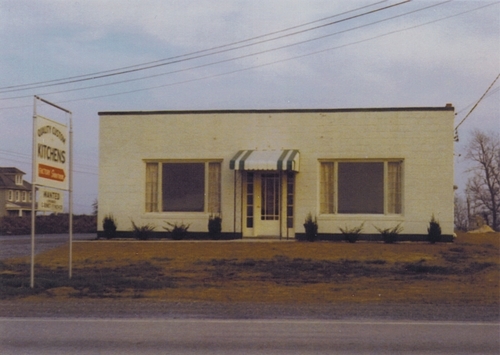
The first ambition was one kitchen a day. In 1968, Martin H. Weaver started Quality Custom Kitchens in a 2,200-square-foot workshop in Brownstown, Pennsylvania. Two employees. A local market. A product whose name explained exactly what he intended to make. Consider the discipline of that goal: one complete kitchen, built for one particular household, then another.
- Made-to-order cabinetry for kitchens and the rest of the home.
- Three collections, with different construction and finish choices.
- More than 100 design partners nationwide, rather than a shopping cart.
Today, Quality Custom Cabinetry belongs to the family-owned QCCI business in New Holland. The intriguing part of its growth is the distance between the workshop and the customer. A national network of designers helps bridge it. Somewhere between a homeowner’s description of breakfast and a manufacturing drawing, someone must decide where the cereal goes.
Leave a little room in the catalog
A 2006 Philadelphia magazine profile caught the business at an entertaining stage. Glenn Good, Weaver’s son-in-law, described its expansion this way: “We started out with a teddy bear and ended up with a monster.” The report found a manufacturer making every cabinet to order. Its catalog supplied possibilities rather than warehouse inventory.
The requests could be wonderfully particular. A designer wanted fire-engine-red cabinetry. Appliances disappeared behind matching panels. Customers chose decorative details and finishes that required more than a straightforward trip through a production line. The point was the manufacturer’s willingness to accommodate a drawing that had not already become a standard item.
“We started out with a teddy bear and ended up with a monster.”Glenn Good, Philadelphia magazine, 2006
That history helps explain QCC’s position in the market. This is premium residential cabinetry, competing for projects where dimensions, construction and finish matter enough to commission them. An independent cabinet shop is another route. So are other established custom manufacturers. The buyer is choosing a working relationship as well as a cabinet.
Three ways to build a box
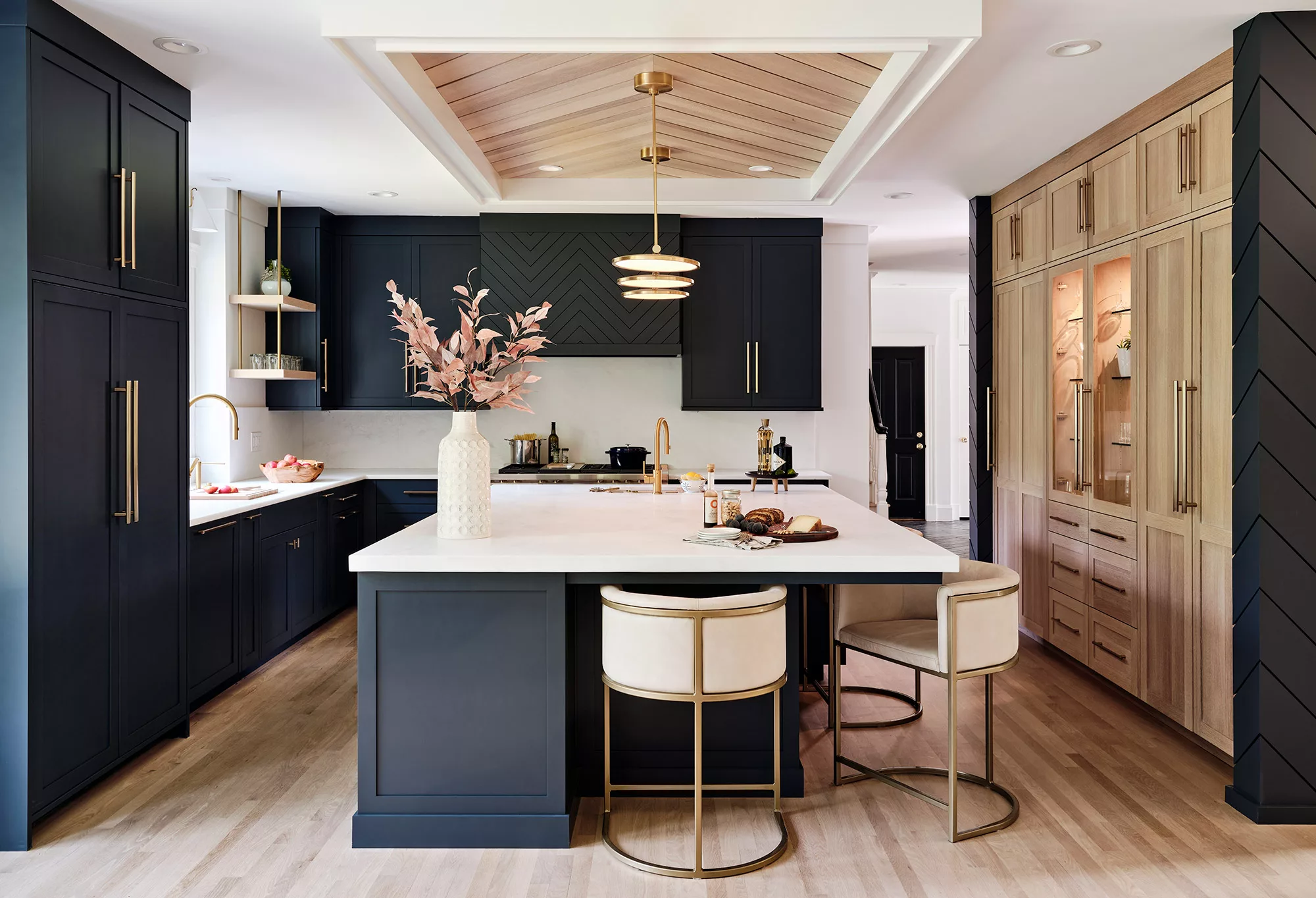
QCC’s three collections make that choice more concrete. Steeplechase uses inset construction: doors and drawer fronts fit inside a one-inch face frame. The frame remains part of the composition. Its appeal lives in those repeated borders, with options for moldings, distressing and custom finishes.
Vision removes the front face frame. QCC calls it full-access cabinetry and offers wood or melamine box construction. The collection can support contemporary or traditional rooms; its defining distinction is structural. A door style alone will not tell you how a cabinet is put together.
Radian takes its cues from European kitchens, with horizontal lines, integrated pulls and channel hardware. Its finish categories include textured, matte, ion and high gloss. Made in Pennsylvania, it gives the company a different visual vocabulary. A cabinetmaker rooted in local woodworking can also manufacture a room that looks distinctly contemporary.
The designer is part of the product
QCC directs homeowners to more than 100 selected design partners across the country. Those partners translate a room and its occupants into specifications. The manufacturer supplies the cabinetry; the local conversation establishes what it should do. That division is central to how the business reaches customers beyond Pennsylvania.
Its published projects credit designers such as Maison Birmingham, KDW Home and The Design Studio. The galleries make the relationship visible: different designers, recognizably different rooms, a common manufacturer. The useful lesson for another business is to make room for a specialist who understands the customer’s setting.
For a homeowner, the first useful document may be a list of irritations. Which drawer jams with utensils? Where do laptop cables gather? QCC’s home-office offering includes integrated workstations, charging and data ports, concealed electronics and shelving. Those are specific responses to daily activities. They give the designer something more helpful than a photograph of someone else’s room.
There is a manufacturing lesson here, too. QCCI says it uses CNC optimization to get more from raw materials, ships cabinetry protected by blankets to reduce extra cardboard and foam, and has installed rooftop solar and LED lighting. These are factory decisions behind an individualized product. The workshop must repeat its processes even when the kitchens themselves differ.

The finish has a working life
Appearance is only one part of the specification. QCC describes a finishing process involving surface preparation, primer, color or stain, topcoat and controlled curing. It checks adhesion, sheen and color consistency across components. A sample is the visible end of that sequence; questions about the sequence belong in the buying conversation.
The company’s own finish guidance acknowledges tradeoffs. Painted surfaces can chip or scratch. A glaze adds processing steps and cost. Damaged laminate can be difficult to repair. Choosing a finish means choosing how it will behave after the photographs have been taken, when the kitchen returns to regular service.
The same practical reading applies to its limited lifetime warranty. Coverage concerns defects under normal home use for the original purchaser at the original installation site within the continental United States. Removal and installation expenses are excluded. Wood movement, water damage and improper installation have their own boundaries. Buyers should read those terms alongside the proposal.
Start with what must fit
Custom work asks for a larger initial investment and a longer planning process than prefabricated cabinets, as QCC’s own comparison explains. A tight deadline or a straightforward room that accepts standard sizes may favor another approach. Ask for an itemized project quote, with installation and other responsibilities made clear, before deciding how much customization earns its place.
The comparison should be specific enough to survive an attractive showroom. Put the same dimensions, storage requirements and finish expectations in front of each supplier. Ask who measures, who approves the drawings and who handles an installation problem. Those questions turn a broad promise of customization into a proposal you can assess. They also help distinguish an appealing feature from one you will actually use every morning.
A productive consultation can begin with three decisions: what the room must accommodate, which construction approach suits it, and what the finish must endure. Ask the designer to show comparable completed work and explain the proposed materials. Then look inside the sample cabinet. Storage that works only with the doors closed has missed much of the assignment.
QCC’s February 2026 design outlook emphasizes warmer woods, deliberate storage and layouts built around routines. That brings the story back to Weaver’s original unit of work: a kitchen for a household. Before selecting the finish, establish what must fit. The most useful freedom a cabinetmaker can offer is room to answer that question properly.