The first map was a university campus. In November 2016, Qasim Asad Salam launched CampusFeed at Lahore University of Management Sciences, giving students a place to talk without putting their names above their words. More than 600 downloads arrived in two days. Courses, instructors, whatever was happening nearby: the audience was close enough to share a timetable, even when it preferred to keep its identity to itself.
Years later, Salam would be helping software engineers find work with companies thousands of miles away. Between those two maps sits a career spent trying to make useful introductions: students to students, engineers to employers, founders to people who can help them build. His businesses have changed. The question of who gets through the door keeps returning.
Six hundred downloads, one small map
CampusFeed made locality part of the product. Open it on one campus and the conversation belonged to that campus. The app had been incubated at Plan9, and its expansion included FAST, LSE, BNU, IBA and COMSATS. In 2017, Salam appeared among the Motwani Jadeja Foundation’s RC Fellows as Campus Feed’s CEO.
For a student network, anonymity was a feature with an obvious attraction. University life supplies an inexhaustible inventory of things to discuss and a somewhat smaller appetite for being quoted by name. CampusFeed offered a place for the discussion to happen.
Even before that November launch, Salam was testing the proposition in public. At Disrupt Pakistan 2.0 in July 2016, he presented a campus networking app and described an early test at LUMS and LSE. The smallness of the market was useful: a campus gave him a specific community whose habits he could observe.
He had started making websites at eleven. At LUMS, his studies were in economics and political science. Building software and studying institutions make an interesting combination for someone whose later companies would sit between people and opportunity. A functioning app is one achievement; persuading a community to use it is another education entirely.
The friendship that survived the startups
Salam met Talha Masood at Kickstart, a coworking space in Pakistan. Each was working on a startup. They became friends and agreed that, if their separate projects failed, they might work together. The projects did fail. The friendship proved more durable.
There is something pleasingly practical about that beginning. A coworking space sells desks, but a nearby person can turn out to be the more valuable part of the arrangement. Salam and Masood went on to run a software house together, learning how to recruit and train engineers while serving clients.
Salam moved to the United States to find business. In his account of those years, the scenery included a San Francisco garage, three-dollar meals and a short financial runway. The romantic version of startup life generally edits the grocery bill out of the picture. His account left it in.
When the earlier businesses faltered, the founders had engineers they wanted to keep working. Salam contacted people in Silicon Valley to ask whether they needed technical help. The introductions found demand. Work that began as an urgent search for assignments became the basis for a different business.
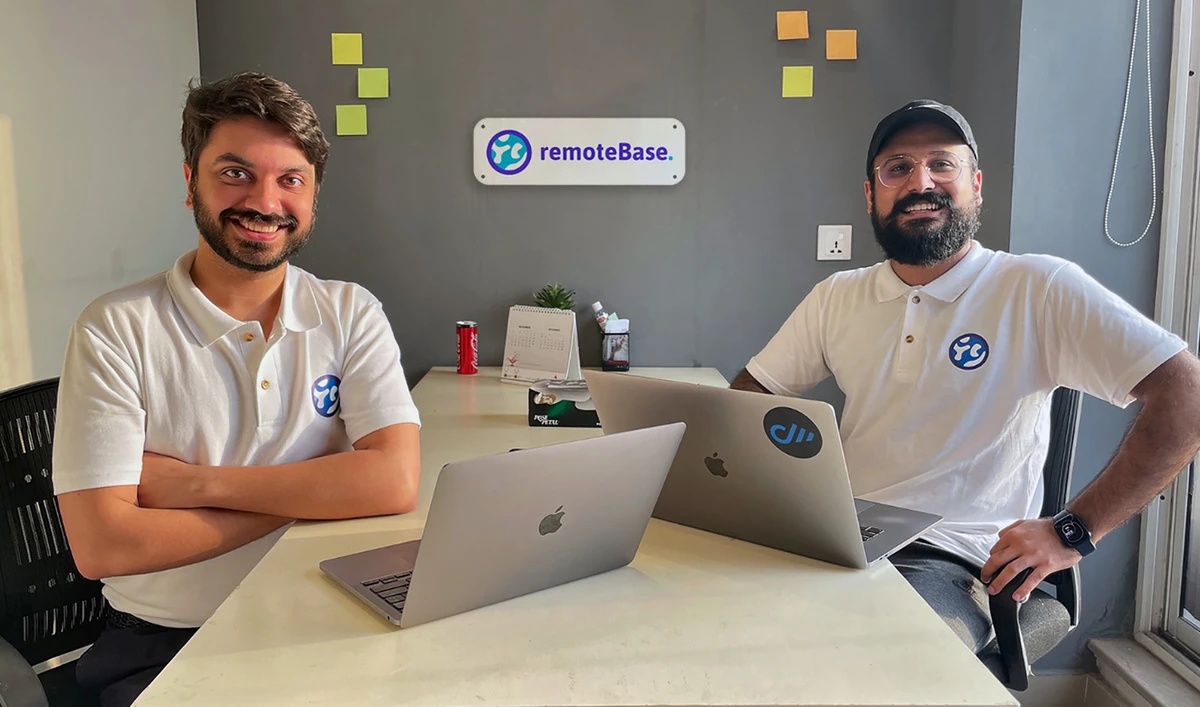
Remotebase began operating in April 2020. Its central transaction was straightforward: identify engineers, assess them and connect them with companies abroad. The founders could use the recruiting experience they had already acquired. They also had people whose ability they knew firsthand, which is a useful place to begin when the product involves trust.
The work behind two cheques
In March 2021, Remotebase secured $1.4 million in seed funding, with investors including Indus Valley Capital, Draper Associates and Hustle Fund. Salam said the business was already profitable and that the round would help expand its network. The ambition was to give Pakistani engineers more access to work with American companies.
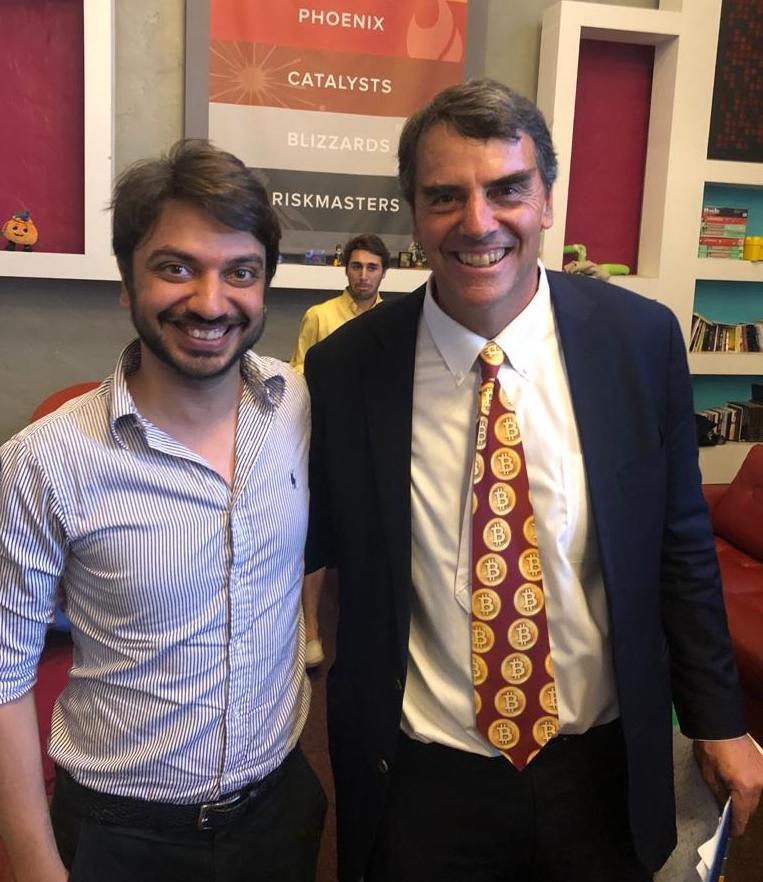
For the founder, investment brought another set of relationships into a business already built on them. A photograph from that period shows him beside Tim Draper. It is a cheerful image, with the added visual contribution of Draper’s Bitcoin-patterned tie. Venture capital occasionally arrives with its own accessories.
A $2.1 million pre-Series A round followed in October 2022, co-led by Indus Valley Capital and Hustlefund Ventures. Alongside it came Talently, then presented as a way for recruiters to access assessed engineering talent more directly. That offering gave customers a different route into the network, with less of the managed matching involved in Remotebase’s core service.
Company funding, in US dollars. These rounds are milestones in Remotebase’s history.
The work behind the numbers was less photogenic. Remotebase’s proposition depended on finding people before a customer needed them, learning what they could do and making a credible match. Its website continues to put vetting, training and a two-week trial near the centre of the offer. The promise of a quick introduction requires preparation somewhere else.
That detail matters to the story of Salam as an operator. A hiring business has two audiences with different anxieties. A company wants confidence in the person joining its team. An engineer wants worthwhile work and a fair opportunity to demonstrate ability. Every match has to survive both judgments.
He also took the subject into public discussion. A November 2021 Slack community event in Islamabad invited people to ask him about technology, remote work and the way Remotebase used Slack to manage distributed teams. It was an opportunity for the audience to ask about the working arrangements behind the hiring promise. Once people have found one another, they still need a reliable way to get through the day together.
A seat at the table, sometimes literally
Salam’s professional network has also included a monthly poker game co-hosted with Ha Nguyen. In sharing her reflections on the game, he compared entrepreneurship with calculated risk: deciding when to press ahead and when to leave. It is a more sociable illustration of business judgment than a slide full of arrows, with room for an actual conversation.
Other conversations take place on foot. Henry Li described a hike with Salam on the Stanford Dish Trail in October 2024, discussing Talently.ai and its AI interviewer. By that point, the public conversation around his hiring work included software conducting interviews at scale. The product questions had moved beyond simply making the introduction.
In November 2024, Salam announced Migrately, an accelerator intended for Pakistani founders and business owners preparing for a move to the United States. He said more than 600 people had contacted him after he began sharing his own experience. The proposed programme would help selected founders prepare and connect them with a lawyer for the formal process.
That project took a personal experience and offered it as a service. It also made clear that crossing a border involves a different set of tasks from finding a remote job. Salam was working on access from both directions: helping people work internationally and helping some founders prepare to move.
“On top of that I travel, A LOT!”
Qasim Asad Salam · November 2024
Later that month, he proposed documenting the daily effort of turning an idea into a business. He wanted to share the steps, obstacles and decisions while already running Remotebase and Talently. He acknowledged that the experiment could fail. The travel aside gave the proposal a useful touch of calendar realism.
Building in public makes a different demand from presenting a finished company. An audience can see the decisions before the outcome supplies a flattering explanation. His proposal invited people into that unfinished space. For a founder whose work depends so heavily on networks, it was also another way to start a conversation.
His conversations have extended to other founders building around remote work. With SafetyWing co-founder Sondre Rasch, he discussed the evolution of remote companies and the practical questions involved in scaling them. The shared subject was a business that can recruit beyond a single local labour market. That widens the search, but it also asks founders to think deliberately about collaboration. For Salam, these discussions sit close to the everyday work of a company whose customers and engineers can be on different continents.
The engineer is still in the room
By September 2025, Salam was sharing work being made with SnapDev. One example came from Danny Beck, who described building Benjamin, a product for evaluating potential acquisitions, with AI tools and a small amount of direct engineering support. It offered a concrete example of the kind of builder Salam was trying to help.
His published SnapDev course paired AI coding assistants with live sessions, individual engineering support and feedback from other participants. It was aimed at people who had ideas and wanted to turn them into working products, including those without a technical background. The course listing now says it is unavailable.
SnapDev’s current website puts access to senior engineers at the centre of its service. A builder describes where a project is stuck, connects with an expert and works through the problem. An AI tool may have helped generate the software; an experienced person remains available when the software refuses to cooperate.
Read together, these projects suggest a recurring interest in the difficult middle of an introduction. A student needs a community willing to respond. An engineer needs an employer willing to look. Someone building an app needs a person who can diagnose the part that broke. Software can arrange the meeting; useful work has to follow.
CampusFeed’s original map was deliberately small. Remotebase’s was international. SnapDev makes the unit of help smaller again, down to a particular technical problem. Salam’s career has moved between those scales, with people remaining central to the transaction. The next opportunity, in this story, often begins with knowing whom to ask.
Keep the conversation going
Published October 22, 2026 · Funding figures refer to the rounds dated above. Photograph dates are identified in their captions.