A nursing home can have two pictures of itself. One lives in the daily routines of its staff. The other emerges when an inspector starts asking questions. Providigm was founded around the distance between those pictures. Its proposition was straightforward: give the people delivering care better tools to see what an inspection might reveal, while there is still time to act.
- The job: organize quality improvement and survey preparation for skilled nursing facilities.
- The product: abaqis, now HealthStream Quality Manager.
- The business: facility subscriptions, training, and a distribution relationship with Medline.
A different pair of eyes
Brothers Andrew and Peter Kramer founded Providigm in 2006. Andrew, a physician and researcher, believed providers should have access to the quality metrics and tools used by Centers for Medicare & Medicaid Services surveyors. The company’s account of its origins describes a problem of unequal visibility. Providers needed a clearer view of the standards against which their work would be judged.
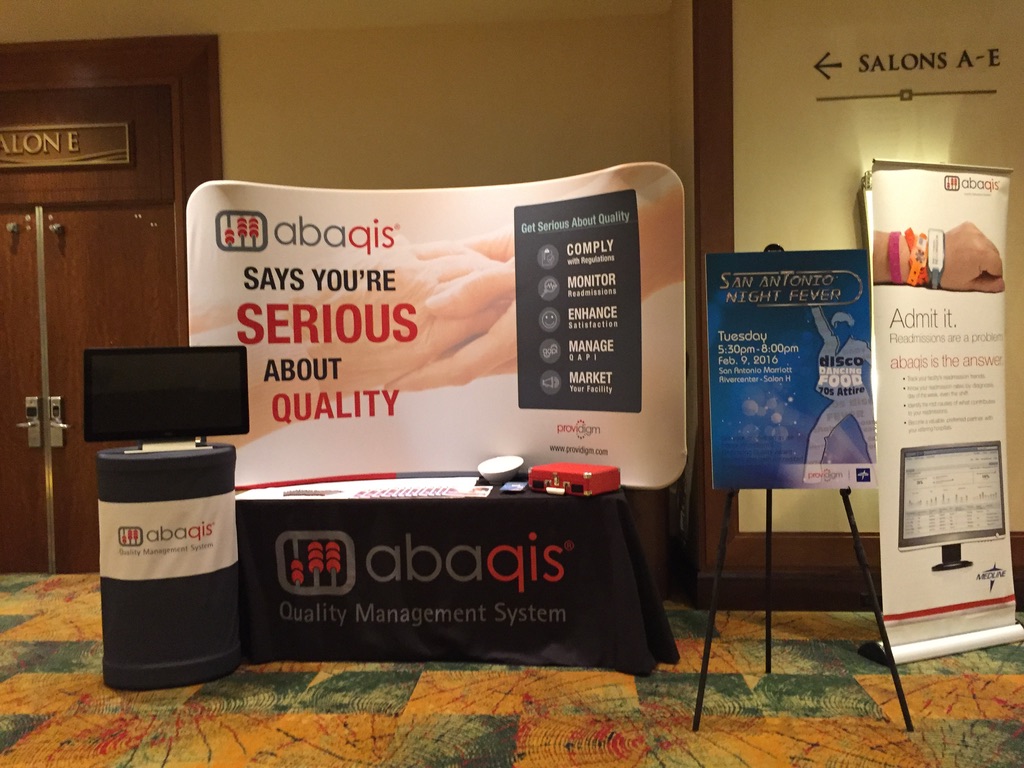
That background matters. Providigm approached nursing-home software through clinical measurement, bringing research, care expertise, and information technology together. Its flagship, abaqis, became a web-based quality management system. The customer was an institution, but the subject of the measurement was a person: a resident whose experience might be captured through an interview, a family response, or a record review.
Consider the difference between a complaint and a pattern. A complaint demands attention. A pattern asks whether something in the organization needs to change. Providigm’s opportunity lay in helping facilities move between those levels, collecting evidence systematically rather than depending entirely on what happened to reach a manager’s desk.
The complaint becomes a workflow
The vocabulary is unglamorous: QAPI, or Quality Assurance and Performance Improvement. The underlying idea is easier to like. Establish how care is performing, investigate trouble, change the process, and check the result. CMS describes QAPI as an ongoing, organization-wide approach involving caregivers in practical problem solving. It reaches beyond a good performance on inspection day.
- 01Collect
evidence - 02Investigate
patterns - 03Assign
improvement - 04Check
results ↺
HealthStream’s current Quality Manager offering puts several parts of that work together: facility assessments, mock surveys, guided QAPI processes, a performance-improvement project builder, and enterprise reporting. Action indicators flag areas for attention. Integrated Minimum Data Set information supports assessments. Administrators and quality leaders can follow the work across facilities rather than assemble the picture from disconnected documents.
This is the company’s place in the market: specialized quality infrastructure for skilled nursing. The practical alternative can be a collection of spreadsheets, binders, free guidance, and separately managed tasks. The appeal is continuity between finding a problem and tracking the response. Whether it helps depends on how faithfully a facility collects evidence and completes the work.
A hospital’s decision about where to send a patient adds another audience for that evidence. Providigm’s historical readmission tools used risk adjustment to account for differences in residents’ needs. The distinction matters: comparing two facilities without considering whom they care for can produce a tidy ranking and a misleading conclusion. Measurement needs context before it becomes a useful management signal.
The $275 clue
Software prices often disappear behind a demonstration request. A public McLean County agreement provides a rare look at one actual purchase. Dated April 8, 2015, it specified $275 per facility per month for abaqis, a 24-month initial term, and a $2,750 two-day training package.
At those stated rates, 24 months of subscription fees plus training total $9,350. That is arithmetic from one historical agreement, not a current quote. The contract also applied Medline supply-agreement terms, with a warning that ending the supply relationship could remove the discounted rate.
The training line is revealing. Buying access and learning to run a quality program were distinct purchases. Medline’s role was equally practical: a supplier already selling into nursing homes also helped bring the software to them. In 2018, Medline announced that Bishop Rehabilitation and Nursing Center would use abaqis as part of a broader quality initiative, including its facility assessment tool.
An $18 million connection
On January 10, 2019, HealthStream announced its acquisition of Providigm for approximately $18 million in cash, with up to $500,000 more tied to subsequent performance. At that point, HealthStream reported more than 2,000 skilled nursing facilities using abaqis and approximately 45 Providigm employees. Those are historical figures, not a present-day customer or headcount estimate.
“Helping eldercare providers deliver improved quality of care has been my passion for decades.”Dr. Andrew Kramer · January 2019 acquisition announcement
The acquisition announcement connected quality measurement with workforce competency and education. For a training company, the fit is understandable: knowing where care falls short can help focus development. Kramer pointed to HealthStream’s resources, knowledge, and technology as reasons the combination could advance Providigm’s work. The case for the deal was a link between identifying needs and developing staff.
The work after the warning
Providigm’s own QAPI toolkit makes the human requirement clear. Written by nurse and quality specialist Barbara Baylis, it calls for senior leadership, a supportive culture, and people trained to work together. Its particularly useful suggestion is modest: team members should learn at least one tool during each meeting. Improvement becomes something practiced in the room.
There is a lesson here for managers outside healthcare. Agree on what to observe. Make the evidence comparable. Give someone responsibility for the response. Return to see what happened. Software can organize that sequence; a leader still has to protect the time for it. Weak participation or unattended improvement projects can leave an impressive system with little operational effect.
The product continues under the Quality Manager name. March 2026 release notes document updated investigation pathways and a correction to feeding-tube indicator logic. Small maintenance details, perhaps, but consequential for a business built on what people notice. Providigm’s useful idea endures in that work: make the picture clearer, then give the care team a way to respond.