A gas station can change its name without moving an inch. The canopy stays above the pumps, cars still turn in from the same road, and the store keeps its front door. Yet almost every surface that tells a driver where they are may need attention. A logo becomes a manufactured object. A color becomes a panel. Somebody has to measure the place before anybody orders the new look.
That is the territory of Promotion Plus Sign Co., Inc., a Los Angeles company whose work concentrates on the physical identity of commercial sites. Its national service offer stretches from independent stations to multi-state programs, with petroleum retail at its center and convenience stores, restaurants, and other businesses in the mix. The finished sign is the visible result. Much of the job happens before it can be switched on.
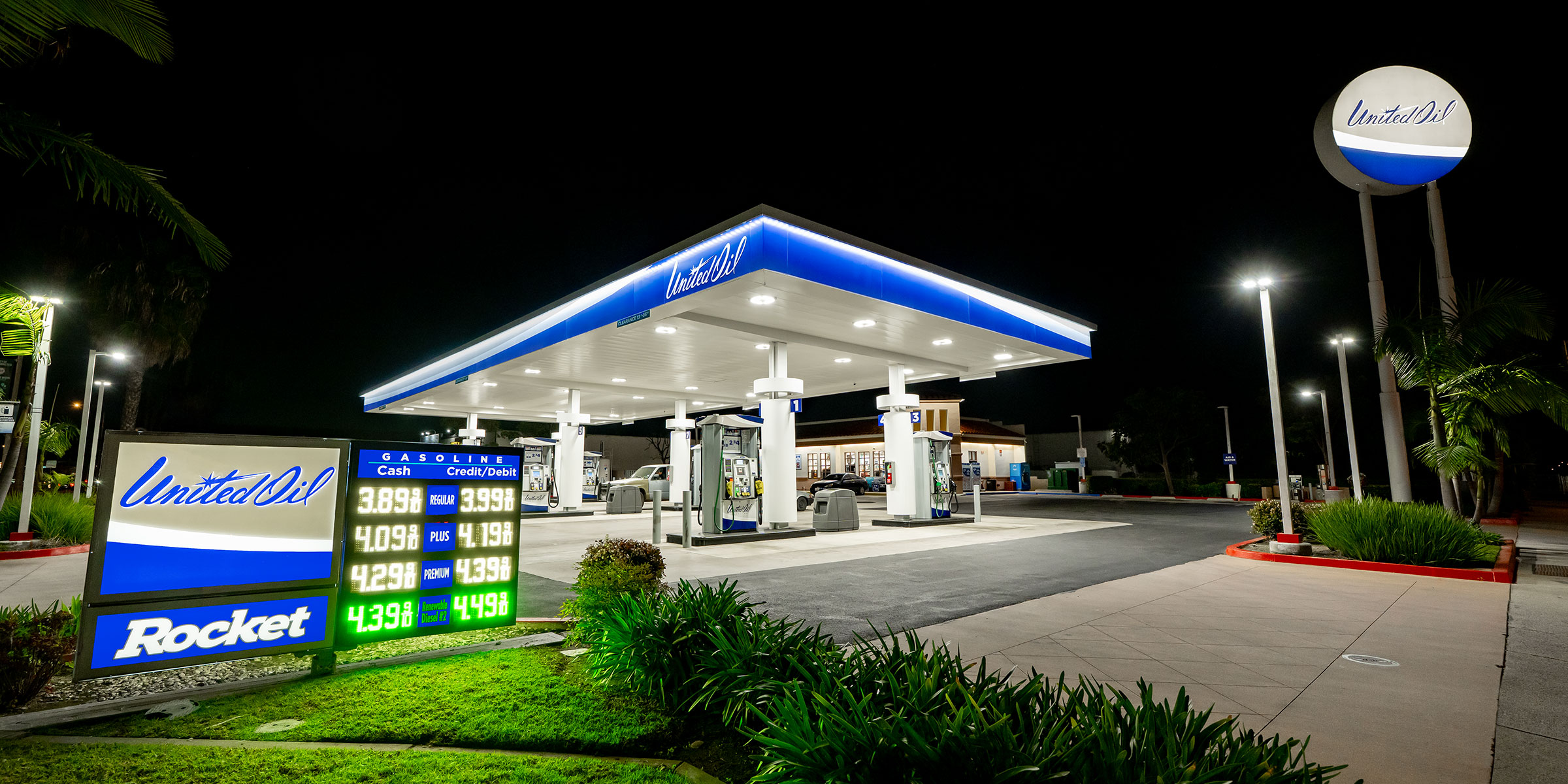
A family-home business finds the roadside
Tony and Wendy Mastrangelo are the founders named in the company’s account of its history. The business dates to 1994. Its description of the early operation is pleasingly domestic: a marketing and promotion company working from a garage and side room. That origin helps explain the name, which sounds broader than the canopy framing and illuminated letters now filling its service list.
In its 25th-anniversary post, the company described the move from a family-home operation into brand imaging. Its current contact page lists Tony as president and Wendy as vice president. The Blue Book construction directory provides a separate historical marker: it says the business has been listed since 1998. There is a long operating history here, without needing a dramatic overnight-success story to dress it up.
The founders’ language puts customer relationships and attentive service near the center of the business. An older company statement uses the phrase Pride and Persistence
. Those words suit an operation that has to carry decisions across designers, customers, production staff, and crews. Its present-day work asks for repeatable execution, even when the properties themselves refuse to be identical.
The brand book meets the measuring tape
Promotion Plus describes an unusually broad assignment for something casually called a sign job. Its service description includes surveying, concept renderings, permit acquisition, procurement, installation, and acting as a liaison between the brand and the end user. A station owner can ask one contractor to carry the job through several stages that would otherwise need separate coordination.
Its advertised manufacturing work includes illuminated and non-illuminated signs, channel letters, monument signs, canopy imaging, and large-format prints. The list moves easily from substantial structures to decals and banners. That range matters because an operator’s identity is distributed around the property. The sign visible from the road and the graphic beside the pump both belong to the same customer experience.
- 01Survey
Measure the actual site - 02Design
Translate the brand - 03Approvals
Resolve requirements - 04Fabrication
Make and source parts - 05Installation
Bring the pieces together - 06Maintenance
Keep the image working
Illustrative sequence based on the company’s services. Project stages can overlap.
The practical lesson is to treat the site survey as part of the creative brief. A rendering may settle what a brand wants to say; measurements establish where it can say it. For a buyer, the useful question is who carries those facts forward when drawings become orders. A beautiful concept becomes less useful if the people making the parts are working from a different set of assumptions.
Six inches can send a drawing back
A 2010 Goleta design-review agenda brings that tension down to letter size. Promotion Plus appeared as the agent for World Oil at 5960 Calle Real. The proposal included refacing part of a pole sign and adding illuminated WORLD lettering to the canopy. The canopy signs were described as 1.5 feet high. In comments carried forward from the July meeting, the board called for 12-inch canopy letters and continued the item.
That is a small, documented collision between a submitted design and a local review. It is not evidence that the business failed. It does explain why permitting belongs inside the offer: a drawing can require another pass before the physical work proceeds. The copyable habit is to resolve that kind of change while it is still a drawing, then make sure the revised version reaches everyone who needs it.
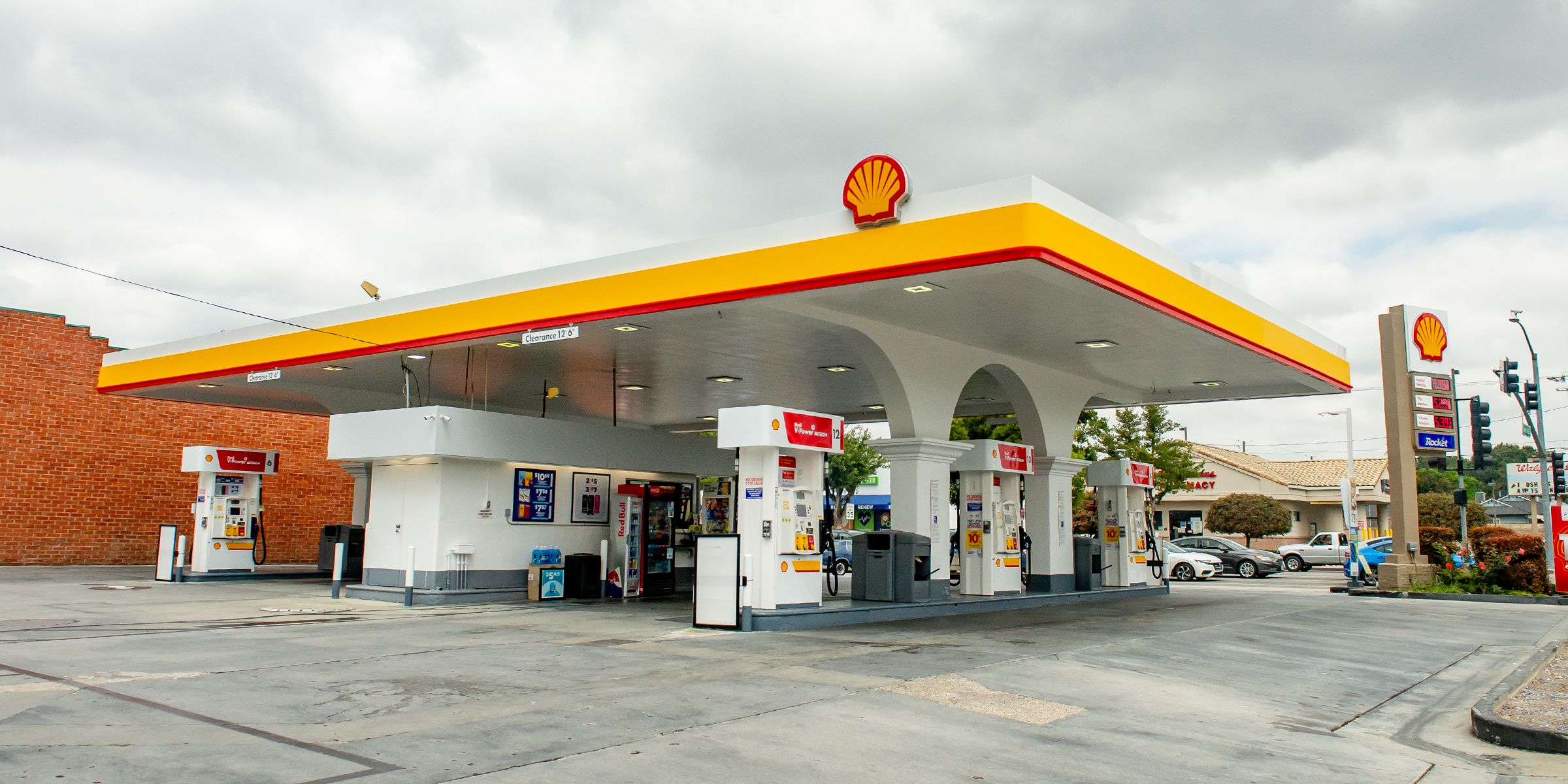
The same relationship between branding and existing structures remains visible in newer work. An August 3, 2026 Contra Costa County agenda names Promotion Plus in an application concerning a Shell station in Alamo. The requested changes cover an illuminated canopy logo, graphics on pump valances, and two freestanding price signs refaced with LED text. This is a proposal recorded for review, not a claim that the installation is finished.
Read those items together and the scale becomes clear: a station refresh can be several connected alterations rather than one replacement sign. The buyer needs consistency across those alterations while retaining a workable plan for the individual property. A national visual identity still has to make sense at one particular curb.
A national visual identity still has to make sense at one particular curb.
THE SITE-LEVEL PROBLEM
The customer sees one station
Promotion Plus names ExxonMobil, Shell, P66/76, Marathon, Circle K, ARCO, and Chevron among its brand-rollout relationships. It says it coordinates with brand management and sources through approved manufacturers. These are company-described relationships; they explain its chosen market more usefully than a loose claim to be able to build any sign for anybody.
Its project portfolio reaches beyond fuel brands, displaying names from automotive, retail, and food service, including Toyota, PetSmart, and Subway. The extension is understandable. Each has a physical place where a familiar identity must be reproduced. The work changes with the building and the brief, but the need to connect an approved design with a finished site remains.
That is also the sensible basis for comparing vendors. Promotion Plus positions itself as a contractor that combines making, sourcing, and coordinating. A buyer weighing it against separate designers, fabricators, and installers should compare responsibility as well as the objects being purchased. Which party handles a revision? Who checks that the approved materials are the ones arriving? Those questions make the comparison concrete.
Two very different kinds of price tag
For a glimpse of an actual project budget, look away from the pumps. On May 13, 2021, California State University, San Bernardino’s student union board approved a purchase and installation of plexiglass from Promotion Plus for service areas and affinity centers, with an amount not to exceed $7,247.31. The minutes place it within the plan to bring people back to campus and protect staff and students.
Plexiglass purchase and installation authorized by CSUSB’s student union board. An approved maximum for this job, not a final invoice or a typical rebranding price.
The example shows a useful adjacent application for the company’s capabilities: supplying physical pieces and installing them where people use a space. It also shows why price context matters. A bounded plexiglass assignment tells a reader something about that purchase. It cannot sensibly become a benchmark for a canopy, a freestanding sign, or an entire station conversion.
At the smaller end, the company links to Zoom-N-Supply, which it has described on LinkedIn as its online parts department. The store organizes products around station brands and practical needs, including tank tags, dispenser decals, and signs. Here an operator can browse specific items rather than begin with a site-wide scope and a custom quotation.
On September 10, 2026, its CA Tax - 2026 listing showed $39.90 for a pack of 24 decals. The product description specifies two-by-three-inch vinyl labels with permanent adhesive. That is a real retail price attached to a defined quantity. It is another buying route for the same general customer: an operator who sometimes needs a coordinated construction job and sometimes needs small replacement graphics.
The job survives installation day
The company’s employment form offers a useful view of the skills behind the output. Applicants can select installation, electrical work, painting, metal fabrication, estimating, project management, and general production. The mixture makes the business easier to understand. Its work combines drawings and customer conversations with tools, materials, and people who can finish a physical installation.
A published sales-representative job description makes the coordination unusually explicit. Duties include requesting surveys, reviewing estimates and brand books, tracking deposits, communicating city-required revisions, and checking the completed work against the agreed scope. That account role stays involved well beyond the first sale. The listing also calls for weekly updates to internal and external teams, a mundane detail with considerable practical value.
The service offer continues after installation with time-and-material maintenance. Promotion Plus also advertises emergency repairs for damaged structures and fallen fascia. This gives an operator a reason to return when the original project has ended. A site's appearance is something to maintain: lighting, signs, and panels remain physical equipment exposed to use and their surroundings.
For an operator considering the company, the best starting point is a specific brief: which site, which brand, which surfaces, and which existing pieces are meant to stay. Ask for the scope and approvals to be clear before production. An integrated contractor has the most to coordinate when several trades and brand requirements meet; a simple standalone print order may need much less of that machinery.
The appeal of Promotion Plus is clearest at that busy intersection. Its job is to turn a recognizable identity into parts that belong together on an actual property. Drivers get the quick version, often in a glance through the windshield. Behind that glance sit the measurements, revisions, fabrication, and installation that make the station legible.
Take a closer look
Company website · Project photographs · Request a quote · Parts store