Codegen is for the engineering manager whose backlog has become a second, less charming product. The tickets are already written. The acceptance criteria are hiding in comments. A customer-success manager knows exactly which tiny fix would save an account, while the developers are elbow-deep in the roadmap. Codegen tries to turn that institutional clutter into working pull requests. In 2026, however, there is a catch printed in type large enough to read: you now buy it through ClickUp.
That change is the whole review. Founder Jay Hack started Codegen in 2023 after work in machine learning at Palantir and an earlier startup, Mira. The original pitch was broad, codebase-level labor: migrations, refactors, integrations, bug fixes, tests, and documentation. In November 2023, the company announced a $16 million seed round led by Thrive Capital. Hack described a multi-agent system that could split large jobs among cooperating models. The reported total raised was $16.2 million, with a claimed $60 million post-money valuation.
Then the independent product reached its final merge. ClickUp acquired Codegen in late 2025. The standalone service shut down on January 9, 2026, and Hack became ClickUp's Head of AI. Codegen says the useful machinery survived: orchestration, ClickUp task context, isolated execution, pull-request review, audit trails, analytics, and a SOC 2 compliance layer. The current website is largely a directory and learning publication. The button marked “Try Codegen” sends buyers to ClickUp.
Why context beats a clever prompt
Many coding assistants begin where a developer happens to be: a file, a terminal, an editor selection. Codegen begins one floor above, in the work system. An agent can receive the task description, comments, linked specifications, acceptance criteria, and conversation history. It can then enter a sandbox, inspect the repository, make changes, run code, and return a branch or pull request. This does not make the model wiser. It makes the assignment less amnesiac.
That distinction matters especially when work arrives from outside engineering. Codegen's Warmly case study describes a customer-success manager writing a requirement in Linear, asking the agent for a technical specification, and passing the result to an engineer who confirmed class names and function signatures before merge. Warmly co-founder Maximus Greenwald called Codegen a “Slack teammate” that helped his customer-success team move smaller features and bug requests that engineering otherwise would not reach.
“It helps us go from task planning to implementation with astonishing speed.”Jake Ruesink, Lambda Curry co-founder, in Codegen's customer story
Lambda Curry reported a similar pleasure: fewer hops between GitHub, Slack, and Linear, with the agent handling small changes and explaining code relationships. These are vendor-published stories, so keep the confetti in its box. Still, they reveal the customer shape to watch. Codegen is compelling when a team already has structured work, healthy repositories, reliable tests, and people who know how to judge a diff. A chaotic backlog does not become a product specification merely because an agent can read it.
The surprisingly unglamorous hit
Codegen published an analysis of tens of thousands of historical customer agent runs. Development and implementation accounted for 35 percent. Code review and analysis took 25 percent. Linear initiated 35 percent of runs, chat or API 30 percent, Slack 20 percent, and GitHub 15 percent. “Review this PR” outnumbered every other request, including the theatrical build-my-company-by-lunch work.
That is encouraging. Review has boundaries. A pull request has a diff, repository rules, tests, and an accountable owner. Codegen's PR Review Agent can leave inline comments, look for unsafe patterns, suggest maintainability improvements, and comment on architecture. Teams can set organization-wide instructions and add repository-specific rules. There is also a check-suite auto-fixer, plus cost and success reporting intended to show which categories of work deserve an agent.
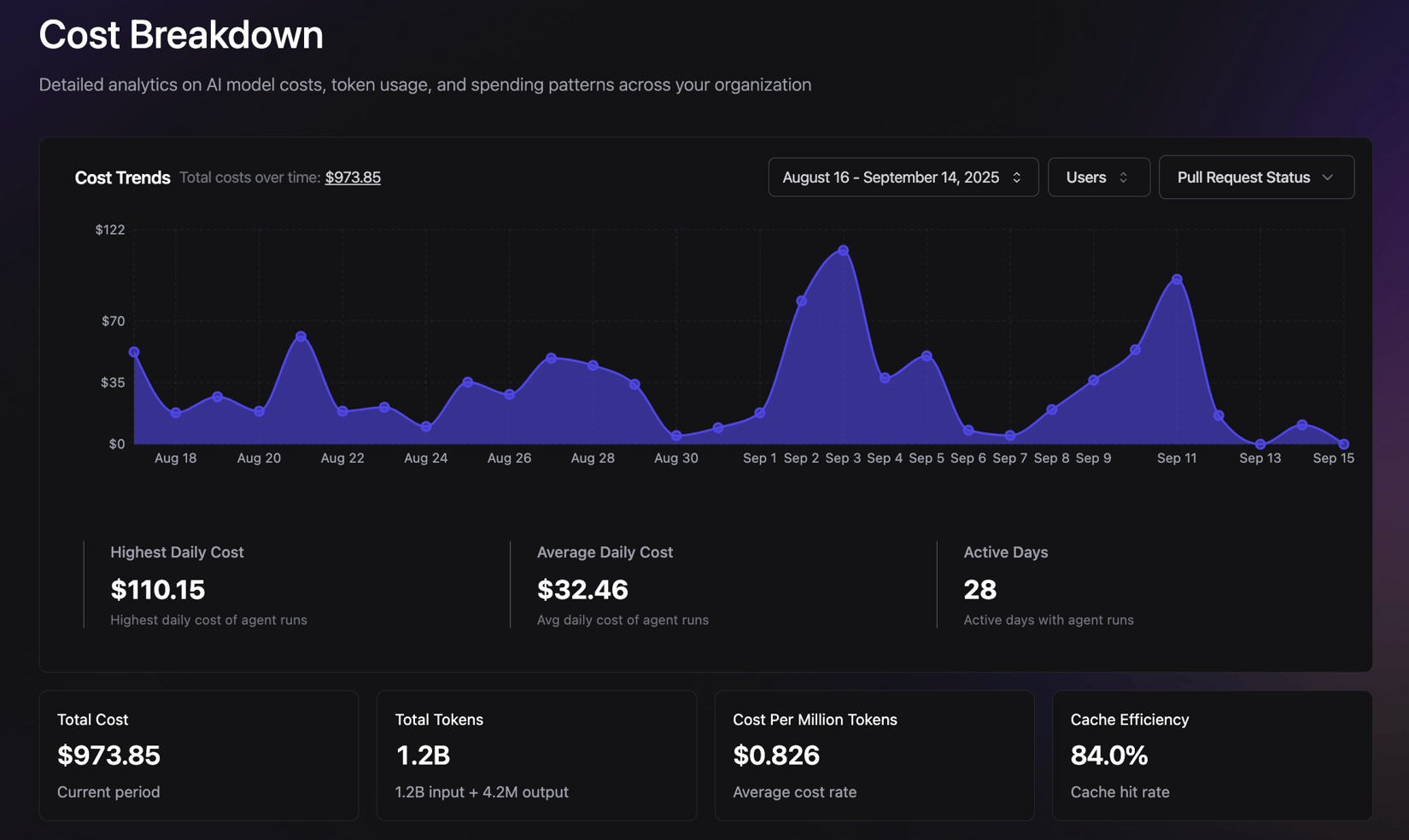
The dashboards are not decoration. If an agent costs less on paper but floods senior developers with cold, overconfident diffs, the labor has merely moved. Cost per task, acceptance rate, retry rate, escaped defects, and review time belong in the same conversation. Codegen's analytics are a reason to consider the platform, provided a buyer actually uses the evidence to narrow the agent's remit.
What sits under the floorboards
The historical platform was more than a prompt wrapped around a model. Its open-source code manipulation work used Tree-sitter to parse abstract syntax trees, rustworkx and Python to build multi-file graphs, and precomputed relationships for fast symbol, dependency, usage, and call-graph lookups. The public SDK installs as a Python package; a CLI could start runs, pull agent branches, and wrap Claude Code with OpenTelemetry traces. The repository remains public under Apache 2.0.
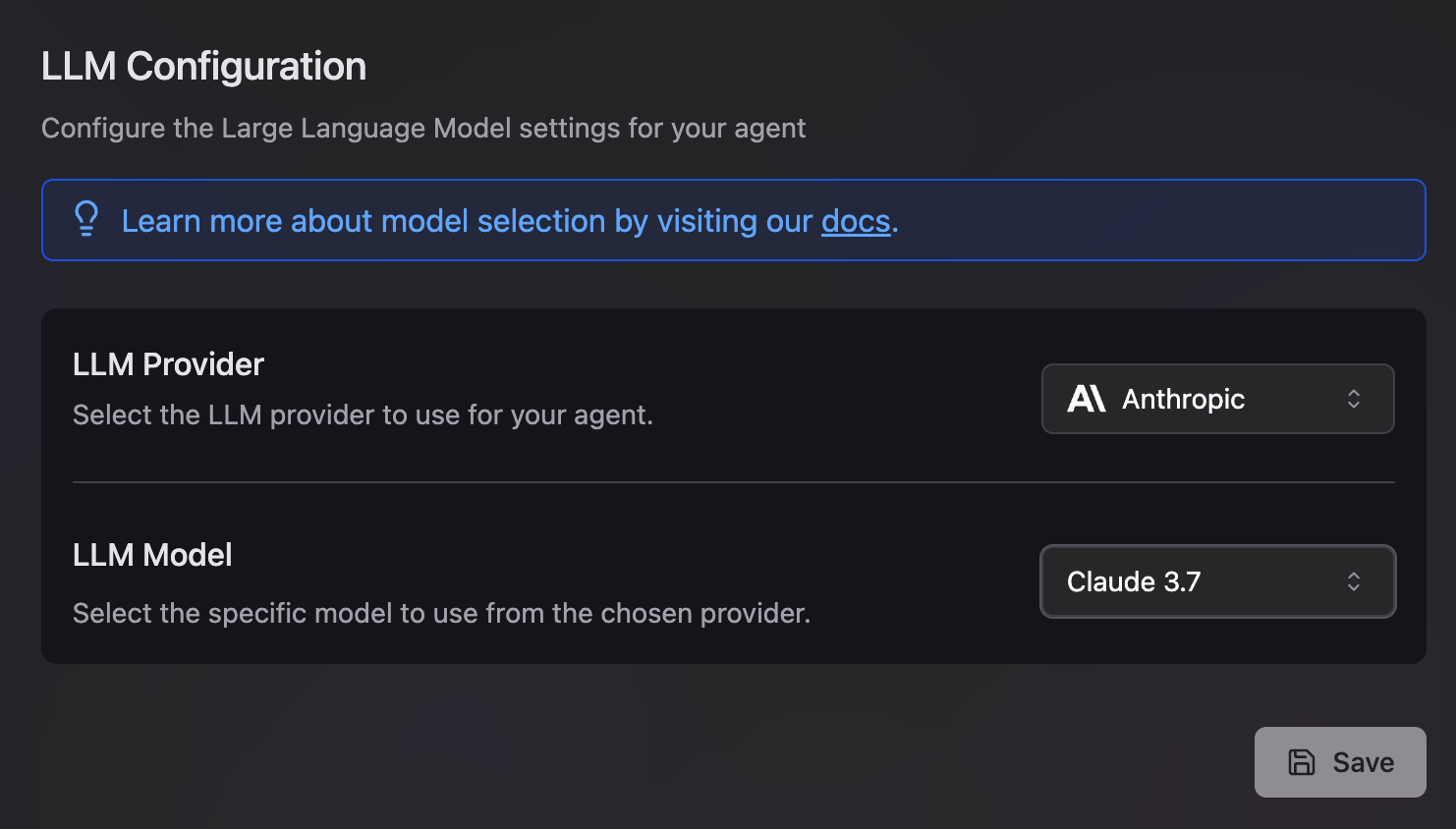
Model choice was configurable rather than proprietary. Documentation listed Anthropic, OpenAI, Google, and Grok, with custom keys and base URLs for some enterprise arrangements. It recommended Claude 4 Sonnet at the time because Codegen's prompts had been tuned around it. That recommendation belongs to the legacy documentation, not a guarantee about today's ClickUp package. Buyers should ask which models, retention terms, data regions, and routing controls are actually included in their proposed deployment.
The buy, try, or walk table
| Product | Natural home | Good fit | Main tradeoff |
|---|---|---|---|
| Codegen | ClickUp task to governed PR | Enterprise teams already running work in ClickUp | Sales-led pricing and platform dependency |
| Cursor | AI-native editor | Developers who want assistance while coding | Workflow governance lives elsewhere |
| Claude Code | Terminal and IDE | Hands-on agents with strong developer control | Teams must assemble their own operations layer |
| Devin | Autonomous task workspace | Delegating defined backlog work | Context and governance differ by team setup |
| GitHub Copilot | Editor and GitHub | A broad, familiar starting point | Less focused on ClickUp-native orchestration |
Codegen lists enterprise pricing through ClickUp and no public self-serve rate. That immediately rules out curious solo developers and most small teams. The free, open-source SDK is useful to builders, but it should not be confused with the managed product, its support, compliance controls, or current availability. Product Hunt offers a charmingly small sample: one review, five stars, praising the Slack approach. One happy reviewer is a postcard, not a census.
Where the seams show
The ClickUp requirement is both the product's advantage and its chief constraint. A team on Jira or Linear can admire the architecture, but the current offering reserves its fullest context for a different work system. Migration cost belongs in the price even when it is absent from the invoice. The public site also makes evaluation awkward: current product pages, historical documentation, an open-source SDK, and the new editorial directory sit under one name. A buyer has to keep asking which screen belongs to which era.
There is a deeper limitation shared by every coding agent. Codegen's FAQ says its LLM-based understanding is not formally exact and may miss edge cases that a compiler or linter would catch. Sandboxes contain execution; they do not contain bad judgment after a merge. Audit trails explain what happened; they do not prove the change was right. Those are useful controls, but only when paired with tests, branch protections, restrained permissions, and reviewers who understand the touched system. If the sales demo skips that human workload, ask to see it again.
Questions to carry into the sales call
Start with the exit, not the demo. Ask how your code, traces, credentials, and task history can be exported; the standalone shutdown makes portability a practical concern. Then ask for acceptance rates broken down by your task types, not a blended success number. Require a live run against a representative repository. Measure review minutes and retries alongside agent cost. Confirm whether sandboxes have network access, how secrets are scoped, where logs live, which actions require approval, and how quickly a compromised integration can be revoked.
Also decide who may assign engineering work. Letting product, QA, or customer-success colleagues initiate a fix can compress a valuable feedback loop. It can also create a shadow queue of plausible patches. A sensible rollout begins with low-blast-radius work: documentation, tests, narrow bugs, dependency chores, and well-specified interface changes. Require human approval, protected branches, test gates, and a named owner. Expand only after the numbers and the reviewers agree.
Buy the control room, if you already own the building.
Codegen fits a ClickUp-centered engineering organization that has moved beyond individual AI assistants and now needs assignment, isolation, traces, review, and governance. The idea worth buying is attaching code generation to the messy context where work is requested and judged. Everyone else should begin with a self-serve coding agent and learn what their review process can safely absorb.
The acquisition gives Codegen a curious afterlife. The old app disappeared, while its worldview spread into a much larger work platform. That worldview is worth keeping: the code is only one artifact. A useful agent also needs the request, the reasons, the constraints, a safe place to work, and someone awake enough to say no.