Devin makes the most sense when your engineering backlog has begun to resemble a kitchen drawer: one expired dependency, six flaky tests, a migration nobody volunteers for and an old service that only Gary understands. Cognition's agent takes a ticket, opens a cloud workspace, reads the repository, writes and tests code, then brings back a pull request. You do not sit beside it accepting autocomplete suggestions. You send it away to work and check the result later.
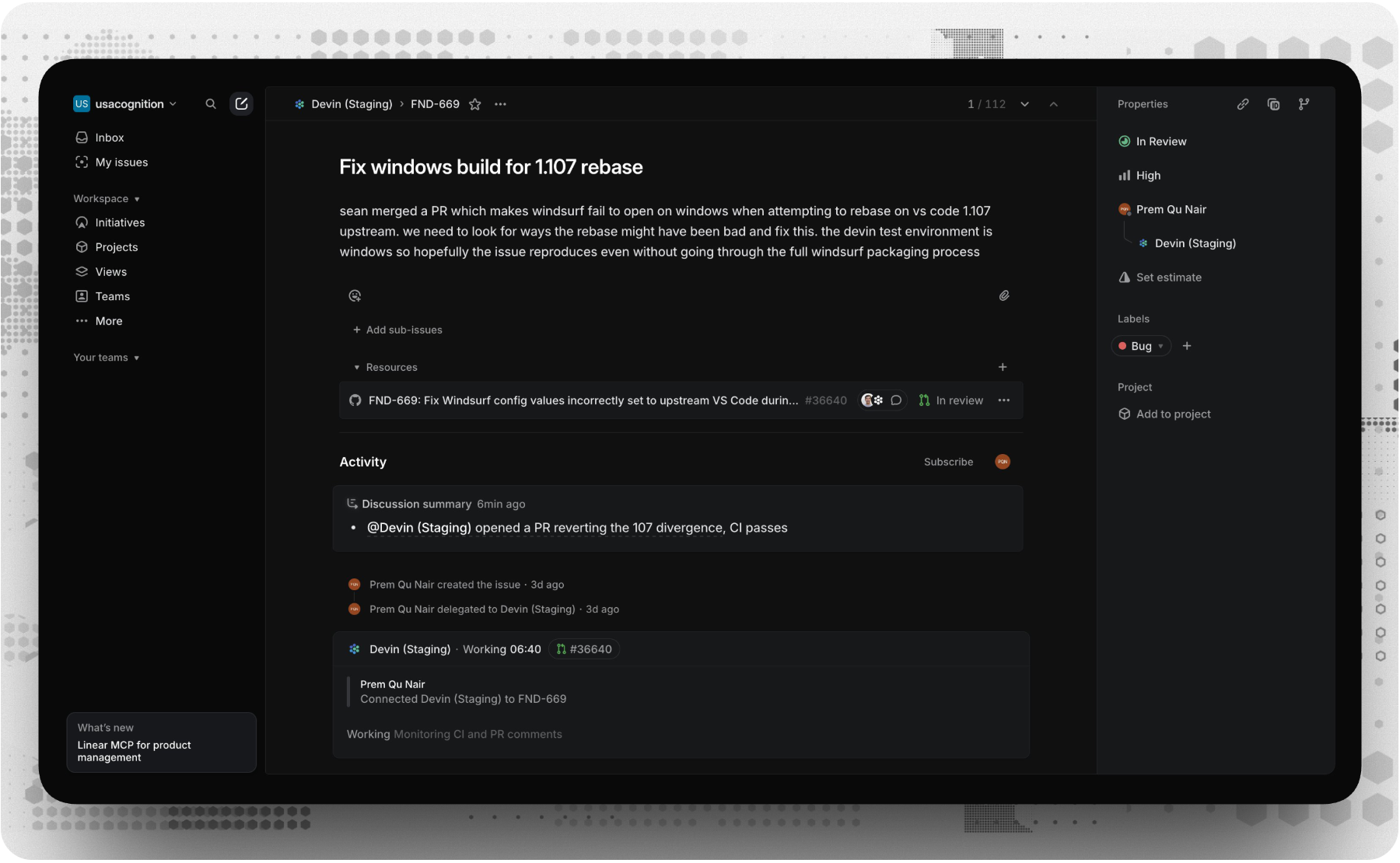
That difference is the whole pitch. Cursor, GitHub Copilot and the usual editor assistants amplify the person at the keyboard. Devin is meant to create another lane of work. It can start from the web app, terminal, API, Slack, Teams, Linear or Jira. A bug report can become an investigation; an alert can become a patch; a row of nearly identical repositories can become a fleet assignment. The product is for teams with enough established code and process that the agent has patterns to copy and tests to satisfy.
Solo developers can still find value, especially now that there is a free tier and a $20 Pro plan. Yet Devin's clearest advantage appears inside organizations where small, parallel tasks pile up faster than humans can clear them. If your problem is deciding what to build, discovering the right abstraction or negotiating a fuzzy requirement, hiring more compute does not settle the argument.
The job description, minus the cape
How the handoff worksA Devin session resembles an asynchronous assignment. The agent receives repository access and instructions, makes a plan, uses a shell and editor, searches documentation, runs tests and can operate a browser or Linux desktop. Devin 2.2 added screen-recorded testing for desktop applications, along with self-review and autofix before a human opens the PR. Its newer interface puts planning, implementation and review in one trail, which matters because an agent's work is only useful when somebody can inspect what happened.
- Write a bounded ticket with examples
- Let Devin inspect, change and test
- Review the plan, recording and diff
- Merge, correct or turn success into a playbook
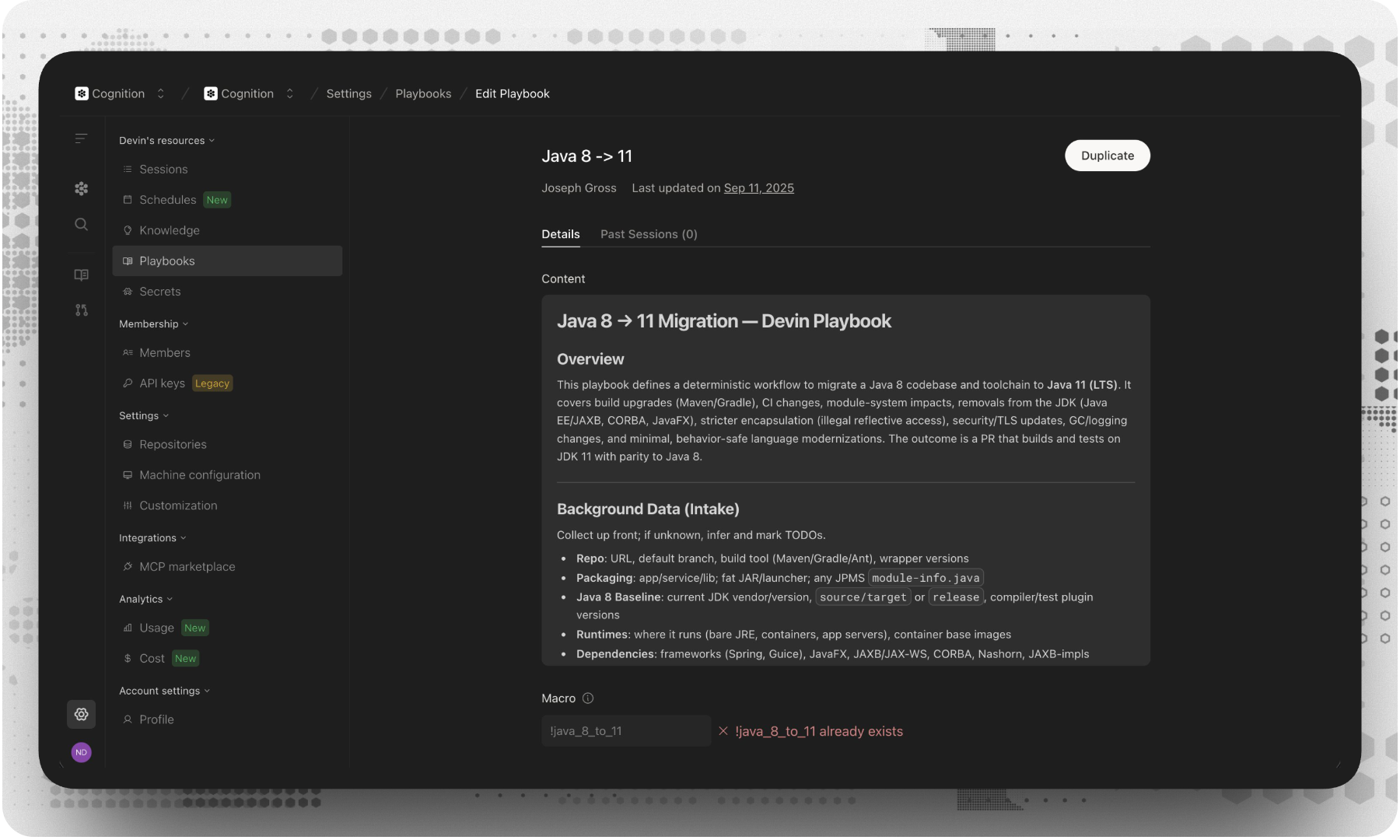
Around that core sit three useful pieces. Ask Devin answers questions about an indexed codebase. DeepWiki produces linked repository documentation and architecture diagrams. Devin Review reorganizes a pull request into logical groups, detects moved code, flags possible bugs and lets reviewers ask questions against broader code context. Playbooks capture a successful recipe so the next session starts with your team's rules instead of rediscovering them.
Where Devin earns its chair
Cognition's unusually candid 2025 self-review called Devin senior-level at codebase understanding and junior-level at execution. That is a better buying frame than the launch phrase “AI software engineer.” The agent is good at learning the contours of large systems, producing first-pass documentation and repeating an approved change across many repositories. It is less dependable when the desired outcome lives in a product manager's head.
The numbers require labels. Cognition says Devin had merged hundreds of thousands of PRs across thousands of companies by November 2025. It reports that Litera raised test coverage 40 percent and shortened regression cycles 93 percent; Nubank reported dramatic gains on a carefully prepared migration. Those are vendor or customer accounts, useful as examples rather than universal promises. Opened PRs are not value. Merged, correct changes that save more review time than they consume are value.
“The most important metric is not code written. It is human attention returned.”
The early counterexample matters too. Answer.AI spent a month trying 20 real tasks in late 2024 and reported only three successes, with three inconclusive and 14 failures. Testers described sessions following impossible approaches for too long. That study predates two substantial rebuilds, computer-use verification and newer models, so it cannot grade today's product. It does expose the durable risk of autonomous tools: a wrong direction can burn hours without the little facial cues that tell a colleague to ask for help.
Choose work with visible finish lines
A good first ticket has a narrow surface area, an existing implementation pattern and acceptance criteria a machine can run. “Update these services from Java version A to B and pass this test suite” is promising. “Make onboarding delightful” is an expensive mood board. Devin's browser and desktop use can check visual flows, but taste still needs a spec: component structure, spacing, colors, screenshots and exact states.
| Assignment | Fit | Why | Human checkpoint |
|---|---|---|---|
| Dependency or framework migration | Strong | Repeatable pattern, broad parallelism, testable result | Approve one exemplar before the fleet runs |
| Tests and security fixes | Strong | Clear scanners, coverage targets and CI feedback | Inspect test logic and security impact |
| Brownfield feature | Fair | Existing code supplies conventions to imitate | Specify edge cases and review architecture |
| Greenfield product design | Weak | Success depends on changing judgment and taste | Keep product decisions with the team |
For a trial, collect ten to twenty tickets that represent your actual backlog. Include easy, medium and awkward cases. Record total cost, elapsed time, interventions, review minutes, retries, defects and whether the work merged. Compare that with a human baseline. Do not improve the test set after seeing the results. A cheap agent that creates review debt is not cheap; a costly run that clears a week-long migration may be an easy decision.
The bill has two meters
Devin now has a sensible entry ramp. Free offers limited individual use. Pro costs $20 a month; Max costs $200 and raises the weekly quota. Teams starts at an $80 monthly minimum, with $40 full seats and free flex seats that draw from shared on-demand credits. Extra usage costs extra, and AI-powered review can consume those credits separately. Enterprise accounts keep custom, Agent Compute Unit pricing.
Subscription price is only the first meter. The second is management time. Someone must prepare access, select tasks, encode house rules, watch early sessions and review output. Teams that already write crisp tickets and maintain tests have built the rails Devin needs. Teams hoping the agent will repair a chaotic process may simply automate the chaos at impressive speed.
Desktop, Fusion and the model question
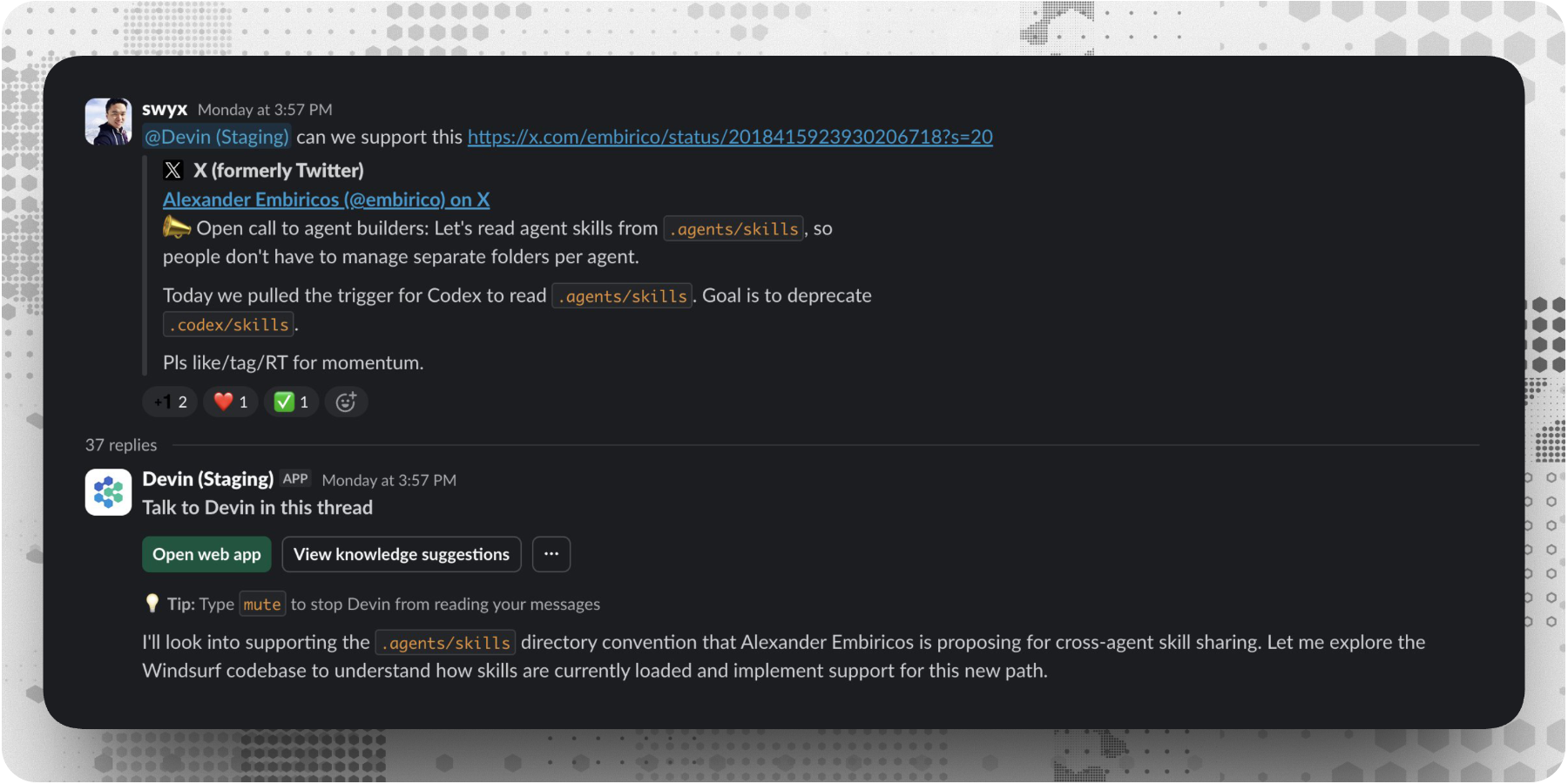
Devin Desktop is the next generation of Windsurf, the IDE Cognition acquired in 2025. It combines a full editor with an Agent Command Center for local and cloud agents, shared Spaces and pull-request review. Support for the Agent Client Protocol means compatible third-party agents can sit beside Devin. This shifts the product from a lone remote worker toward a dispatch desk where an engineer scopes, delegates, checks progress and makes the final edit.
Underneath, Devin is not married to one model. Devin Fusion runs a stronger main agent with a cheaper sidekick and can switch models during a session. Cognition's updated FrontierCode results report comparable benchmark performance at up to 60 percent lower cost than selected frontier-only configurations. The architecture is more interesting than the headline percentage: reserve expensive judgment for planning and final review, hand mechanical work to the sidekick, and upgrade when the work becomes thorny.
Competitors attack the same queue from different angles. Claude Code and OpenAI Codex are strong terminal and cloud-agent options. Cursor and GitHub Copilot keep the human closer to the editor. Google's Jules, Amazon Q Developer and open-source OpenHands fill out the field. Devin's distinction is the surrounding operations layer: repository knowledge, integrations, playbooks, parallel sessions, review and an IDE designed as an agent control room. The right choice depends less on a benchmark crown than on where your tickets begin and how your team reviews them.
Our verdict: hire the workflow, not the mythology
Best for: teams with mature repos and neglected queues
Buy when repeatable, reviewable work is abundant. Wait when requirements shift hourly, tests are scarce or nobody has time to inspect the diff.
Devin's viral debut invited the wrong interview question: can this replace a software engineer? The more useful question is whether your engineers can turn parts of their work into reliable assignments. If they can, an agent that reads the repo, crosses tools, runs in parallel and returns evidence can recover real attention. If they cannot, autonomy mostly increases the distance between an unclear request and its consequences.
Start small. Give Devin a task you understand well enough to reject. Put the acceptance test in the prompt. Check the plan before a long run, insist on a recording for interface work, and read the code rather than the confident summary. When a session succeeds, capture the recipe as a playbook. Then widen the lane. The winning mental model is not a synthetic prodigy in a hoodie. It is a queue worker with a terminal, infinite patience and a manager who has learned to write down what “done” means.