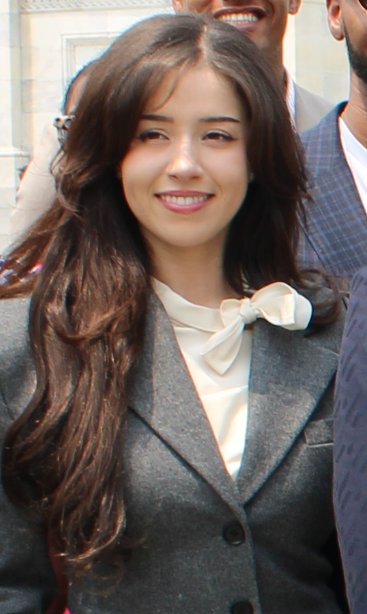
From Kijiji to Cultural Force
In 2013, a nineteen-year-old chemical engineering student in Ontario took $250 to the Canadian classifieds site Kijiji and bought a secondhand PC. She'd just hit Platinum rank in League of Legends. The Twitch account she made that year was called Pokimane. By 2017, it had 450,000 followers. By 2026, 9.4 million.
Imane Anys grew up speaking French at home in Quebec, then moved to Ontario at four. Her parents had immigrated from Morocco; she grew up Francophone, then added English in school, then Moroccan Arabic as she got older. She enrolled at McMaster University to study chemical engineering - rigorous, respectable, the kind of career a family from another country might understandably point you toward. She left to stream full-time.
That decision looks obvious now. At the time it required a particular kind of nerve. Pokimane's early streams were gaming commentary - League of Legends runs with chat, a young woman at a desk who was funny and direct and good at the game. It turned out that was enough. In fact, it was rare. She earned a Shorty Award for Best Twitch Streamer in 2017, the same year she cracked the platform's top 100 most-followed.
The next chapter was Los Angeles. She joined OfflineTV, a content creator house she helped co-found, where streamers like Disguised Toast, LilyPichu, and Scarra lived and worked together. The experiment - part group house, part studio, part community - produced years of collaborations, inside jokes, and viral moments. She would describe the logic plainly: "It's not fun being a streamer and living alone, so we decided to come together in a way so we not only keep each other company but we can also collab and actually do good work."
In October 2020, Pokimane and Representatives Alexandria Ocasio-Cortez and Ilhan Omar played Among Us live on Twitch to encourage voter registration. The stream pulled hundreds of thousands of concurrent viewers. It became one of the most cited examples of gaming culture and political outreach finding genuine overlap - not gimmick, not stunt, but a room where the game itself was the common ground.
Forbes 30 Under 30 came in 2021, the same year she had a cameo in Ryan Reynolds' Free Guy alongside several other streamers. She also co-founded RTS, a gaming talent management firm backed by Endeavor (formerly WME). When she quietly sold her stake a few years later - reportedly for at least six figures - she described it without drama. That's the pattern: enter, build, exit on her own terms.
In November 2023, she launched Myna, a direct-to-consumer snack company. The cookies cost $28 for four. Twitter had opinions. Pokimane responded to critics with the line "math is hard when you're an idiot" - which went viral in its own right, became a meme, and probably sold more cookies. By 2025, Myna had rebranded with new packaging and three crowd-sourced flavors, and saw a 28% increase in site traffic. The company runs an affiliate creator club offering above-average revenue shares to micro-influencers.
She departed OfflineTV in May 2023 - a "graduation," as the community called it. She left Twitch exclusivity in January 2024, spreading across YouTube, TikTok, Instagram, and streaming platforms simultaneously. In September 2024, she launched "Sweet n Sour," a podcast with LilyPichu. Sixty-eight episodes later, in April 2026, they wrapped it up. That is its own record: a podcast that had a beginning, a middle, and an actual end, run by creators who knew when to stop.
In June 2025, Pokimane participated in the Creator Economy Caucus launch in Washington, D.C. - the kind of institutional recognition that would have been impossible to predict in 2013 when she bought that Kijiji PC. That same year, she was also nominated for Best Streamed Collab at the Streamer Awards, alongside a collaboration with K-pop group KATSEYE.
She has been consistent on one subject: burnout. "Streaming 12 hours straight, 7 days a week will absolutely lead to burnout," she has said. "I need time to reset in order to be a happy, functioning human being." When managers pushed her toward 8-10 hour daily streams early in her career, she pushed back. In an industry that routinely sacrifices creators to the algorithm, that's not a wellness stance. It's a business model.
By November 2025, she was writing on X: "I miss when streaming was about gaming, not just drama baiting and clip farming." The platform had changed around her. She'd stayed. The audience - 9.4 million Twitch followers, 7.3 million on TikTok, 6 million on Instagram, 4 million on X - had stayed too.