Consider the dog that has never bitten anyone. Its vaccinations are current. Its owner is careful. Then a rental application asks for its breed, and the conversation is effectively over. A category has swallowed an individual. John Bradford’s account of founding PetScreening in 2017 begins with that objection: a breed label alone should not settle the question of whether an animal belongs.
- Digital profiles put pet records and owner disclosures in one place.
- Property managers get the core service free; household pet owners pay annually.
- Assistance-animal requests follow a separate review process, without a profile fee.
- An $80 million funding round helped finance the next expansion.
Bradford’s company made the individual legible to the leasing office. A pet gets a digital profile: photographs, vaccination records, behavioral history and information about its owner. The property gets an organized record. The important customer insight is almost comically mundane. Someone has to collect this material, remember where it went and retrieve it when a question arrives.
The first problem was the filing cabinet
PetScreening’s pitch lands where scattered documents meet busy employees. Its platform combines pet records, policy acknowledgments and incident reporting. It also gives residents without animals a free profile acknowledging the property’s rules. That last detail reveals the ambition: manage the building’s policy, including the person who might start fostering a dog next month.
“It was a very manual and very cumbersome process.”
Katie Ashley / Fortis Property Management
Company-published customer testimonial
Ashley’s account identifies what broke down: the daily administration. The company sells relief from repeated work, alongside the promise of more consistent decisions.
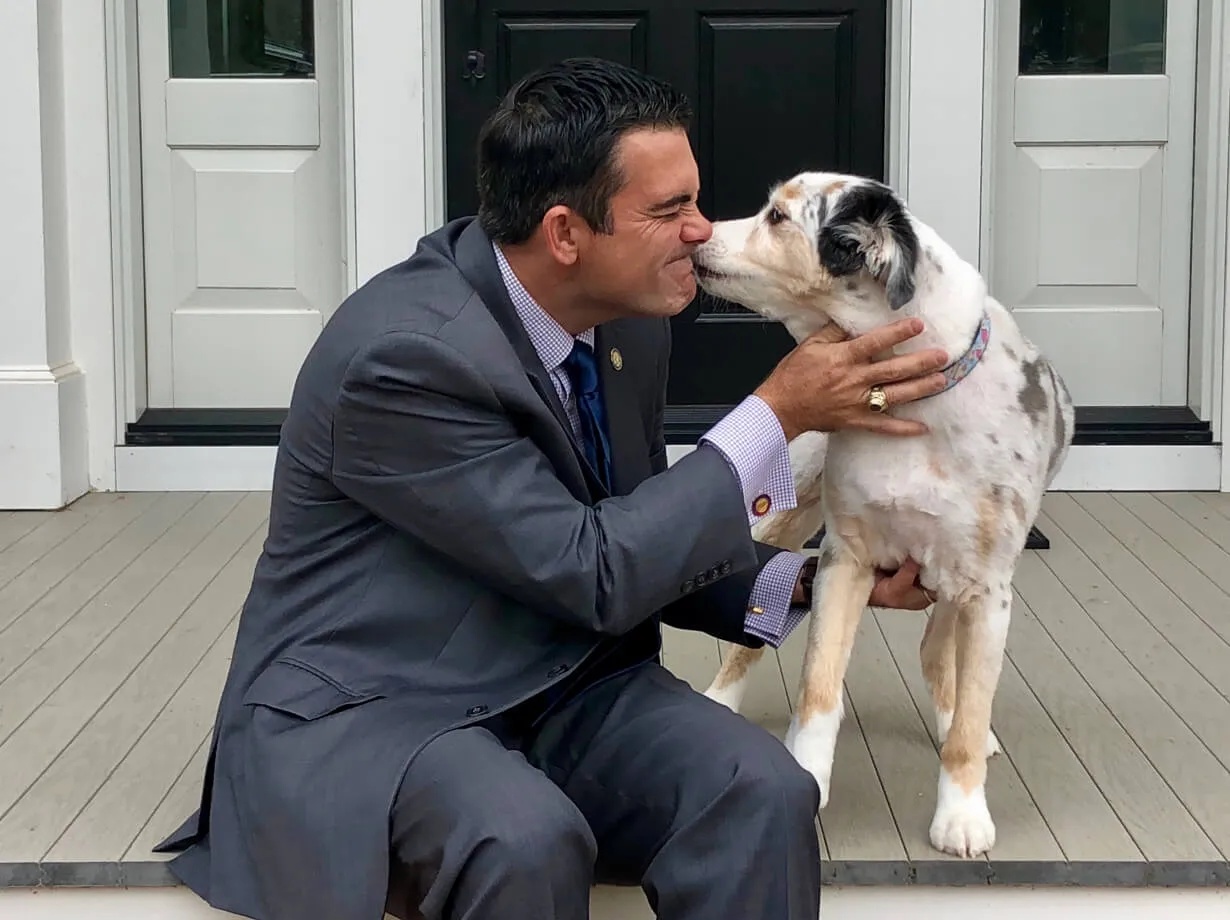
Inside that process sits the FIDO Score, a proprietary housing-related risk indicator expressed in paws. The inputs include the animal’s characteristics and history, its owner’s care and the property’s restrictions. A higher paw score indicates potentially lower risk. The score is an input to the landlord’s decision; PetScreening says it does not approve or deny household pets.
Property rules shape the result. A restriction can also produce a zero-paw score.
This makes the product more interesting than a digital permission slip. It could help an operator consider individual animals more carefully. It can also encode an existing breed or weight restriction. Better records create room for better judgment. Whether the policy becomes more welcoming still depends on the person writing it.
Free has two sides
The core long-term rental service costs property managers nothing. Household pet owners fund it through annual profile fees. Official onboarding materials list $30 per profile by card or $25 by ACH, with a further $5 discount for early renewal. Those charges are separate from whatever pet rent, deposit or fees a property imposes. Checkout terms deserve attention.
ACH / card, published onboarding prices
That arrangement removes a purchasing obstacle for the leasing office. It puts a new expense in the resident’s moving budget. Both things are true. For an operator copying the approach, the practical lesson is to explain the fee before an applicant encounters the payment screen. Administrative convenience feels different depending on which side of the invoice you occupy.
In June 2021, PetScreening raised a $3 million Series A led by Grotech Ventures. In March 2025 came an $80 million Series B led by Volition Capital and Guidepost Growth Equity. The stated uses were product development, hiring and expansion. The company’s website now reports more than 7.6 million units or doors and 3.5 million generated profiles. Those are company-reported reach measures, not counts of paying landlords.
A request is not a pet score
Assistance-animal accommodation requests take another route. PetScreening’s review team examines submissions and supporting documentation, contacts healthcare providers to check authenticity and shares a recommendation. The company describes an interactive process for insufficient requests. Its help center says the property management team makes the final decision. These profiles are free.
- 01 / SubmitResident sends the request and supporting material.
- 02 / ReviewReviewers examine documentation and seek clarification.
- 03 / RecommendA recommendation goes to the resident and manager.
The distinction matters because an accommodation request cannot sensibly be treated as an ordinary pet-pricing exercise. It also exposes an operational limit: verification can depend on a third party responding. PetScreening acknowledges that assistance-animal reviews can take longer. Moving the paperwork into software does not make every unanswered question disappear.
The dog that wasn’t on the list
In July 2025, PetScreening launched PetComply.ai, a free feature for managers intended to identify indications of undisclosed pets and prompt residents to register them. The company had moved further into compliance monitoring. Its launch announcement described roughly 3,600 pet owners declaring previously unregistered animals during a 60-day study involving four large property managers. That company-run result is evidence of a particular rollout, not a universal forecast.
Distribution matters here as much as detection. PetScreening integrates with property-management systems, and its December 2025 Boom partnership puts animal-screening results inside BoomScreen reports. The useful idea for other software businesses is concrete: put the specialized record where the customer already reviews the application. Another dashboard helps only if someone opens it.
A passport, and a way home
The May 2025 OwnerRez partnership extended the model into vacation rentals. BetterPet Passport stores an animal’s details; a property-specific application becomes a “visa.” The announcement specified standard pricing of $10 per pet per booking after its launch promotion. Same information problem, different purchasing rhythm.
There is a softer extension, too. PetScreening developed FidoAlert and TabbyAlert, a free lost-pet network using identification tags and local text alerts. Its published workplace culture includes pets at its renovated mill office. Meanwhile, its March 2026 housing report surveyed 673 industry professionals, and August brought a fifth consecutive Inc. 5000 appearance. The business keeps growing around a small, consequential question: what does this property actually know about the animal living here?
Follow the paper trail
Explore PetScreening, its blog and integrations. See the 2026 housing report and FidoAlert.
LinkedIn / X / Instagram / Facebook
Watch the YouTube office tour, watch Bradford’s VPM interview on YouTube, or request a product demonstration.