Peter Melby got a helicopter in the mail. It was 2013, and a vendor had sent the Greystone president a toy, packaged with a personal card. Melby rounded up colleagues and began assembling it. Then came the missing part: the remote control. A letter explained that he could have it after booking a meeting. Somewhere, a marketer may have been admiring a conversion rate. In Denver, a potential customer was looking through the trash for a controller that had never arrived.
Melby wrote a complaint on the company blog. He liked toys; he disliked having his delight converted into leverage. His suggested alternative was wonderfully literal: send the other recipients their missing remotes, without conditions. Let them remember a useful gesture. The story is small, funny and revealing. Long before he became CEO of New Charter, he was asking how a business transaction felt from the other side of the desk.
The boss’s intentions have a short range
Years later, an employee’s unexpected resignation gave that question a more personal consequence. Melby had assumed that caring about people would translate into being a good boss. A valued employee leaving abruptly challenged the assumption. The workplace he intended to create and the workplace someone else experienced could be different places.
“Good intentions are not enough.”
Peter Melby
That admission carries weight because it leaves the responsibility with the leader. A founder can feel misunderstood and still need to change how the company works. Trust has to travel farther than the distance between the boss’s desk and the next chair. Growth adds people who were absent for the original conversations, and managers who must translate those conversations into decisions.
An apartment, then a company
Greystone began in 2001 with Melby and Jesse Armstrong. Its early base was Armstrong’s apartment. By the time the company announced growth financing in 2016, that address belonged to a history of office moves, added locations and acquisitions. The apartment origin is a useful corrective to the scale of Melby’s later responsibilities: there was a time when having an actual office counted as a milestone.
His own account of entering the business is equally unvarnished. He left college because computers interested him more than homework, and people were willing to pay him for help. He resists polishing that decision into foresight. “Wow, I was a visionary” is the retrospective story he explicitly rejects. Entrepreneurship, in his telling, included realizing that a decision might have been a mistake and then working to make it worthwhile.
The early difficulty was practical. Pricing required confidence. Hiring required understanding what customers needed from the person who showed up. Technical ability alone could leave a service business short of the accountability clients expected. Those lessons help explain why his later language about management concerns behavior so often: what people agree to do, what they can decide, and who owns the result.
Greystone
New Charter
CRO
CEO
Let the decisions happen in the room
By 2013, Melby was experimenting with how his team met. Instead of separate weekly conversations with each direct report, the group met together and made decisions where everyone could see them. He described better delegation, less confusion and greater trust. It was a modest change in format with a considerable implication: people could hear the same decision being made.
He also talked about employees moving into roles that had not existed when they were hired. A growing company could give people somewhere new to go. His enthusiasm for that individual progress sat beside a less solemn disclosure. His children had given him a LEGO DeLorean from Back to the Future. It lived in his office so his son would not take it. Even a workplace built on trust apparently needed a policy for small plastic time machines.
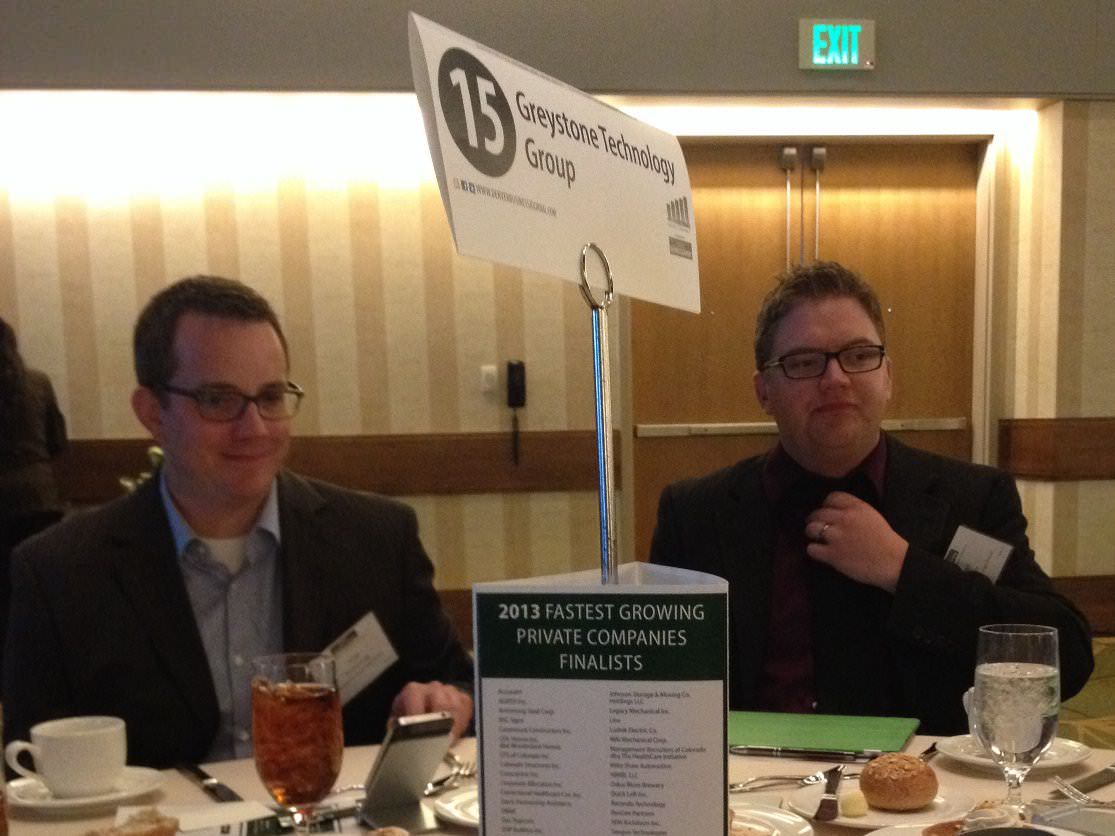
The competitor in the wrong room
In 2008, Melby met Nick Hemmert in an executive leadership group designed to avoid putting overlapping businesses together. The introductions revealed a scheduling error with possibilities. Their companies were trying to do similar things in similar ways. They decided there were enough dissatisfied IT customers to share experience without taking each other’s business.
They kept talking. By 2014, the competition that mattered was increasingly for employees: both businesses wanted the same kind of IT professional. Greystone acquired Hemmert’s Ability To that year. Hemmert joked about the companies being two blocks apart and about Melby taking his team members. The teasing makes the relationship easier to picture than a transaction announcement would.
Melby described a combination of strengths. Ability To would add capabilities for existing Greystone clients; Greystone would give Hemmert more structure and resources to serve his own. This was an early instance of a question that would return at New Charter: what can people do together that their separate organizations make difficult?
A little more room to think
Greystone’s ambitions also crossed internal boundaries. In 2015, its IT and web operations came together under one brand, encompassing managed IT, consulting, digital marketing, web development and mobile development. The company described 65 employees across Denver, Fort Collins and Boulder. One charmingly concrete example of collaboration involved the IT team walking ten feet to talk to the web team.
A year later, Greystone announced $2 million in royalty-based growth capital from Cypress. The financing would support its service model, broader markets and new capabilities. Its approach assigned clients dedicated groups of engineers, consultants and business technology advisers. Familiarity with a client’s circumstances was part of the service itself. The company was trying to grow access to expertise without making the client start every conversation from the beginning.
By his 2017 conference talk, “Boss or Babysitter?”, Melby was describing the move from micromanagement toward a team of more than 85 people who could hold themselves accountable. Greystone associated that change with reaching $10 million in annual revenue. The talk’s title identified an occupational hazard of founding a business: being indispensable can become a tedious full-time job.
His later account gives the management approach four parts: an agreement about behavior, room for honest conversations, autonomy within clear boundaries, and empathy that can withstand difficult decisions. Each addresses something a friendly intention leaves unresolved. Employees need to know how to act, where they can decide and how to raise a problem.
Citizenship
Agree on how people act.
Candor
Make honest conversations possible.
Directed autonomy
Define boundaries. Own outcomes.
Courageous empathy
Keep care in difficult decisions.
Recognition followed his work at Greystone. In 2016 he was named to Denver’s 40 Under 40 and among Colorado’s Top 25 CEOs. The company received repeated workplace and growth recognition. His older biography also records board service with Bayaud Enterprises, whose employment work supports people facing barriers to meaningful jobs. The record reaches beyond computers to the circumstances in which people can contribute.
More companies, the same awkward question
Greystone joined New Charter in 2020. Melby became New Charter’s chief revenue officer in 2021, then CEO in February 2024. Founder Mitch Morgan moved to executive chairman, with attention to acquisitions and strategy. The leadership transition was announced at the company’s Nashville kickoff. A founder who had built one service business was now responsible for a platform bringing many businesses together.
The appointment expanded an existing partnership. Morgan said he and Melby had discussed the possibilities before New Charter became a reality. Melby’s task was to help operating leaders retain stability while the larger business invested in change. Entrepreneurial judgment remained valuable; shared resources had to make that judgment more effective.
He also identified a problem that success supplies in abundance: too many worthwhile ideas. The organization would have to choose, sequence and execute them. He called himself a simplifier. That description fits a CEO whose work increasingly involves deciding which complexity other people should have to carry.
Later in 2024, he argued that changing strategy while results still looked good mattered. Waiting for a decline could leave too little time. He wanted vendors to understand the needs of New Charter’s customers, and acquisitions to strengthen relationships and capabilities. The missing helicopter remote has a distant echo here: the supplier’s preferred transaction may be a poor substitute for understanding the person receiving it.
Teaching the help desk a bigger job
In February 2025, New Charter acquired Orchestrate AI Labs. Its co-founder and CEO, Ryan Barton, joined as chief innovation officer. The deal added a team and technology intended to bring AI into the delivery of managed services. Melby described tools supporting employees and clients. The purchase put resources behind his argument that IT service would need a different operating model.
In 2026, his explanation grew more specific. New Charter had introduced internal initiatives for service automation, ticket resolution and assisting technicians. Michelle Curtis joined as chief revenue officer. The plans covered automated core services, more advanced consulting and conversations with executives about AI strategy. These were plans for how service should work, with customer outcomes as the test.
“The future is about fixing business problems.”
Peter Melby
On June 8, 2026, New Charter announced an expanded AI portfolio and an evolved brand. Enablement, tools, custom development and security were its four stated areas. The company intended clients to access those capabilities through the local teams they already knew. For Melby, the ambition once again brings organizational design and personal familiarity into the same conversation.
Still willing to be the beginner
Melby joined GTIA’s board in 2025, with his term beginning May 1. At ChannelCon that July, he admitted that he had struggled to articulate the association’s value to service providers when considering the board position. He saw an opportunity for a community that could help providers lead change. Joining did not require pretending he had never been skeptical.
Outside work, he plays ice hockey, a sport he took up as an adult. It offers a fairly strict answer to the executive habit of carrying work everywhere. His warning: “Try thinking about work while you’re on the ice. You’ll pay for it.”
There is something fitting about a leader choosing an activity that makes distraction immediately expensive. Melby’s career has repeatedly returned him to the experience of the person doing the work or receiving the service. A good intention, an attractive technology, a clever sales tactic: each still has to survive contact with that person. The remote control belongs in the box.