A grocery label gives software very little room to be philosophical. The information has to be right, the printer has to cooperate and somebody is waiting to get on with the day. Peter Helander’s early technology work lived in that practical world. In the late 1980s, he was creating label software for grocery and meatpacking businesses at Alferi Communications. It was a modest-looking starting point for a career that would eventually encompass cloud services, cybersecurity and thousands of customers. It also supplied a useful discipline: the technology had a job to do.
Helander co-founded Heartland Business Systems and led it from its formation in 1992 until his retirement in October 2025. The Wisconsin business expanded through technical partnerships, hiring and acquisitions. Behind that long sequence of corporate events was a recurring concern with the people expected to make the machinery useful. He asked what employees needed from him and how they saw the work. Those are unusually portable questions. They remain serviceable even after the equipment has been replaced.
An economist among the label printers
His education offers an unexpected entrance to the story. Helander earned a Bachelor of Science in Agriculture at the University of Wisconsin-Madison, then a master’s degree in Agricultural Economics at the University of Arizona. Before the technology company, there was research into the economic life of communities.
In 1985, he and David L. Barkley published a study of commercial bank lending and nonmetropolitan economic activity. They examined loan and retail sales data from 27 Arizona communities between 1975 and 1980. Their question concerned direction: did lending lead local development, or did banks respond to economic activity already underway? Their results supported the latter relationship in the communities studied.
It is tempting to draw a straight line from an economics paper to a business career. Lives rarely provide lines that tidy. Still, the juxtaposition is worth keeping: the future technology executive had already spent time investigating how a local economy worked, and whether a plausible explanation survived examination. The label software came later, in another setting where the details mattered.
HBS’s beginnings had several stages. Its formation dates to 1992; a later acquisition and rebranding of Alferi Communications by Helander dates to 1994. The company’s roots were in software and the label business, before its offerings spread into the broader needs of organizations. A useful program could open a conversation about the next problem. Over time, those conversations became a much larger business.
- 1985Published economics research with David L. Barkley
- 1992HBS formed; Helander became President and CEO
- 2016Avastone consolidation announced under HBS
- 2025Retired as CEO; Jimmy Buddenberg succeeded him
The work of making room
Growth eventually changes a founder’s job. In August 2011, Helander appointed Ben Turner, a former GE Capital executive, as managing director of HBS. Turner took responsibility for HBS sales and operations, along with accounting and human resources functions across HBS and its sister businesses, Heartland Label Printers and Avastone Technologies.
Helander continued overseeing sales and operations at the sister companies while focusing on business development, strategic partnerships, mergers and acquisitions across the group. The division of responsibilities is a revealing piece of the story. Expansion required someone to run the work already in hand while someone else attended to what might come next. A founder’s attention, like a server’s capacity, has limits; the calendar is usually less polite about announcing them.
Another organizational choice followed in 2016. HBS announced an agreement to bring Avastone’s assets, people and customers into HBS. Avastone specialized in business applications, including Microsoft Dynamics, customer relationship management, collaboration and cloud work. Helander wanted customers to experience a single company providing consulting, design, expertise and delivery.
For the customer, that ambition had a plain meaning: fewer boundaries to navigate between a business problem and the people able to address it. For Helander, it meant bringing related capabilities into a common identity. The company was becoming more complicated internally while trying to make the experience of buying its services simpler.
“What do team members need from me?”
Peter Helander, on the questions behind his leadership
Security gets a seat at the table
As organizations depended more heavily on their systems, protecting those systems became part of the assignment. In September 2017, Helander appointed Larry Boettger Chief Information Security Officer. Boettger brought experience in risk assessment, compliance and security programs. Helander presented the appointment to the team as a step toward strengthening HBS’s security practice.
The appointment came with a title, a start date and a defined responsibility. Cybersecurity can be an expansive promise. A named leader makes the promise someone’s work. In Helander’s HBS, the service offering was developing alongside the leadership needed to deliver it.
The school and government business had its own specialists. When HBS received Cisco’s Public Sector K-12 and State, Local and Education partner awards in a December 2020 announcement, Helander singled out Greg Huza and the education sales and engineering team. He placed the recognition with the people doing the delivery. The awards belonged to the company; his response made the contributors visible.
Buying expertise, one team at a time
Acquisitions extended the same process. In June 2021, HBS announced an agreement to acquire certain assets of The NetGuys, a Minnesota provider of Cisco solutions. The transaction expanded HBS’s Minneapolis base and its voice, collaboration and networking practices. For existing customers of The NetGuys, it also opened access to a wider range of services.
Helander’s explanation emphasized technical staff and customer relationships. Geography mattered, but so did the people arriving with knowledge of particular systems and the organizations using them. An office on a map can be opened quickly. A team that knows why a customer’s network is arranged that way takes longer to assemble.
In December 2022, HBS announced plans to acquire Pratum, an information security firm. Its capabilities included consulting, assessments, risk management and security operations services. The agreement gave a specific direction to Helander’s interest in cyber defense: bring more of the necessary expertise into the business.
Midwest Computech followed in July 2023. The Missouri company had locations in Columbia and Sedalia. Helander highlighted its managed services practice, hardware as a service program and network operations center. The attraction was concrete. These were capabilities that could support a customer after an installation, through the recurring work of operating and maintaining technology.
Read together, the transactions describe a business broadening what it could take responsibility for. Networking, applications, security and ongoing support became parts of the same customer conversation. The acquisition announcements make more sense when read as an inventory of work the combined teams could now perform.
The telephone and the school board
Some of Helander’s practical contributions were smaller than an acquisition and easier to picture. Casa ALBA Melanie’s 2021 midyear report records a phone system he donated in memory of his mother, Peggy Helander. A telephone system is an unglamorous gift until an organization needs people to reach it. Then its usefulness is quite immediate.
His work with schools also extended beyond a sales slogan. In 2015, Helander and Tad Peterson appeared before Kewaunee’s school board to discuss technology services and products. HBS had been meeting staff, conducting surveys and assessing the existing network and equipment. Staff training was part of the discussion, too. The work started with an examination of what people already had and what help they needed using it.
Municipal networks were another part of HBS’s work. In March 2021, Des Moines considered an $83,812.32 purchase of Cisco network hardware from HBS to replace aging core equipment. The purpose was reliability and security for city operations. For the city, keeping that infrastructure running was part of keeping its services available. For HBS, the proposed purchase was the kind of precise assignment that lay behind the broader description of an IT services business.
A school board presentation, a donated telephone system, a city network replacement: these are different forms of a familiar task. People have something to accomplish. Someone has to make sure the equipment lets them accomplish it.
A company ready for another name on the door
HBS entered a new ownership phase in September 2022 through a partnership with A&M Capital Opportunities. Helander stayed in charge. He described the selection in terms of shared values and the resources to support further growth. Outside investment became another part of the company’s expansion, alongside its own commercial and technical work.
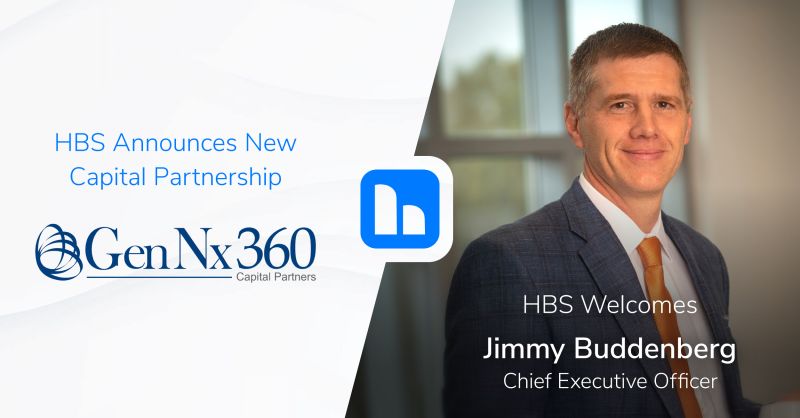
In October 2025, GenNx360 Capital Partners acquired HBS from A&M Capital Opportunities. Helander retired as CEO, and Jimmy Buddenberg succeeded him. At that moment, HBS reported more than 675 full-time employees, including over 400 certified engineers, and more than 3,200 customers. These are figures from the handover, a dated view of the organization he helped build.
Helander had been born in Green Bay on April 25, 1960. Away from the business, he enjoyed projects at the cottage with his wife, Pam, and their dog, Tally. The detail belongs beside the corporate chronology. It gives a little space back to the person whose working life can otherwise disappear into company names and transaction dates.
He died on March 16, 2026, aged 65. His family asked for contributions toward a foundation to be formed in his name supporting STEM education. The request looked toward students and future opportunities, extending the educational thread in his life. HBS colleagues remembered a leader and mentor who cared about enduring relationships.
A company can be measured in customers and engineers. A career can also be understood through the responsibilities someone accepted: a program that needed to work, a colleague who needed room to lead, an organization that needed a telephone. Helander’s story contains all three. The equipment changed repeatedly. The usefulness of paying attention to the person at the other end endured.
Follow the threads
- HBS website
- Peter Helander on LinkedIn
- The HBS company story
- 1985: the economics paper
- 2011: appointing Ben Turner
- 2016: the Avastone consolidation
- 2017: a security leader
- 2021: the Casa ALBA gift
- 2021: The NetGuys agreement
- 2022: the Pratum agreement
- 2023: Midwest Computech joins HBS
- 2025: the leadership handover
- Peter’s life and remembrance
- 2015: Kewaunee school board discussion
- 2021: the Des Moines network proposal
- 2020: Cisco public-sector awards
- 2022: the A&M partnership
- Helander’s approach to leadership
- HBS remembers its founder