At the Pentagon in May 2008, Dale Boehm had a question about one employee. He was among 14 entrepreneurs visiting Army leaders in Washington. The employee, an Army reservist at his Wisconsin technology business, was preparing for a second deployment to Iraq. Boehm was concerned about the family. He was also concerned about the work.
There is a whole category of management language available for this situation: continuity, capacity, personnel planning. Boehm’s description was more direct. Someone essential to his day-to-day operation would be away, and the company would have to make arrangements. Behind the arrangements was the uncertainty of waiting for news about a colleague.
“We’re going to have to figure out how to fill that gap while he’s gone.”
Dale Boehm, at the Pentagon, 2008
It is an unusually useful place to begin a technology executive’s story. No product demonstration is required. The dependence is visible. A business is held together by particular people doing particular things, and an interruption exposes how closely those things are connected. Boehm’s question brought the employee, the family, and the business into the same conversation.
Before the stack, the cables
Boehm is based in Waukesha, Wisconsin. Today he is president and CEO of Armorstack, a company bringing together technology infrastructure and security services. His working history reaches back into telecommunications, before the current emphasis on AI and integrated intelligence. That history includes executive roles at OneSecure and Qwest, along with work in the university classroom.
He received a certificate in telecommunications analysis from the University of Wisconsin-Milwaukee in 1994. From 2000, his activities included teaching TCP/IP, business-to-business e-commerce, and IP technology there. These subjects required attention to the machinery of connection: how information travels and how businesses use networks to transact. Teaching added another requirement. Someone else had to understand the explanation.
At OneSecure, he worked as regional vice president of central-region sales between December 2000 and September 2001. A Qwest sales-director role followed. His responsibilities included national-account revenue in Illinois and Wisconsin and roughly 90 direct reports. The scale mattered, but so did the combination of technical services and people responsible for delivering commercial results.
His Caspian leadership dates to May 2002. The business’s founding premise was that IT should help companies accomplish their objectives. It is a proposition easily printed on a presentation slide. Making it useful requires decisions further down the organization, where budgets, equipment, staffing, and business priorities meet.
His work also included a directorship at The Children’s Internet, beginning on August 23, 2002. The company’s leadership record placed him alongside executives with responsibilities in software, business, and law. That appointment adds a corporate-board role to the same period as his early Caspian leadership. Sales, teaching, and board responsibilities were already sharing space in the career, well before the restaurant entered it.
In 2003, Boehm described a data-center upgrade involving Caspian and supplier HellermannTyton. The details were material and ordinary: patch panels, fiber connectors, cable management, labels. These are the ingredients that seldom make a chief executive’s biography, although they do rather a lot of the work.
“My clients trust me to manage all aspects of a project.”
Dale Boehm, 2003
His accompanying point was about reliable partners and the time and quality consequences of choosing them. A client could give Caspian responsibility for a project; Caspian still had to assemble suppliers capable of fulfilling their parts. Responsibility moved through a chain of relationships. The labels and connectors were small. The expectation attached to them was considerably larger.
A second business, with a wine list
Then comes the restaurant. On February 5, 2015, Artisan 179 opened in Pewaukee, in the space previously occupied by Lakefront Grille. Dale and Carrie Boehm were among the owners, alongside Ted Anderson, formerly of Bacchus. The venture supplies a pleasing interruption to a career otherwise populated by networks and technical abbreviations.
Chef Richard Sweed’s opening menu drew on several culinary traditions. The concept made room for sandwiches as well as dishes such as pork belly with parsnip purée and apple salad. Cocktails included a smoked blood orange Manhattan. Local artwork and live music were part of the plan. Dinner had been given a supporting cast.
The restaurant’s identity was built around the meeting of food and artistry. That word can carry a heavy burden on a menu, but the opening details were concrete: paintings in the dining room, local musicians, and space for events. The experience depended on more than whatever arrived on the plate.
A restaurant is also a business whose operations are unusually easy for a customer to observe. The welcome, the room, the timing, and the food arrive as one evening. Guests have little incentive to sort the experience into departments. The technical business and the dining room therefore make an interesting pair to place in the same biography, even without declaring them expressions of a single grand plan.
Artisan 179 later became the first venue for Concordia University’s inaugural dinner club. Hospitality and event-management students created and hosted the private dinners. The university identified Boehm as an alumnus. Here, two of his connections met quite literally at the table: education and restaurant ownership. The dining room became a place where students could put an event together for actual guests.
Wisconsin connections that stayed close
The Milwaukee School of Engineering welcomed Boehm as a Corporation member in November 2017. It identified him as Caspian’s president and CEO, with the business associated with Milwaukee, Chicago, and St. Louis. He joined executives from construction, aerospace, engineering, and other businesses in the university’s community.
His fellow new Corporation members included Matt Burow of Catalyst Construction, Chad Cundiff of Astronautics, Mark Simonides of Turner Construction, and Jay Stocki of Experian. The group put technology services alongside businesses concerned with buildings, aircraft, construction, and data. Boehm’s Caspian role had a place in that mix of practical responsibilities and industries.
These Wisconsin links give the career a geographic center. Waukesha is his listed base. Pewaukee is the restaurant setting. Milwaukee appears in his teaching and institutional relationships. The technology work has extended beyond that area, but the local connections have their own substance. They include classrooms, students arranging dinners, and a university gathering people from the businesses around it.
The questions behind the acronyms
In July 2020, Boehm appeared on a Wizer panel about outsourcing cybersecurity. The other participants included Seth Rao, Allan Alford, Gabriel Friedlander, and moderator Chris Roberts. The subject was the practical difficulty of buying security services: understanding the language, judging the provider, and deciding what an organization actually needs.
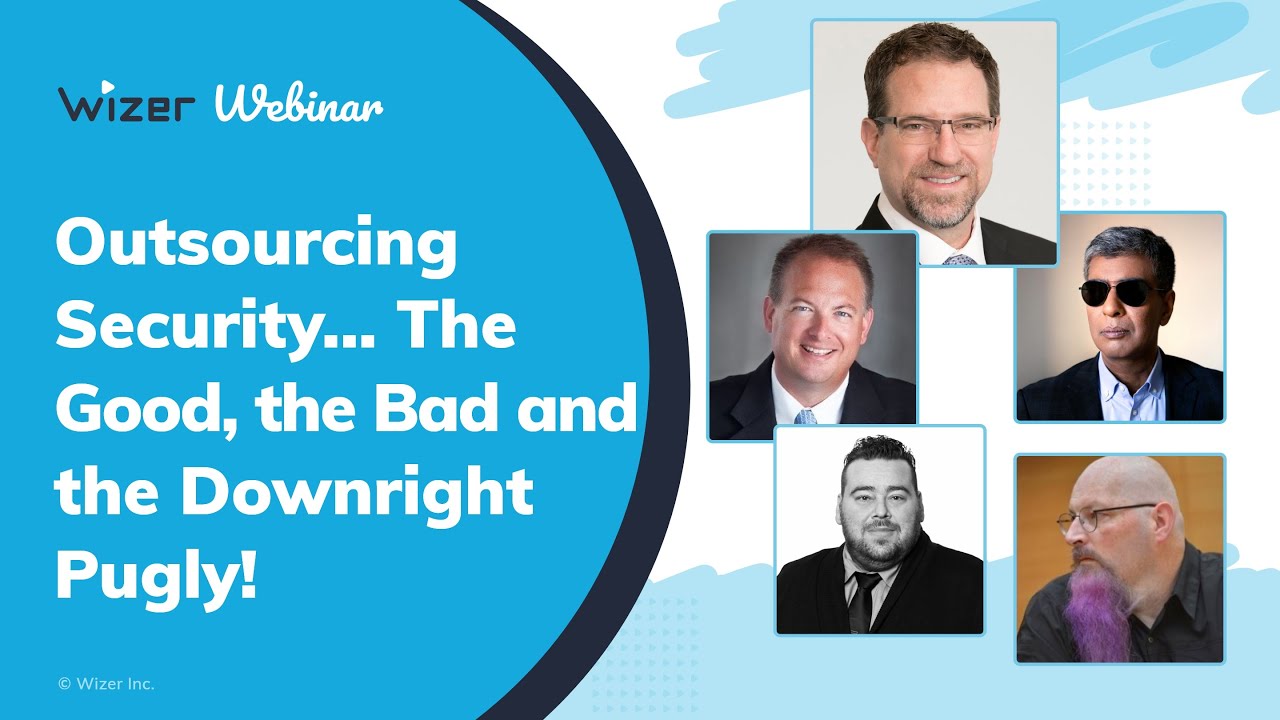
The discussion covered risk tolerance, education, recovery planning, and independent scrutiny of a service provider’s work. It moved between the needs of small organizations and larger enterprises, and between choosing an adviser and assessing a provider. Boehm was participating in a conversation that began with what a buyer needed to understand before deciding what to buy or whom to hire.
It is a relevant stop in his story because the challenge includes translation. A buyer needs to connect a technical service to an operational consequence. What is protected? What interruption could the business bear? Who is responsible for helping it resume work? The alphabet of product categories does little good until those questions have understandable answers.
Four portfolios, one name
Boehm’s public explanation of Armorstack describes it as an evolution of Caspian’s work. He emphasizes the connection between physical and digital security, arguing that risks can move between those domains. His stated direction includes automation, AI, and analytics, along with a shift toward services organized around client outcomes.
That direction adds to the work of delivering technology services. Physical-security equipment, networks, and software each generate information; connecting them becomes part of the company’s assignment. Boehm’s proposed model asks clients to consider those responsibilities together. The early concern about dependable partners remains a useful question to carry forward as the number of connected systems grows.
Armorstack groups its work into Verity, Core, Sentry, and Citadel. The company describes a shared operating relationship across advisory, infrastructure, cybersecurity, and physical security. Each portfolio has a different assignment. The proposed value of grouping them is that the client can deal with connected responsibilities rather than assemble every relationship separately.
There is a long distance between a patch-panel label and an AI-governance program. Boehm’s career has occupied places along that distance: telecommunications sales, teaching, project delivery, security discussions, and executive leadership. Beside them sits a restaurant where art, music, food, and service make an evening. The variety is part of the story, not an inconvenience to be edited away.
The 2008 Pentagon question keeps its force because it had a named concern behind it: an employee who would be gone, a family affected, and work that still needed doing. That is a demanding measure for any operating model. Sooner or later, the people and arrangements behind the promise have to carry it.