A person opens a game to play. Every screen between that impulse and the first move spends a little of their patience. Pengyu Wang arrived in crypto carrying that elementary observation from casual gaming, where registration has consequences and an abandoned session is an answer. Blockchain applications offered him plenty to work on. Before the entertainment, the newcomer could encounter a wallet, a recovery phrase, a signature request and a vocabulary lesson. The front door had acquired a reception committee.
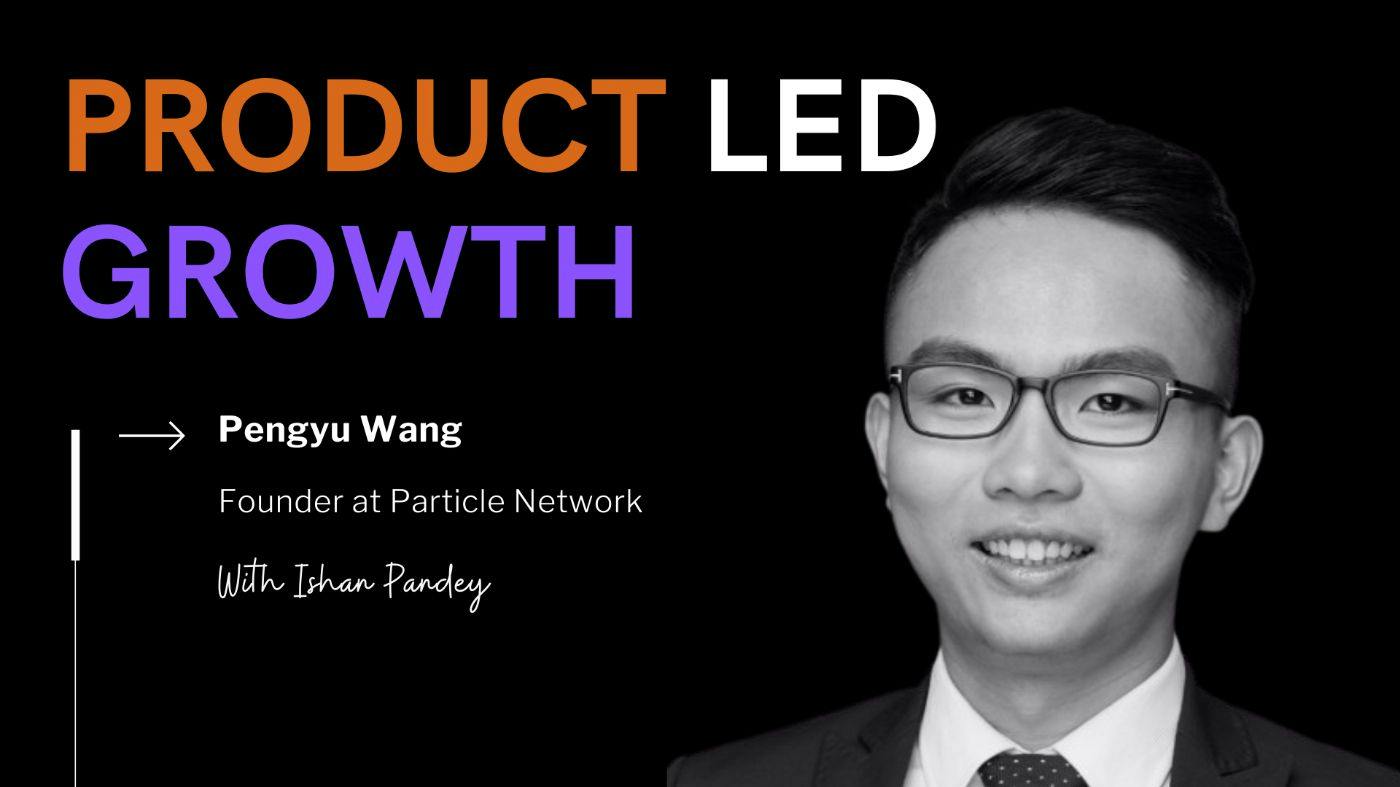
Wang is the Singapore-based co-founder and CEO of Particle Network. He co-founded the business with Tao Pan, its chief technology officer, in 2022. Their shared mobile-gaming background helps explain the question that runs through Particle’s successive products: how much work should a person have to do before an application lets them do the thing they came for?
The game starts at registration
Before Particle, Wang worked in investment and then led MiniJoy. His public career record includes an investment-manager role at SAIF Partners and becoming MiniJoy’s CEO in 2019. He attended Tsinghua University. The route from investing to operating a gaming business placed him on both sides of a familiar startup conversation: what might a product become, and what will someone actually use?
In his 2023 account of Particle’s origins, Wang described the team’s experience developing and distributing social and casual games. Those games, he said, had accumulated more than 400 million users worldwide. His explanation concentrated on registration conversion and the lifetime value of a user. The number belongs to the team’s earlier gaming experience; it is not a count of Particle customers.
That attention to entry points followed him into wallets. Particle initially supplied infrastructure that developers could put inside their own applications, including social login and embedded wallets. A visitor could arrive through a familiar account rather than taking a separate excursion to install and learn another product. Wang’s customer was the application builder, but the application’s user also had to be satisfied.
By October 2023, Particle reported 15 million wallet activations within a year. That is a specific measure of account creation, rather than evidence that 15 million people were using a wallet every day. Wang credited demand from games and social applications, attention to developers, and partnerships. The early business was a way into an application, delivered through the companies building it.
A wallet should not require a field trip
Wang’s description of wallet friction was refreshingly concrete. In written answers about wallet design, he singled out private-key and seed-phrase management, awkward interfaces, and repeated signatures. Even a token swap could ask for more than one approval. Each requirement made sense somewhere in the machinery; the person at the screen still had to live through the collection.
He also described Moongate’s use of Particle for NFT event tickets. The flow combined email login with purchases in ordinary currency and delivery into non-custodial wallets. A ticket buyer had a recognisable job to do: obtain admission. It was a useful example of blockchain infrastructure meeting someone at an existing task rather than asking them to invent a reason to use it.
The tension in this work is user control. Making an interface easier does not remove the need to decide who can authorise a transaction or control an account. Wang’s stated aim was to preserve that autonomy while reducing the number of underlying operations users had to manage. A tidy screen is only the visible end of the arrangement.
“Our motivation stemmed from our background in R&D and distribution within the gaming industry.”
Pengyu Wang, 2023
When the account outgrows the wallet
Particle’s ambitions widened. Its June 2024 funding announcement described three eras: wallet abstraction, account abstraction and chain abstraction. The company announced a $15 million round led by Spartan Group and Gumi Cryptos Capital, taking its reported funding to $25 million. The progression moved from helping someone enter a blockchain application to improving how their account behaved, then coordinating activity across networks.
The terminology is stern; the everyday problem is easier to recognise. A person can have assets on several blockchains, with an application expecting funds on a particular one. Moving between them can require a bridge, a network switch and the right token to pay transaction fees. Owning enough value in total does not automatically make it available where the next action happens.
Familiar login
Programmable interactions
Coordinated balances and execution
In March 2024, Particle set out its modular Layer-1 proposal for Universal Accounts. The intended experience combined an account, liquidity and gas-payment handling across chains. Its own blockchain would coordinate and settle operations involving other networks. The proposition was to spare users the manual orchestration while letting applications and assets remain spread across the ecosystem.
There is a pleasing complication here. Wang’s team proposed another blockchain to help people cope with multiple blockchains. The design makes sense on its stated terms only if the added layer reduces the user’s workload. The coordination must earn its place. Calling something universal is the easy part; making a balance usable at the moment it is needed is the assignment.
A small team with several audiences
Wang’s June 2024 discussion of running Particle was candid about balancing demands. A small crypto team had to handle product development, growth, a global presence, investors, communities and exchanges. He described audiences whose interests did not neatly align. He also explained that Particle maintained core, growth and operational product lines, accounting for an assortment of tools that could look disconnected from the outside.
One revealing operational detail was a custom-built customer relationship management system. Wang described regular reviews of partner projects and continued conversations about their needs. The glamorous phrase is ecosystem building. The quieter activity involves keeping records and following up. Infrastructure depends on other people integrating it, and a partnership announcement cannot perform that integration by itself.
His aspiration was for Particle to act as a coordinator that reduced friction across the industry. This gives his work an unusual measure of success. The infrastructure needs to matter to developers while becoming less conspicuous to the people using their applications. A consumer may benefit from the system without ever feeling obliged to learn its founder’s name.
The trading desk marks the homework
In December 2024, Wang’s author archive recorded the launch of UniversalX, Particle’s trading application built around Universal Accounts. It brought the company’s infrastructure into a product its own team would have to operate. The promise of a combined balance now faced a demanding setting: people buying and selling tokens, with immediate opinions about speed, prices and fees.
The team’s July 2025 retrospective acknowledged the lesson. Traders could like the absence of manual bridging and still choose a competitor for quicker execution. Real-time data, transparent costs and reliable fills all mattered. Better onboarding could attract attention; retaining that attention required the trading experience to hold up after the welcome screen.
This is where the gaming origin becomes useful again. Registration creates an opportunity to serve a user. It does not complete the job. UniversalX exposed Particle to the next set of demands, including accurate streaming information and competitive pricing. The team’s account of that experience is more revealing than a smooth demonstration: users were grading the whole product.
June 2024 round, bringing Particle’s reported total to $25 million. Company funding, not Wang’s personal wealth.
During 2025, Particle released the Universal SDK publicly in July and launched the Particle Chain on Avalanche in September. Its year-end review also described partnerships involving Circle Gateway and xStocks. For Wang, these developments extended the business beyond its original wallet entry point into tools for developers and coordination for a wider range of digital assets.
The builder goes back to the tools
Wang’s own March 2026 reflection brought the story down to an individual scale. He said he was trying many AI products to understand what they enabled for a founder without a coding background. He reported building an AI workflow and independently launching a SaaS product that had earned revenue and remained in limited use. He was also reviewing the previous year’s entrepreneurial lessons.
It is a useful companion to the infrastructure story: a founder spending time as the user of somebody else’s tools. In that reflection, he questioned the habit of releasing a product too early. The concern fits the thread of his earlier work. An easier path to building and launching still leaves the question of whether the resulting product deserves someone’s time.
Particle’s March 24, 2026 update tackled a remaining adoption hurdle through EIP-7702 support. Developers could upgrade existing accounts into Universal Accounts without requiring new addresses or an asset migration. The announcement named compatibility with Privy, Dynamic and Magic Labs. Keeping the account someone already uses is an especially literal way to remove a step.
A May roadmap then outlined a Universal Deposit SDK and Universal Agent Accounts. These were announced as upcoming products: one to simplify funding applications from other chains, the other to give AI agents an API and dashboard for Universal Accounts. The audience was expanding, but the proposed job remained familiar: let the caller specify an outcome while infrastructure handles the route.
By July 13, 2026, UniversalX had announced a rebuilt version with frontend improvements, faster charts and more configurable workspaces. These are ordinary product details, and they make an appropriate stopping point. Wang began with the cost of making people wait before they could play. His company’s latest work still has to answer the person watching a screen, deciding whether the next click is worth it.
Follow the work
Products, conversations and further reading.
- Particle Network website · UniversalX
- Pengyu Wang on LinkedIn · Pengyu Wang on X
- Wang’s Particle blog archive
- The 2023 wallet and gaming conversation
- The 2024 conversation on building Particle
- Wang’s 2026 startup reflections
- Watch: Particle’s Real-World Value conversation with ChainlinkA company interview on digital assets and cross-chain infrastructure.