Patrick Quigley’s founding revelation arrived disguised as a bill. A diagnostic scan at one location carried two prices: $1,300 when routed through insurance, $330 when paid directly. The difference was $970, a number large enough to be insulting and tidy enough to become a thesis. Most people encountering such arithmetic complain to a spouse, perhaps with feeling. Quigley, an engineer who had spent years around software, marketplaces and consumer acquisition, began taking the mechanism apart.
The discrepancy offered him an unusually clean view of American healthcare’s machinery. Insurance was supposed to confer bargaining power. Here, it made the same service cost nearly four times as much. The person buying the service could not see the price until the process was well under way. The provider had more certainty when paid directly. Every participant possessed a fragment of the truth; nobody had much reason to assemble it for the customer.
The question was not merely how to secure the lower price. It was how to construct an insurance product in which the lower price became visible before the decision. That distinction became Sidecar Health, which Quigley co-founded with Veronica Osetinsky in 2018. The company’s model gives members a stated benefit amount for a service, shows local prices, permits them to use any licensed provider, and pays at the point of care through a benefit card. When a provider charges less than the benefit amount, the member can share in the savings. When the price is higher, the difference is visible rather than arriving as an unpleasant epilogue.
The engineer enters a maze
Quigley did not arrive wearing the ceremonial robes of a healthcare lifer. He earned an engineering degree at Duke, later added a Wharton MBA, and moved through McKinsey, enterprise-software company BEA Systems and the founding management team at QuinStreet. He then ran Katch, an online business that enrolled consumers in individual health plans. The sequence matters. It gave him experience in analysis, sales, software, customer acquisition and insurance distribution before he tried to combine them inside an insurer.
He has described himself plainly: “I am not a traditional healthcare guy.” It is less a confession than a statement of method. Outsiders sometimes underestimate the reasons an awkward system became awkward. Insiders sometimes mistake those reasons for natural law. Quigley’s advantage was to know enough about insurance to see its constraints while retaining an engineer’s impatience with unexplained outputs.
“I did not set out to run a health plan.”Patrick Quigley
The partnership with Osetinsky also predates Sidecar. Both had worked at Katch, so the new company was not a chance collision between strangers intoxicated by a whiteboard. They brought a shared operating history into a heavily regulated business. Sidecar’s first product arrived in 2019. Its early pitch was consumer-facing and vivid: take an app that reveals prices, add a payment card, and allow people to visit providers without asking whether a logo appears on a network list.
The simplicity is real, but so is the work hidden beneath it. A useful price estimate has to account for a service, a provider and a location. A card transaction has to connect to claims infrastructure. The benefit has to satisfy insurance rules. The member needs enough information to choose without becoming a part-time billing clerk. In a 2021 interview, Quigley said Sidecar’s system could predict the local cost of roughly 170,000 medical services. “Lots of research,” was his compact description of the undertaking.
Freedom has an interface
Traditional insurance turns a network contract into a proxy for price and access. Sidecar tries to replace that proxy with information and a defined payment. It is a philosophical swap disguised as product design. The conventional plan tells a member where to go, then leaves much of the final arithmetic obscure. Quigley’s plan shows an amount and asks the member to choose. One system concentrates negotiation in the insurer; the other gives the shopper a larger role.
That role is the attraction and the rub. Choice is useful only when the information is legible, the quoted cash price is honored and a person has the time to compare. Critics of non-network plans have warned that patients and providers can inherit administrative work once handled by an insurer. Sidecar’s task is therefore more demanding than publishing numbers. It must make comparison feel like agency rather than homework and surround the member with enough protection that a surprising bill does not turn transparency into theatre.
Quigley’s position has hardened as the company has matured. He argues that insurers ought to pay for care rather than arbitrate whether it may happen. Sidecar promotes plans without prior authorization, referrals or a fixed provider network. In 2026, he put the point with the delicacy of a fire alarm: “Prior authorization should be illegal. Plain and simple.” The sentence reveals something about his leadership vocabulary. He likes first principles, declared without ornamental hedging.
Capital, then a larger argument
The funding milestones came quickly. In January 2021, Sidecar raised a $125 million Series C at a reported $1 billion valuation. In June 2024, a $165 million Series D led by Koch Disruptive Technologies gave the company more room to expand its employer business and enter new markets. Quigley explained the emphasis in demographic terms: roughly half of Americans receive coverage through work, so employer plans offered the fastest route to more people.
Capital is useful, but it does not settle the argument. Insurance expands state by state, filing by filing, employer by employer. It must work on a dull Tuesday when someone needs a claim resolved, not only in a polished demonstration. Quigley’s career before Sidecar looks almost designed for this unglamorous middle: consulting taught decomposition, enterprise software taught complex sales, QuinStreet taught measurable consumer funnels, and Katch taught enrollment. The founder’s story is less about a sudden conversion than about several trades converging on one troublesome bill.
Completes his Wharton MBA after studying engineering at Duke.
Co-founds Sidecar Health with longtime colleague Veronica Osetinsky.
Raises a $125 million Series C at a reported $1 billion valuation.
Closes a $165 million Series D to expand employer coverage.
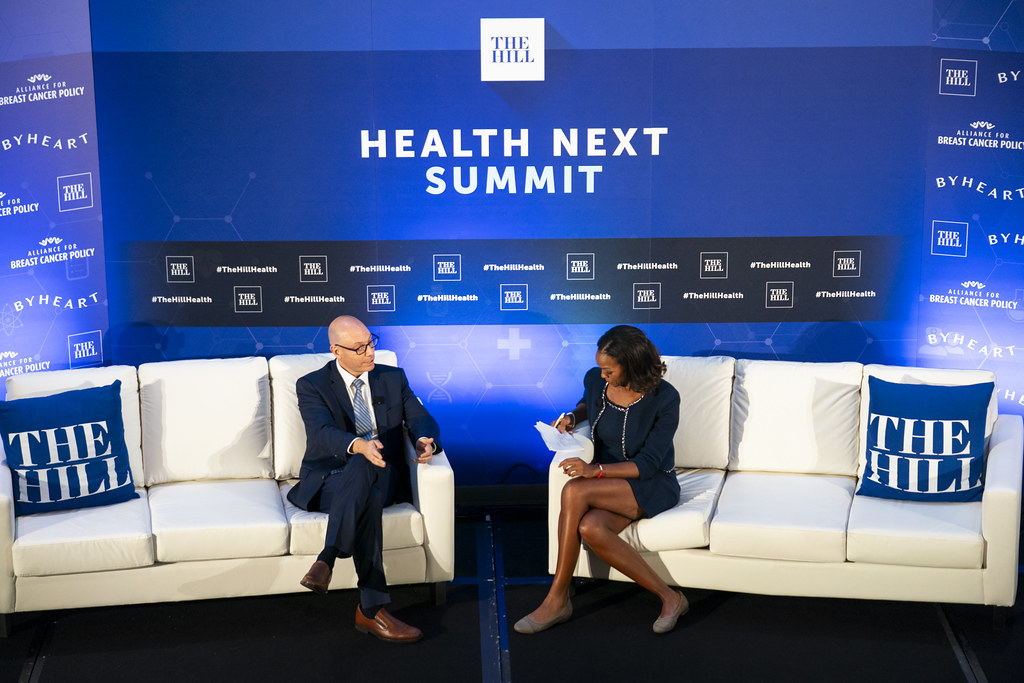
Takes the case for non-network plans to policy forums and Texas lawmakers.
By 2026, the argument had escaped the app. Federal policy opened a path for non-network plans to appear on Affordable Care Act exchanges beginning in 2028. Quigley called individuals and families a critical part of Sidecar’s mission. In September, he testified before a Texas House committee examining healthcare affordability, presenting cash prices and flexible plan design not as eccentric features but as policy options.
This is the second act of his work. First came the claim that a different product could exist. Now comes the claim that rules built around conventional networks should make room for it. A startup can route around an incumbent convention for only so long before the convention appears in statute, regulation or purchasing practice. Eventually, product design becomes civic argument.
The Cleveland measure of persistence
Quigley is based in Greater Cleveland, far from Sidecar’s California headquarters, and the company biography supplies one gloriously non-corporate credential: he is a diehard Cleveland Browns fan. His wife makes salsa on game days. It is tempting to convert fandom into an executive metaphor, and the temptation should be indulged only modestly. Still, devotion to the Browns does suggest a healthy acquaintance with rebuilding, adverse evidence and the annual renewal of belief.
In conversations about hiring, Quigley has emphasized problem solvers, empathy and a bias toward action. Those qualities fit a company asking ordinary people to make choices in an industry that historically conceals the information required to choose. Problem solving without empathy becomes a clever interface nobody wants. Empathy without action becomes a handsome mission statement. His preferred combination is practical: understand the person, then move.
There is wit, too, in the Sidecar name. The member is meant to be in the driver’s seat; the insurer rides alongside. It is an image of assistance without control, which is precisely the balance Quigley wants to redraw. He is not proposing that insurance vanish. He is proposing that it become visible, immediate and less bossy.
The enduring idea is not the card or the app. It is that a price should arrive before the decision, not after it.
The test will be measured in decidedly unromantic details: whether quoted prices hold, whether claims resolve cleanly, whether employers renew, whether members feel helped rather than deputized. Quigley’s aspirations are national, but the credibility of the model will be earned one transaction at a time. That is true of every insurer; Sidecar has simply made the transaction more conspicuous.
And so the story returns to $970. Not the largest figure in Quigley’s career, certainly. Venture rounds have added nine zeros to the conversation. Yet it remains the most explanatory number because it shows his instinct at work. He saw two prices where convention expected one unquestioned process. He did not accept the mystery as the cost of doing business. He put the number on the table, then began building around it.