Patricia V. Rivera came back to Delaware with a fairly modest business ambition: make work fit around a life. She had been a newspaper journalist in Dallas. Southern Delaware offered the prospect of a lifestyle business, a family, and water close enough for her children to skim, surf, paddle and kayak. Then she met the business community. The plan acquired more people.
What appealed to her was the deliberateness of the place: people trying to work out how their businesses could make a difference. She would build Hook PR & Marketing in Lewes, bringing a reporter’s attention to organizations that needed help explaining themselves. In her account of returning, the pleasure of raising children near the water sits comfortably beside the pleasure of doing useful work. Neither sounds like an afterthought.
There is a pleasing complication in Rivera’s career. She left newspaper work, built a communications business, and eventually became board president of a local journalism organization. Follow the job titles and it looks like a change of direction followed by a return. Follow the question of who gets heard, and the route looks considerably straighter.
A reporter notices a translation problem
Rivera was born in Bolivia and moved to the United States at seven. She speaks English and Spanish. Her education took her to the University of Tennessee, Knoxville, where she studied journalism and Latin American studies. The combination put the craft of reporting alongside a sustained interest in a region she knew as more than a place on a map.
The newsroom years supplied an education of their own. Her career included The New York Times, Delaware’s News Journal, USA TODAY and The Dallas Morning News. The progression took her through internship, reporting, rewrite work and business writing. These are related jobs with different pressures: finding the information, making sense of it, and getting it into a form another person can use.
Business reporting also put her close to a problem that would become a business opportunity. Organizations wanted to communicate across communities, but language and cultural understanding could get in the way. A message could be perfectly satisfactory to the people sending it and considerably less useful to the people expected to receive it.
Her first entrepreneurial move came in 2003. A native Spanish speaker, she saw a need for better Spanish translations and left newspaper work to address it. That date matters. Hook’s founding came four years later, in 2007. Her movement from journalism into marketing had an intermediate chapter devoted to the quality of language itself.
Translation offers a rather unforgiving test of communication. The sender’s good intentions do not make a sentence clear. A reader still has to understand it. Rivera’s multilingual work grew to include content creation, website localization and video, with plain language as part of the approach. The practical aim is to help organizations communicate with immigrant employees and consumers in language that makes sense within their lives.
The business grew around the questions
Hook began as Hook PR Group. Rivera brought writing experience and website development skills; people wanted help building their businesses. The assignment widened from producing content to helping clients develop the ability to communicate consistently. There is a difference between receiving a finished piece of writing and having a reliable way to decide what the next piece should say.
By 2024, she described an evolution toward nonprofits and foundations. The work covered consulting and coaching, marketing management, and multilingual marketing. Some clients needed help building their own capacity. Others needed an outside team to manage substantial parts of the work. The relationship could expand or contract around what the organization could actually carry.
“The goal was always to empower clients with good storytelling,” Rivera said. The verb is doing useful work here. A client who understands its audiences and can explain its purpose has gained something more durable than a busy week on social media. The next communications decision becomes a little less mysterious.
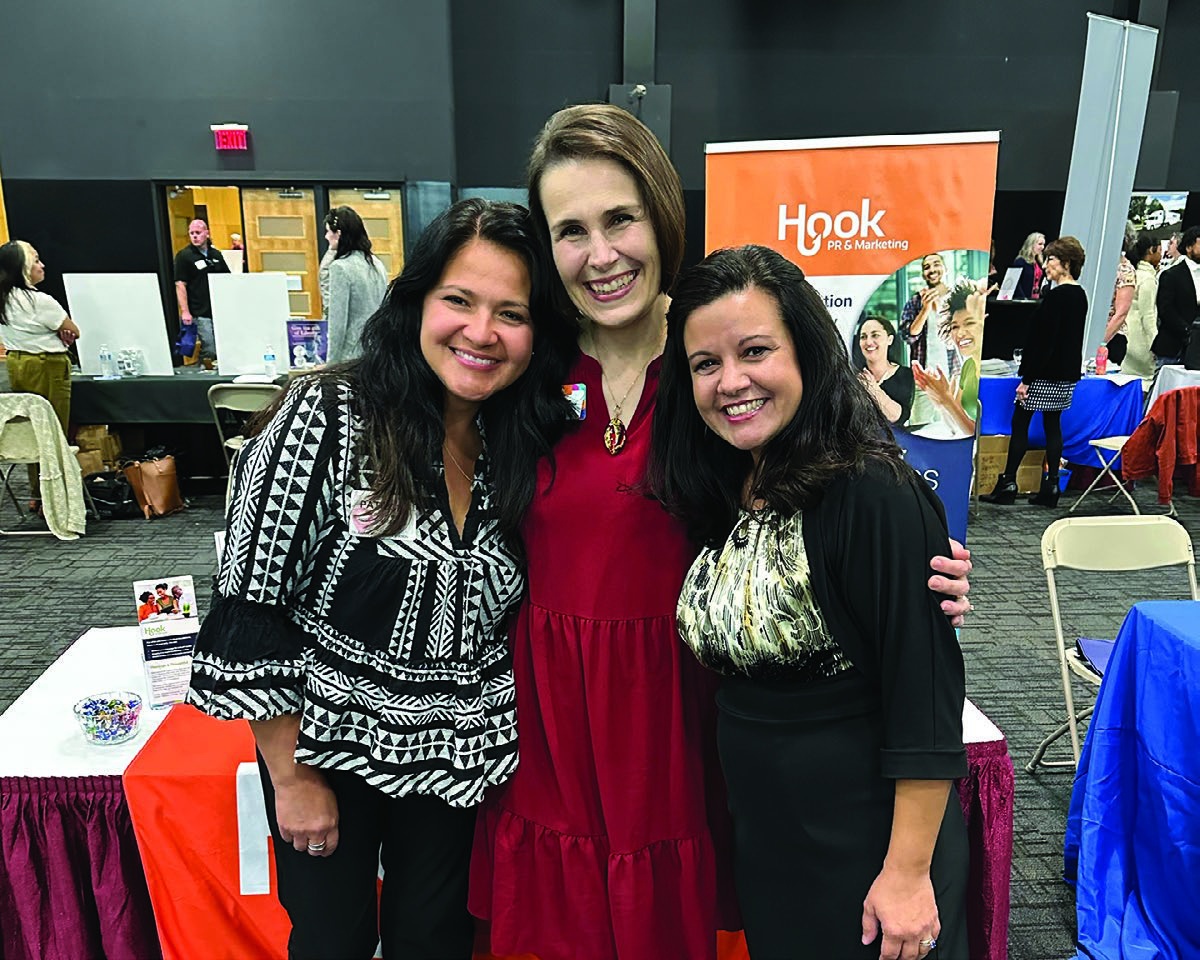
Rivera’s work also includes teaching. In 2023, she promoted a full-day Delaware Alliance for Nonprofit Advancement workshop built around an executable marketing plan. Its agenda ran from a digital audit to an editorial calendar and measures of effectiveness. Lunch was included, a merciful acknowledgment that strategy remains subject to the ordinary requirements of a working day.
In 2024, she and Jessica Bell presented on brand authenticity at Delaware Technical Community College’s social media conference. The setting was digital; the subject was trust. Across those two workshops, the practical pattern is recognizable: examine what exists, decide what matters, and help people do the work themselves.
The person inside the success story
A nonprofit story has several interested parties. The organization wants support. A donor wants to understand the result. The person whose experience supplies the story has a life that continues after publication. Rivera’s communications work pays attention to that third party, who can too easily become a supporting character in an institution’s account of its own usefulness.
Hook’s stated approach gives people a say in how they are described and respects their privacy and right to tell their own stories. Its other working principles include inquiry, accessibility and learning. In practice, those commitments ask something fairly demanding of a communicator: listen closely enough that new information can change the proposed approach.
That method makes room for a client to hear an unwelcome answer. Rob McCreary, executive director of Amanecer Counseling & Resource Center, described Rivera’s contribution to a rebranding campaign in unusually economical terms: “She tells you the truth.” A testimonial rarely gets much shorter, or sets a clearer expectation for the next meeting.
“She tells you the truth.”
Rob McCreary, on working with Rivera
Her current consulting work puts her directly alongside executive directors, leadership teams and boards. Campaigns, rebrands and leadership transitions all feature in the remit. The process starts by asking why the work is needed now, reviewing the situation, and agreeing on a plan with a scope, fee and schedule. The questions eventually have to turn into decisions somebody can act on.
There is room for a writer, a designer, a developer and a translator in this picture. Rivera leads strategy; specialists carry different parts of the execution. That is a practical answer to a familiar organizational predicament: the person responsible for communications is often expected to possess an entire department’s worth of skills.
A seat at the local-news table
In September 2024, the Local Journalism Initiative elected Rivera chair of its board. She had been a founding board member and rejoined earlier that year after a two-year hiatus. The organization operated Spotlight Delaware, a collaborative nonprofit newsroom, and was expanding its service to Spanish-speaking residents.
The timing gave the appointment a specific purpose. The Delaware Journalism Collaborative had published its first bilingual voters guide. Spotlight Delaware planned to begin providing bilingual local news and information by the end of 2024. Rivera’s experience in reporting and multicultural communications belonged squarely in that conversation.
Her stated ambition was for bilingual coverage to reflect and elevate Delaware’s Latino communities. Allison Taylor Levine, LJI’s founder and CEO, welcomed the combination of Rivera’s commitment to Delaware and her experience reaching Latino audiences. This was a return to journalism through governance, with the audience’s access to information at the center of the assignment.
Her community work extends beyond a newsroom boardroom. She chaired La Esperanza’s board from October 2017 through December 2024, served on the Delaware Alliance for Nonprofit Advancement board, and spent nine years as a Delaware Hispanic Commission commissioner. Those roles put her alongside organizations concerned with immigrant communities and the practical strength of the nonprofit sector.
What an entrepreneur needs to hear
The recognition arrived in several forms: New Castle County’s 2018 Entrepreneurial Woman of the Year award, Hook’s 2019 Delaware Minority-Owned Business of the Year recognition from the U.S. Small Business Administration, and a 2020 Delaware Today Women in Business honor. Each points to a different part of the same working life: founder, business owner and woman in business.
Rivera has also taken the entrepreneurial argument onto a TEDx stage. Her Spanish-language talk, 3 Claves para el Éxito Empresarial de la Mujer, draws on lessons from women street vendors in Bolivia. Its concerns include sustainable growth, motherhood and staying faithful to one’s values. The business classroom, in this telling, has room for people selling in the street as well as people sitting at a conference table.
In a 2025 Risk Taker podcast conversation, she discussed the part family and faith played in becoming a CEO, including a moment with her daughter that influenced her departure from journalism. She also talked about beliefs that had limited her willingness to grow the business. The personal account makes space for uncertainty alongside the professional milestones.
By May 2026, she was discussing entrepreneurship with Stuart Comstock-Gay on the Delaware Community Foundation’s podcast. Their conversation covered communication bias, Hispanic entrepreneurs, the Arsht-Cannon Fund and finding a purpose. In her own accompanying commentary, Rivera argued that business ownership can provide income and dignity, while calling attention to unequal access to capital and the need for training suited to different people’s circumstances.
That is a useful place to leave her story: with the aspiring owner who needs an explanation, the reader who needs information in Spanish, or the nonprofit leader who needs a candid answer. Rivera has built a career around reaching those people. The lifestyle business became a communications firm, and the former reporter found another way to keep asking who was missing from the conversation.