Person / Healthcare & Technology
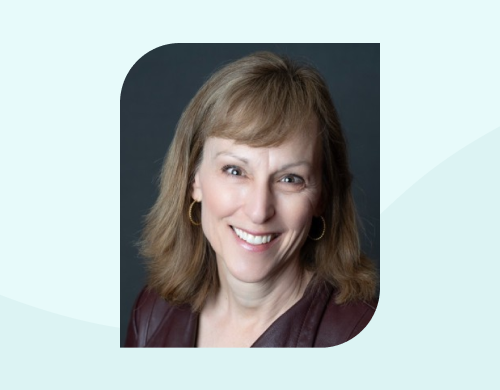
Patricia
Patricia
Obermaier
A biologist who learned to grow businesses the way she once studied living systems - measure, test, scale, repeat.
EVP & CHIEF GROWTH OFFICER · ACENTRA HEALTH
A biologist who learned to grow businesses the way she once studied living systems - measure, test, scale, repeat.
EVP & CHIEF GROWTH OFFICER · ACENTRA HEALTH
The Dispatch
In December 2025, Acentra Health introduced its new Chief Growth Officer, and the headline was not the title. It was the resume underneath it. Patricia Obermaier - Patty to nearly everyone - had just spent years inside Microsoft running the growth engine for one of the largest health and life sciences portfolios in technology. Now she was bringing that to a company most people outside government contracting have never heard of, but whose work touches some of the most vulnerable patients in the country.
Her job at Acentra is deceptively simple to describe and famously hard to do: lead business development, marketing, and product management, and make the company bigger without making it worse. Acentra builds technology and health solutions for government and commercial clients - claims and encounter processing, provider solutions, care management, clinical assessments, quality oversight. The unglamorous plumbing of Medicaid and Medicare. The kind of work that only gets noticed when it fails.
What makes Obermaier interesting is where she started. Her undergraduate degree is in biology, from MIT. Not computer science. Not finance. Biology. The discipline of watching complex systems and figuring out which variable actually moves the outcome. She later added an MBA from the University of Virginia's Darden School, and somewhere between the petri dish and the P&L, she became a person companies call when they want to grow on purpose rather than by accident.
I am honored to join Acentra Health during this time of transformation. The company's innovation and precision execution are setting new benchmarks in the industry.
- Patricia Obermaier, on joining Acentra HealthBefore Acentra, Obermaier was a Microsoft executive, and the numbers there were not small. As Chief Growth Officer for Global Health and Life Sciences, she oversaw growth across a global portfolio valued at $12 billion, led customer engagement strategy, and pushed the company's bets in emerging health technology. When Microsoft swallowed Nuance in a $20 billion acquisition - one of the largest deals in its history - Obermaier played a pivotal role folding that company into the global field organization. Integration work is the part of a deal nobody writes press releases about, and the part where most deals quietly die.
Step back one role and the story is even cleaner. Earlier at Microsoft she led the U.S. Health and Life Sciences business and doubled it - from $3 billion to $6 billion. As a vice president she managed a sales organization of more than 750 people. Doubling a multibillion-dollar business is not a slide in a deck. It is a thousand small decisions about where to put people, money, and attention, made correctly more often than not.
Obermaier did not arrive at Microsoft by the usual path. Along the way she founded and led her own consulting firm, Resigility, focused on performance transformation, resiliency, and growth. The name is a tell. Resigility is resiliency and agility fused into one word - the two traits she sells as the heart of growth strategy, stamped right onto her own letterhead. Before that she spent more than five years as a senior executive at IQVIA, leading the payer, provider, and government market businesses. And before all of it, she held several positions at Unisys, learning the enterprise from the inside.
The throughline across Unisys, IQVIA, Resigility, Microsoft, and now Acentra is not an industry. It is a verb. Scale. As Acentra CEO Todd Stottlemyer put it, she has helped numerous companies scale, diversify, and strengthen their market position - the exact muscle a company reaching for national impact needs most.
Throughout her career, Patty has helped numerous companies scale, diversify, and strengthen their market position.
- Todd Stottlemyer, CEO, Acentra HealthAcentra Health sits at an awkward, important crossroads. It is backed by The Carlyle Group. It serves government health programs that millions of people depend on without ever knowing the vendor's name. And it is trying to grow at the exact moment that healthcare is being rewired by data, automation, and machine learning. Hiring a growth officer who already ran a $12 billion technology health portfolio is not subtle. It is a statement of where the company wants to go.
Obermaier framed her own move around the people, not the platform. She talked about the company's dedication to serving the nation's most vulnerable populations and helping individuals live healthier lives. For an executive whose career has been measured in billions of revenue, it is a deliberate choice to lead with the patient instead of the portfolio. Whether the growth follows is the story still being written. The track record suggests betting against it is unwise.
The title Chief Growth Officer is newer than it sounds, and it tends to appear at companies that have decided growth is too important to leave scattered across three departments. At Acentra, Obermaier holds business development, marketing, and product management under one roof. That structure is the job. Business development decides which clients to chase. Marketing decides how the company is understood. Product management decides what actually gets built and shipped. Put one person over all three and you have made a bet: that growth is not a series of campaigns but a single coordinated motion, and that the person running it needs to see the whole field at once. Obermaier has run exactly this play before, at larger scale, which is presumably why the seat was built for her.
It helps to understand what Acentra sells. The company describes itself as a technology and health solutions company accelerating better outcomes for government and commercial clients. In practice that means claims and encounter processing, provider solutions, care management, clinical assessments, and quality oversight - the operational backbone of public health programs. This is not consumer software with a friendly app and a viral loop. The buyers are state and federal agencies, the contracts are long, and the stakes are measured in whether a Medicaid member gets the right care at the right time. Growth in this world means winning trust, then winning renewals, then winning new states. It is slow, relationship-heavy, and unforgiving of sloppiness - which makes Obermaier's emphasis on precision execution less like a slogan and more like a job description.
Beyond her operating roles, Obermaier carries the credential that tends to follow executives whose judgment other companies want in the room: board seats. She serves as a director of ASGN Incorporated, a publicly traded firm on the New York Stock Exchange, and of Applied Information Sciences, the technology consultancy she joined in 2021 while still a Microsoft vice president. Board work is its own discipline - less about running the play and more about asking the question everyone else forgot to ask. In 2021, Fierce Healthcare named her to its Women of Influence list, a recognition reserved for leaders who shaped their organizations through a genuinely turbulent stretch for the entire healthcare industry.
There is a quiet symmetry to the whole arc. A scientist who trained to study living systems now spends her days trying to make a health system grow and adapt - resilient and agile, the two words she liked enough to name a company after. The lab coat is gone. The method never left. If the next chapter goes the way the last several have, the unglamorous plumbing of American public health gets a little more modern, a little faster, and a lot more deliberate about where it is headed.
The Long Game
The Rolodex
Marginalia
Her Territory
Pass It On
The Sources