Retirement had reached the coffee stage. Parvez Abbasi and Zouhair Khaliq were in London, talking about what Pakistan had given them and what they could usefully give back. They knew how to build businesses. They knew people who could help. The conversation eventually led toward Teamup and the National Incubation Center in Islamabad. For Abbasi, another beginning was taking shape over something considerably smaller than a boardroom table.
There is a pleasing complication in his working life: helping people start has become a career of its own. Today he is the founder of AdVentures, working across venture building, university incubation, training and career preparation. The range can look untidy until you consider the person moving between those rooms. He has been an employee, a commercial executive, a company founder and an incubation director. The first awkward step is familiar territory.
The phone before the network
Abbasi was born in Murree and moved to Britain as a young child. London supplied his upbringing; Pakistan became a place he wanted to understand for himself. A family visit and travel around the country sharpened that interest. His eventual move brought family roots and professional curiosity into the same decision. Returning was also a way of discovering somewhere he knew partly through other people.
Telecommunications supplied the opening. After studying in London, he worked at British Telecom before joining Pakistan’s emerging mobile industry. His early professional life straddled two very different markets: one where telecom was established infrastructure, another where its commercial possibilities were still being worked out. Selling a new way to communicate required people willing to believe customers would change their habits.
At Mobilink, his commercial work included helping launch Jazz prepaid services and its nationwide franchise network. Those are practical achievements with a large human component. A network needs places where people can buy, ask questions and return when something goes wrong. Commercial leadership means thinking about that encounter as carefully as the technology behind it.
There is also the matter of temperament. Asked about growing up, Abbasi offered a modest amendment to the premise: “I’m still growing up in a way.” It is a useful line for someone whose work now puts him among people preparing for their first job or business. The experienced person in the room can still have something to learn.
A warranty worth coming back for
In 2001, Abbasi co-founded Mobile Zone. The business dealt in handsets, bringing manufacturers and customers together through distribution. An early mobile industry needed phones as well as connections, and a distributor could grow alongside the operators. His move put him closer to the physical object in the customer’s hand, with all the complications that a physical object can produce.
A phone can be demonstrated in minutes. Confidence takes longer. Mobile Zone offered a twelve-month warranty, a promise that gave buyers somewhere to turn after the sale. In his account of the business, that promise helped establish trust. A warranty is a surprisingly candid piece of marketing: it admits that something might go wrong, then tells the customer who will answer for it.
By 2008, the operation had a substantial footprint. The business had more than 60 outlets, roughly 300 franchises and a network of 15,000 independent retailers, with operations extending into Afghanistan, the United Arab Emirates and Bangladesh. These figures describe the company at that moment, when phone ownership and demand were carrying distribution businesses forward.
A historical distribution network, before Abbasi’s later move into incubation and training.
Expansion also brought exposure. The financial crisis and a falling rupee hurt a business buying in dollars and selling in local currency. Abbasi later described severe losses and selling his shares to his partners in 2010. The arithmetic is unforgiving: a sale can look profitable while the currency needed to replace the stock becomes more expensive. A growing market does not settle every question on the balance sheet.
That experience gives his subsequent mentoring a different texture. He has something more useful than a collection of launch photographs. He knows the distance between a business opportunity and the obligations that come with taking it. Customers, inventory, credit and timing remain in the room long after everyone has agreed that an idea sounds promising.
Experience needs somewhere to go
Teamup brought him back into partnership with Khaliq. Their aim was to help other people build businesses, and the opportunity to operate a national incubator gave that intention an institutional form. Jazz joined the partnership; Ignite supplied funding. The National Incubation Center was established in 2016, with Teamup running the program. Abbasi became its founding project director.
The arrangement joined resources that usually sit in separate places. Government-backed funding could support an ongoing program. A telecom partner could help founders reach events and experienced professionals. Operators could organize the daily work. The result depended on collaboration, an unusually concrete word when there is a room to open, a budget to manage and a founder waiting for an introduction.
“That perfect moment never comes.”
Parvez Abbasi, on beginning a venture
At the NIC, the offer included workspace, mentors, domain expertise, business development and preparation for investment. Abbasi has argued that the suitability of a founding team and the readiness of its market deserve attention alongside funding. It is an operator’s view of an idea: who will do the work, who needs the result, and whether those people can meet at the right time.
The coffee conversation is revealing because the ambition was tied to a skill they already possessed. They could help people build businesses. There was no need to invent a grander identity before getting on with it. Experience, which can become a private store of stories, acquired somewhere public to go.
Chief Happiness Officer, reporting for work
AdVentures extends that work into a collection of settings: startups, corporate teams, university programs and career development. Its team includes people responsible for operations, communications, consulting and training. Abbasi’s name supplies continuity, but the work requires other people’s abilities. The business of connecting experience with opportunity needs an operating team of its own.
Universities offer a particularly revealing setting. BIC Foundry opened in February 2025, with AdVentures named as a consultant. The program offers students a platform to develop ventures with mentorship and access to support. A campus already has learners, teachers and ideas. An incubation program adds a place where those ideas can meet questions from outside the classroom.
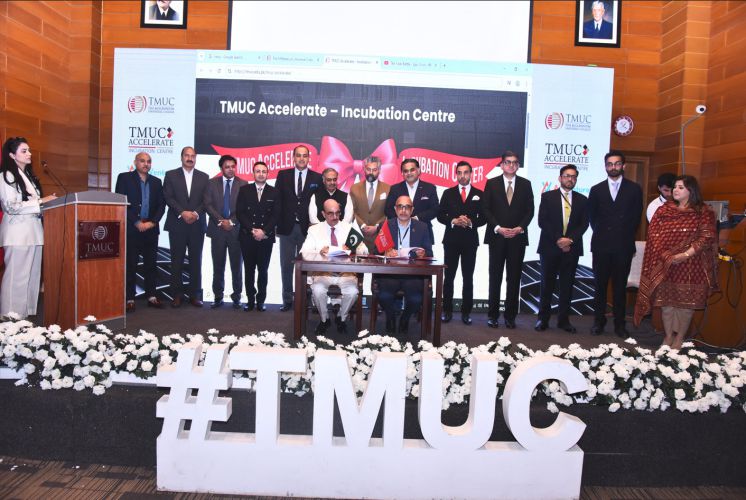
TMUC Accelerate followed in May 2025. TMUC partnered with AdVentures to establish and operate the incubation centre, and Abbasi introduced the initiative at the launch. Its promised ingredients included mentorship, industry connections and access to capital. For a student, those can turn a business idea from a solitary exercise into a conversation with people who have reasons to challenge it.
Elsewhere that month, Abbasi visited Capital University of Science & Technology for an exploratory meeting, carrying the title Founder & Chief Happiness Officer. Corporate titles rarely volunteer so cheerfully for scrutiny. The discussion underneath was quite specific: a three-month career preparation track and a six-month entrepreneurship track, each with weekly classes. The meeting explored possible collaboration; preparation still needed a timetable.
Weekly classes proposed for each track. An exploratory discussion, not a record of enrolment.
The distinction between the two tracks is worth keeping. A useful education should leave room for someone who wants a job as well as someone who wants a business. Each faces a market; each has to explain what they can offer. Helping a graduate become employable can be as consequential as helping a founder prepare a pitch.
Another first day
Career Launchpad addresses graduates moving toward employment, with skills development, coaching and contact with recruiters. Abbasi’s personal work also includes helping employees explore entrepreneurship. Read together, these activities suggest an interest in the transitions between roles. A title is a convenient answer at a dinner party. Changing it requires a more involved conversation.
In September 2025, Abbasi led a session on moving from military to civilian work in an AdVentures Academy workshop for Pakistan Air Force officers. Sipehre Shamsi handled resume preparation. Here the participants already had careers behind them. The task was to make that experience legible in another professional setting, where familiar responsibilities might need an unfamiliar explanation.
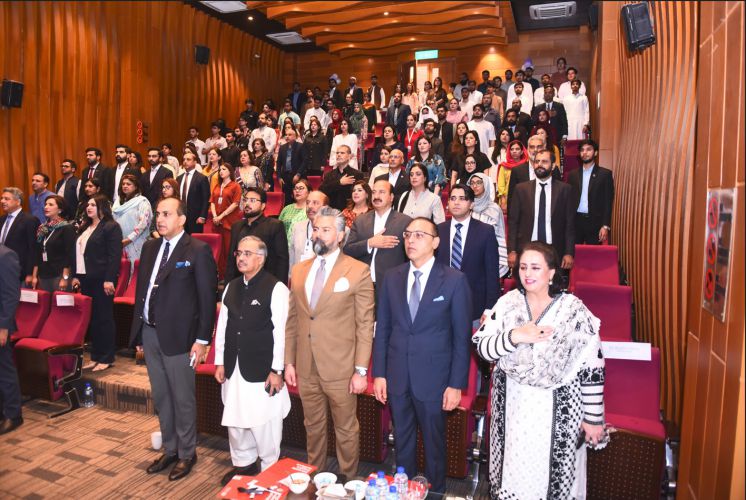
His public activity in 2026 continued along that line, including a Rawalpindi Chamber of Commerce and Industry session on careers and succession in family businesses. Starting again may mean founding something. It may also mean taking responsibility for something a previous generation built. Both situations ask a younger person to decide which experience to inherit and which decisions to make themselves.
Abbasi took the subject to TEDxSTMU, too, in a talk on the entrepreneurial mindset published in October 2024. The stage offered another way to discuss the movement from employee to entrepreneur. His ongoing work puts that discussion back into smaller rooms, where a participant can ask about their own circumstances and receive an answer that has to fit.
The line from phone distribution to mentoring is less mysterious when you follow the practical problem. Someone needs access to something they cannot quite reach alone: a handset, a customer, a professional contact, a chance to test an idea. Abbasi keeps working around that gap. There are more beginnings available than one career can contain. Helping someone else make theirs is one way to keep learning.