At two in the morning, the least interesting person in a technology company becomes the one who can approve a permission. A production service has failed. An engineer knows what to repair. The engineer cannot touch it. Somewhere, a security rule is doing its job so faithfully that the business has stopped doing its own.
- P0 replaces broad, permanent production access with policy-based permissions that arrive when requested and expire automatically.
- It works through native APIs and familiar tools - Slack, Jira, PagerDuty, Teams, and the command line - without requiring jump hosts or a fleet of agents.
- Its public customers include Splunk, Applied Intuition, Afresh, Divvy Homes, CommonLit, and CNA.
- The company has raised $20 million. Pricing is custom; there is no credible public sticker price to quote.
- The newest bet is that AI agents need the same discipline as humans, plus a record of which human set the agent in motion.
This is the little absurdity at the center of privileged access. Companies give permanent power to avoid temporary inconvenience. The permission remains after the incident, after the project, sometimes after anyone remembers why it was granted. P0 Security, founded in San Francisco in 2022 by Shashwat Sehgal, Gergely Danyi, and Nathan Brahms, proposes a clock as the remedy.
The permission should arrive after the need
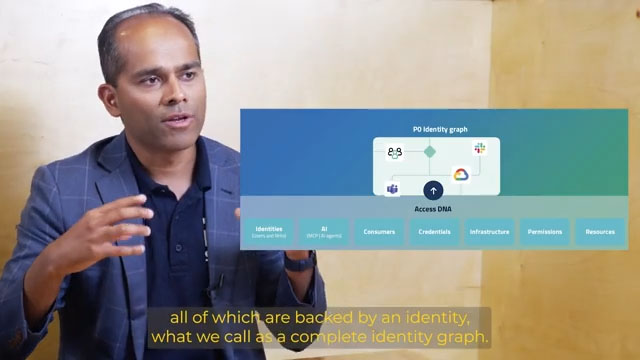
P0 maps identities and entitlements across cloud and hybrid systems, identifies dangerous routes to sensitive resources, and lets an engineer ask for a narrowly defined privilege. A policy evaluates the request. An approver, or an on-call rule in PagerDuty, allows it. P0 uses the underlying cloud or resource API to create the entitlement, then undoes the change when the window closes. The company says its mean time from request through approval to access is five minutes.
Privilege, redesigned as a short visit
That last reversal is the product. Traditional privileged-access management often begins with a vault, a proxy, or a bastion. P0 begins with authorization and calls native APIs. It does not ask a company to replace Okta or rebuild the network. It sits between identity and action, an unusually consequential place for software whose best performance ends with its own permission disappearing.
First the proxy failed. Then the ticket queue did.
The useful evidence for P0 is not its vocabulary. It is what customers stopped tolerating. Splunk had more than 2,000 developers and professional-services engineers who occasionally needed customer-environment access across AWS, Google Cloud, and Azure. Its previous system, Okta Advanced Server Access, depended on a network-proxy model and agents on machines. Splunk evaluated Teleport, StrongDM, and CyberArk. It chose P0's agentless route, using AWS SSM, Google IAP, and Azure Bastion for just-in-time access while adding Slack, Jira, and PagerDuty to the request path.
At Applied Intuition, the thing that broke first was administration. More than 50 escalation requests a week moved through Jira or Slack. Approvals could take hours; permissions could linger. P0 was deployed in one onboarding session. Requests fell from hours to minutes, and on-call access became immediate. The company says those 50-plus weekly tickets vanished.
CNA presents the same problem at machine scale: more than 40,000 service accounts, growing by 5 percent a month, spread across over 1,000 Google Cloud projects. P0's case study says the initial API connection and project import took less than an hour; within weeks, CNA was managing those identities through the platform and had eliminated static keys and overly permissive access in the covered program. An unnamed AI-security company brought more than 150 engineers under one policy and removed standing production access for over 90 percent of them in its first month.
“P0 gives us the best of both worlds by scoping permissions exactly to what our users need, when they need it.”Eugene Yedvabny, Senior Staff Software Engineer, Afresh
The cost is custom. The saved time is visible.
P0 sells enterprise subscriptions and asks buyers to contact sales. Its public enterprise package advertises unlimited users, requests, IAM audits, and integrations, plus around-the-clock Slack and email support. That prevents a responsible per-seat comparison. The better economic evidence is indirect: hours of approval delay cut to minutes, quarterly audit preparation reduced, agents and proxies removed, and operations teams relieved of repetitive access tickets.
The company itself has raised $20 million: a $5 million seed round led by Lightspeed Venture Partners in 2023, followed by a $15 million Series A led by SYN Ventures in September 2024, with Zscaler and Lightspeed participating. Four months before that second round, P0 had been one of ten finalists in the RSA Conference Innovation Sandbox. Zscaler later became a technology partner, pairing its connectivity layer with P0's control over what an identity may do after it connects.
Now the employee may be software
The shift that changed P0's argument is not merely multi-cloud. It is agency. A service account can already hold too much power, but an AI agent can decide to use it. In late 2025, P0 introduced early-access controls for first-party agents built with AWS Bedrock and Google Vertex. Its approach carries the initiating human's identity into the decision, narrows the agent's broad permission to the task, can require a human approval, and records the session.
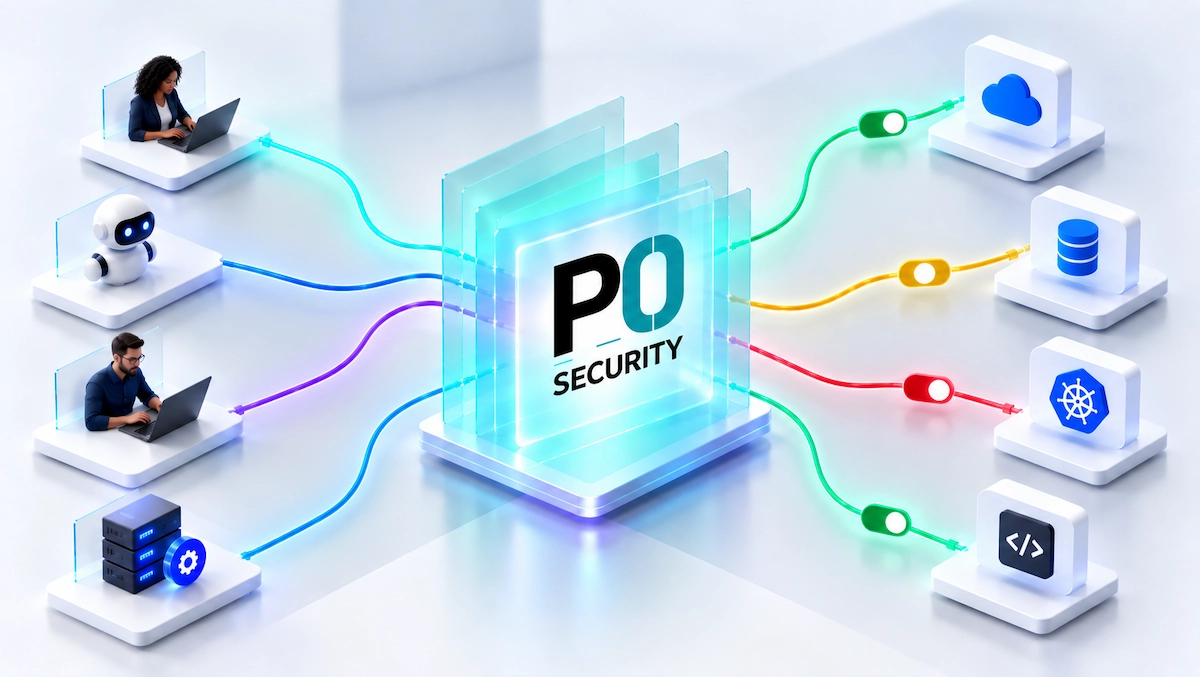
By 2026, P0 was describing itself as an authorization control plane for agents and users, expanding beyond AWS, Azure, Google Cloud, Kubernetes, Snowflake, and servers into applications such as Salesforce, Cloudflare, Grafana Cloud, and Datadog. The market position is deliberate. Authentication vendors prove who arrived. Network products decide who can connect. Legacy PAM guards credentials. P0 wants to decide which action may happen now, using whose authority, and for how long.
The part worth copying
A company does not need to buy P0 to borrow its most sensible idea: make the secure path the faster path. Put the access request in the tools engineers already use. Define the smallest useful scope. Attach an expiration time before granting anything. Pre-authorize emergency rules for the on-call person. Record the decision and the resulting action in one place. Begin with the systems where permanent access is both common and consequential.
That is the modest genius of the five-minute window. It does not ask engineers to stop needing power. It asks the company to stop confusing a recurring need with a permanent right. Security products often promise to remember everything. P0's sharper promise is that the system will remember the reason - and forget the privilege.