Most skincare aisles ask you to choose your one problem. Dryness lives over here. Blemishes are down there. Fine lines occupy a tastefully lit shelf at eye level. Human skin, annoyingly, has not agreed to this filing system. It can be sensitive and oily, red and dehydrated, breaking out and showing age at the same time. Omy Lab built a company around that small retail absurdity.
The Quebec City business makes personalized day and night creams, serums, toners and eye care, alongside a broader line of ready-made cleansers, moisturizers and treatments. A customer can take SkinIA, its roughly five-minute AI-assisted analysis developed with dermatologists, or speak to a skin expert by phone, video or in person. The recommendation feeds a formula assembled from choices of texture, targeted active ingredients and, for some creams, natural fragrance. Omy says the system supports nearly 20,000 combinations.
That sounds like a software pitch. It is actually a manufacturing story. Formulation, testing, filling and shipping happen in Omy's own laboratory. Personalized products are made fresh, the company says, on the day they ship. The quiz is merely the polite front door to a factory that has to turn a messy human face into a repeatable order.
01 / The origin
The first idea did not survive the first co-founder
Andrea Gomez did not begin with customized moisturizer. After working in project management at Quebec's revenue agency, she was developing personalized makeup palettes. She needed a chemist. Rachelle Seguin, trained in cosmetic chemistry and pharmaceutical sciences, happened to be developing her own project for customized facial care. Their concepts overlapped, but the skincare problem was deeper and the scientific fit was better. They combined the projects. A week after meeting, the pair were in New York talking to suppliers.
That was the first useful failure: not a product flameout, but an initial concept abandoned when a stronger founder-market combination appeared. Gomez brought years of pharmacy cosmetician experience and business training. Seguin brought formulation science and a childhood ambition to run a cosmetics laboratory. Both had seen customers with sensitive, complicated skin leave the counter carrying products built for only one concern.
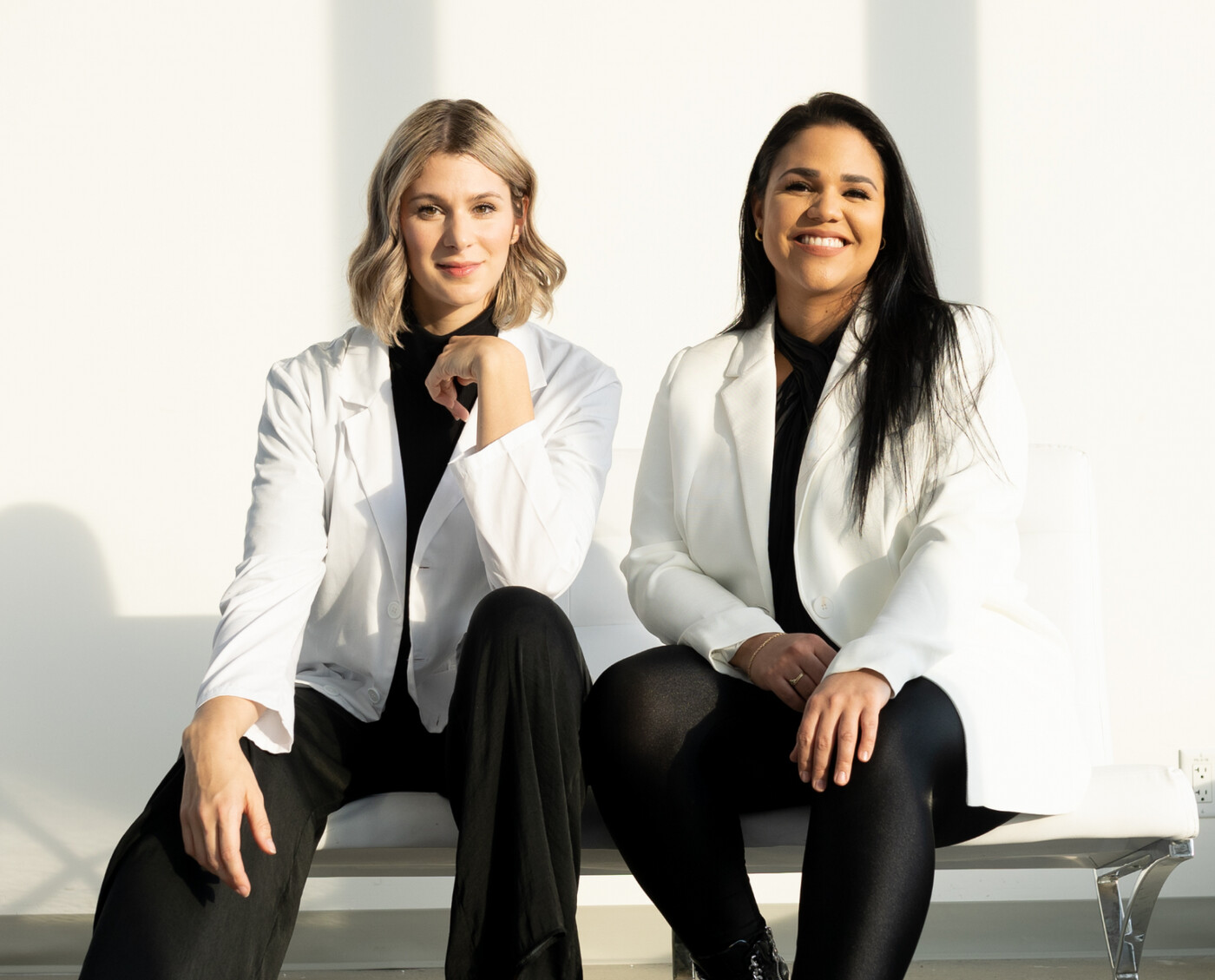
They founded Omy in 2018 inside Universite Laval's laboratory ecosystem, with help from the school's entrepreneurship incubator. The legal company is PSYCOS Dermocosmetiques inc.; Omy is the name customers remember. Early on, there was no pile of founder capital. The pair entered competition after competition - roughly 50 by 2023 - and collected hundreds of thousands of dollars in prizes and grants. They also sold products from other brands to generate cash while developing their own.
“Each penny can make the difference. Testing and innovation are the key.”Omy's founders, on using early contest money
There is a clean lesson hiding in that unglamorous arrangement. The resale business did three jobs: it made cash, kept the founders close to skincare buyers and funded the proprietary line. The competitions added non-dilutive money and forced them to explain the idea repeatedly. Before investors financed scale, customers and judges financed proof.
The personalization loop
02 / What customers buy
A C$70 cream - plus the right to change your mind
Omy's current personalized lineup includes a C$69.99 day cream, C$74.99 night cream, C$89.99 serum and C$79.99 essence-toner. Customers can choose among three cream textures and targeted ingredients; eligible creams also offer a scent choice. For someone unsure about an algorithmic recommendation, a free consultation supplies the human override. The company will reformulate a personalized product without charge as needs change.
The target customer is not merely someone enchanted by customization. It is the person whom mass segmentation handles badly: sensitive skin with overlapping concerns, or a routine that must change between a Quebec winter and an air-conditioned summer. Omy's formula can evolve without forcing that customer to rebuild the entire routine.
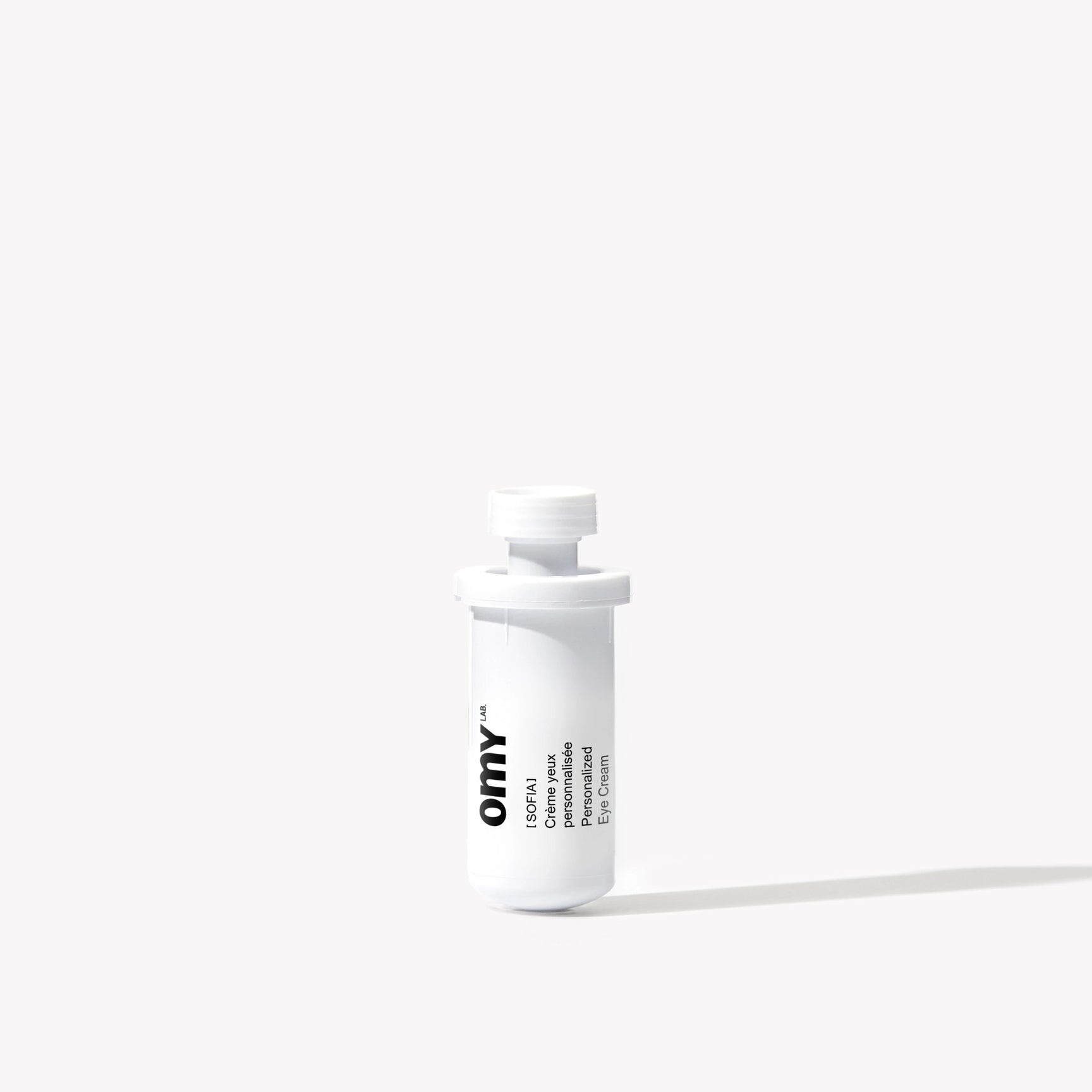
The refill is where the environmental claim becomes tangible. Omy spent about three years developing a reusable glass bottle with an airless refill made from recycled and recyclable plastic. The sealed cartridge shields a fresh formula from air and light. The pump avoids a metal spring so the bottle can itself be recycled. All of that is harder than placing a green leaf on a carton, and it is more useful because the same customer can return with a revised formula.
03 / The scale bill
Personalization gets expensive exactly when it begins to work
Made-to-order beauty creates an awkward operating problem. Every additional choice can mean more ingredients, more quality checks, more inventory states and more ways to pick the wrong jar. Omy's answer was vertical integration and automation. In 2021, it was preparing an 8,000-square-foot laboratory with more automated production. In 2022, the company secured C$2 million in non-dilutive financing to buy machinery and automate part of the line.
Then came the larger wager. In April 2023, Credit Mutuel Equity led a C$11 million round with Fondaction, BDC Capital's Thrive Venture Fund and Accelia Capital. The money was earmarked for hiring, production equipment and North American expansion. The public funding figure is Canadian dollars; a smaller database number in U.S. dollars can make the same round look like two different events.
From proof money to production money
The first financed machinery and partial automation. The second added people, equipment and an expansion mandate.
The growth model also changed. Omy had been largely direct-to-consumer, selling through its Shopify storefront and converting uncertain shoppers with consultations. In May 2024, a 19-product assortment entered more than 400 Jean Coutu and Brunet pharmacies across Quebec, Ontario and New Brunswick. Six new products joined 13 existing staples, while shoppers could still order personalized routines. The pharmacies provided reach; the digital diagnostic preserved some of the original tailoring.
This was a return to the founders' old counter, not a repudiation of online sales. Both had worked as cosmeticians in pharmacies. They knew customers with significant or sensitive-skin concerns often prefer that setting. Omy's reported 2024 revenue estimate was C$10 million. By 2025, an OSEntreprendre program described a team of nearly 60 and more than 100,000 customers across North America.
04 / What is actually defensible
The AI gets attention. The closed loop earns it.
Skin quizzes are cheap to copy. A competitor can ask about dryness and redness before lunch. Omy's differentiation is that the answer can alter the physical product, not just the recommendation carousel. The company controls the chain from analysis to formulation, testing, production and fulfillment. Its laboratory can make a tailored item fresh; its consultation team can catch doubt; its refill system creates a reason to return and update.
The wider market contains two kinds of rivals. Pharmacy dermocosmetic brands such as La Roche-Posay, Bioderma, Vichy, Avene and Quebec's Jouviance offer recognition, clinical positioning and instant shelf availability. Digital-first personalized companies such as Proven, Curology and Function of Beauty train shoppers to expect a quiz and a named formula. Omy sits between them: local manufacturing and a configurable product on one side, pharmacy access and expert advice on the other.
Its credentials help support that middle position. Omy became a certified B Corporation in July 2023 with a score of 90.6, above the certification threshold of 80. It says its products are vegan, cruelty-free, dermatologically tested and formulated with more than 95 percent naturally derived ingredients. Its public awards include a Mercuriades prize for innovative manufacturing and ELLE Canada beauty awards. These do not prove every formula will suit every face. They do show that the company has collected third-party signals beyond its own quiz results.
Four things another founder can steal
- Define the awkward customer. Start with people poorly served by one-size categories, not with “personalization” as decoration.
- Sell beside the future product. Omy used adjacent resale revenue to learn and finance before its own line carried the load.
- Connect diagnosis to production. A quiz matters when its answer changes what gets made, delivered or supported.
- Scale channels after the loop works. The online model proved demand; pharmacies expanded reach without deleting consultations or custom routines.
05 / Where the playbook breaks
Customization is a tax before it becomes an advantage
The Omy playbook is not a free “add AI” template. It works when customer needs genuinely vary, product modules can be combined safely and the margin can absorb consultation, formulation and fulfillment. It also needs customers willing to answer questions and wait for a made-to-order item. A commodity category driven by lowest price and immediate delivery would punish the same complexity.
The recommendation changes the marketing copy but not the underlying product.
Each variation creates uncontrolled testing, inventory or regulatory costs.
Customers cannot perceive enough benefit to repeat, refill or tolerate a wait.
Retail scale flattens the custom experience into the same shelf choice as everyone else.
There is also a delicate trust question. A face scan concerns health-adjacent data and appearance, even when it is selling cosmetics rather than medical treatment. Human consultations, restrained claims and careful privacy practices matter. Omy's best design decision may be keeping several doors open: use SkinIA, answer a questionnaire, speak to an expert or choose a ready-made product. Personalization should reduce confusion, not turn a moisturizer purchase into an entrance exam.
Omy's arc is still unfinished. The 2023 capital was intended to push farther across North America, while the most visible retail expansion has been in three Canadian provinces. But the company has already answered the question that sinks many personalized-product pitches: what changes after the quiz? In Omy's case, ingredients can change, texture can change, a refill can change - and a lab in Quebec City has to make the promise physical.