For nine years, Omri Stern helped Jones decide what to build, whom to serve and which arguments deserved another round. Then he began practicing a different contribution: sitting in a meeting while somebody else had the final word. A founder can announce a successor in an afternoon. Learning to leave the microphone alone takes longer.
In January 2026, Jones named Paul Szemerenyi its next CEO. Stern had initiated the change and would move to an active board role, concentrating on long-term strategy and innovation. The company described a transition running through March 31. There was a schedule, a successor and an explanation. Everything a handover needs, except a guarantee.
Stern subsequently made the handover unusually interesting by writing about it while it was happening. He laid out the mechanics, described the friction and promised to return with an audit. That promise matters. A plan published before the outcome leaves its author fewer places to hide. By April, he had a result to report and an assumption to retract.
The episode also brings his career into focus. Stern has spent years finding the awkward work between a transaction and its completion. First came the insurance certificate that prevented a building-software deal from moving ahead. Eventually came the founder whose accumulated judgment could help a company move forward, yet also make it depend on him.
Five websites, ten brokers, one opening
Stern’s education included government and international affairs at the institution now called Reichman University, followed by an MBA at Harvard Business School, completed in 2015. Before Jones, he worked at Zerofootprint, which offered energy-management software for buildings. Selling into real estate gave him an education of a less ceremonial kind: getting a customer to agree could still leave a great deal unfinished.
Each property needed its insurance paperwork approved. A portfolio could contain hundreds of properties, turning a successful sale into a long sequence of separate administrative requests. In a 2022 interview, he recalled customers treating this obstacle as the ordinary way business worked. The irritation was familiar enough to become almost invisible to the people living with it.
There was also the experience of trying to buy business insurance himself: five websites, ten brokers and no satisfactory result. He obtained a broker’s license to understand the system. In 2018, he described his professional habitat as “dusty, old, unsexy industries.” Insurance had apparently reviewed his résumé and decided he would fit right in.
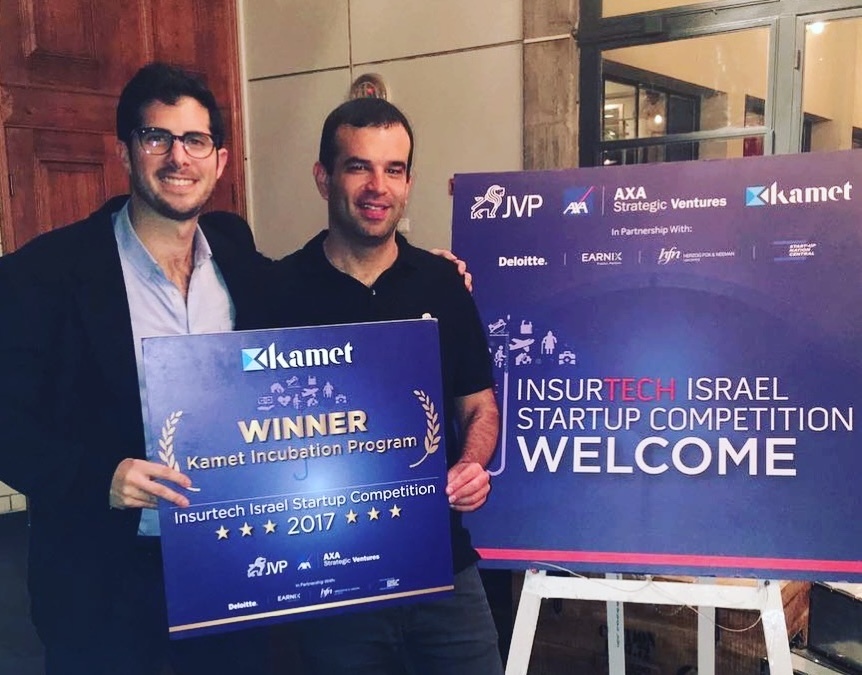
He and Michael Rudman founded Jones in 2017. An early version offered contractors liability insurance they could switch on for a project. The later business would center on insurance compliance. That distinction helps explain Stern’s route: his interest kept returning to the point where the work stalled, rather than remaining attached to the first product designed to get it moving.
The building has an inbox
A certificate of insurance sounds like a small object. Across owners, contractors, vendors and properties, its circulation becomes a large coordination problem. Someone requests it. Someone sends it. Someone checks it against the requirements for that particular job. A change or an exception creates another exchange. The building itself may be perfectly modern; its administrative conversation can still take place in a spreadsheet.
By 2023, Jones had developed a network containing more than 50,000 vendors and subcontractors with verified insurance data. Stern described his ambition as a shared database that property owners and construction managers could consult, reducing repeated collection and making approval faster. His chosen phrase for the underlying opportunity was “dusty, boring problems.” There is a certain efficiency in finding both your market and your temperament in three words.
The business attracted partners familiar with the buildings in question. A $12.5 million Series A in 2021 was led by JLL Spark and Khosla Ventures. Jones had already received the insurance-category Real Estate Tech Award in 2020. Those milestones put an administrative specialty in front of investors and customers who understood how much work could accumulate behind a seemingly minor requirement.
In January 2025, Jones announced a $15 million Series B led by NewSpring. Its next priorities included AI agents and deeper connections with enterprise software. It reported serving 25,039 properties and projects across more than 2.5 billion square feet in the United States. The humble certificate was now attached to a rather considerable amount of floor space.
Insurance-category Real Estate Tech Award
Series A led by JLL Spark and Khosla Ventures
Series B led by NewSpring
A co-founder who can question the shortcut
Stern’s account of Rudman makes the partnership more specific than the familiar pairing of a business founder and a technical founder. Early on, they faced a choice about building their own computer-vision technology. Rudman argued for using outside optical-character-recognition capabilities instead. The team could devote its effort to industry workflows, integrations and the information needed to understand difficult insurance cases.
The choice was consequential because the technical achievement and the customer’s problem were not identical. Reading a document was one task. Understanding what its contents meant in a particular workflow was another. An impressive tool could consume time without removing the obstacle that had brought Stern into insurance in the first place.
His later writing also describes a less glamorous product decision: standardized emails. User testing showed strong document-submission rates, so the company deferred requests for flexibility. It eventually learned that some customers needed a more nuanced way to communicate with their vendors. An email could perform well on a dashboard and still miss something in the relationship.
These recollections give his AI arguments their texture. The examples involve choices, consequences and somebody willing to challenge an attractive shortcut. A founder benefits from another person who understands why a seemingly economical decision might become expensive later. Rudman’s role, in Stern’s telling, was to bring that judgment into the room before the bill arrived.
- 01CollectCertificates, endorsements, policies
- 02VerifyMatch documents to requirements
- 03ResolveHandle exceptions and follow-up
When the founder becomes the junction
As Jones grew, Stern became a translator between its product ambitions, customers, engineers and board. A requested feature could be a commercial necessity to one team and a costly detour to another. He helped connect the competing views. That ability was useful enough for the organization to rely on it, which made the succession harder than changing the name on a chart.
His December 2025 reflections reveal a related weakness. When two functional leaders struggled to collaborate, he tried repeated process changes instead of confronting their lack of trust. He wrote that the hesitation lasted six months and contributed to two quarters of missed revenue targets. The lesson was uncomfortable for an operator inclined to solve problems by improving the system: sometimes another process merely postpones a decision.
By February 2026, with the CEO transition underway, he was watching product debates lose their old rhythm. Discussions that he once helped settle stayed unsettled. He described the need for executives to carry more of the decision-making themselves. The useful question became who could take responsibility, rather than how quickly the founder could restore a familiar balance.
One incident offered an answer. A senior operations director raised a problem with Rudman about how technical-review changes were being communicated. She addressed it directly, framing the issue around customer expectations, and they worked through it. Stern noticed because the conversation did not need to travel through him. Independence arrived in the shape of a practical disagreement handled by two colleagues.
Ninety days, and one false premise
The January handover plan had three parts: sharing founder knowledge, transferring operating ownership and aligning people around the future. Szemerenyi would control the budget, hiring and daily rhythm. Stern would move toward board governance, partnerships and the AI roadmap. The separation needed to be clear enough that employees could tell whose decision they were hearing.
The company had reached a different stage. Stern described eight-figure annual recurring revenue and a shift toward more disciplined execution. Szemerenyi brought experience at Allbound, Bizzabo and Fuze. Hiring him reflected a decision about the kind of work Jones now required, as the demands of running a larger software business became more prominent.
In his April 30 audit, Stern reported that sales-cycle time had fallen from 112 days to 59 and that March had been the strongest month for new annual recurring revenue in two years. These were his reported results for the transition period. He also wrote that the team was increasingly looking to the new CEO for the final word.
The part he revised was the assumption that founder intuition could be handed over with the information behind it. “Product vision isn’t a slide deck,” he wrote. Customer knowledge and roadmaps could be shared; interpreting them together and persuading a team to pursue a direction had to be learned. His recommendation was to identify who would carry that responsibility before the founder stepped back.
“Product vision isn’t a slide deck.”
Omri Stern, April 2026

A shorter route to a sale
Sales-cycle duration reported by Stern in his 90-day audit. These are founder-reported observations during the handover period.
The work after the title
The personal side of the transition comes through in Stern’s account of his grandfather Murray, a founder in consumer goods and hospitality. At an anniversary gala for Shoppers Drug Mart in Toronto, Stern watched people rise to greet him years after his operating role had ended. The scene stayed with him as an example of work whose meaning survived the job.
His own move to the board required separating those things. Years of hiring, difficult decisions and shared achievements had made the company’s story feel inseparable from his own. He described the effort of releasing outcomes he could no longer personally direct. The writing is frank about attachment without pretending that a new title settles it.
His subsequent essays keep returning to the work others overlook. In June 2026, he argued that large software platforms leave messy industry workflows underserved. In July, he examined how AI might expand networks that connect separate companies. His October essay turned to skilled-trades training and the difficulty of matching a contractor’s short project horizon to the years needed to develop a tradesperson.
The scale of the subject has changed, but the habit is recognizable: find the obligation, follow the delay, ask why the sensible people involved cannot simply remove it. At Jones, that habit helped Stern build a business with Rudman. In the handover, it required him to examine his own place in the machinery. A company that can continue making good decisions without its founder in every meeting offers a quieter kind of achievement. It has learned to carry the work.
Continue the conversation
Follow Stern’s writing, meet the company, or explore the interviews and essays behind these chapters.