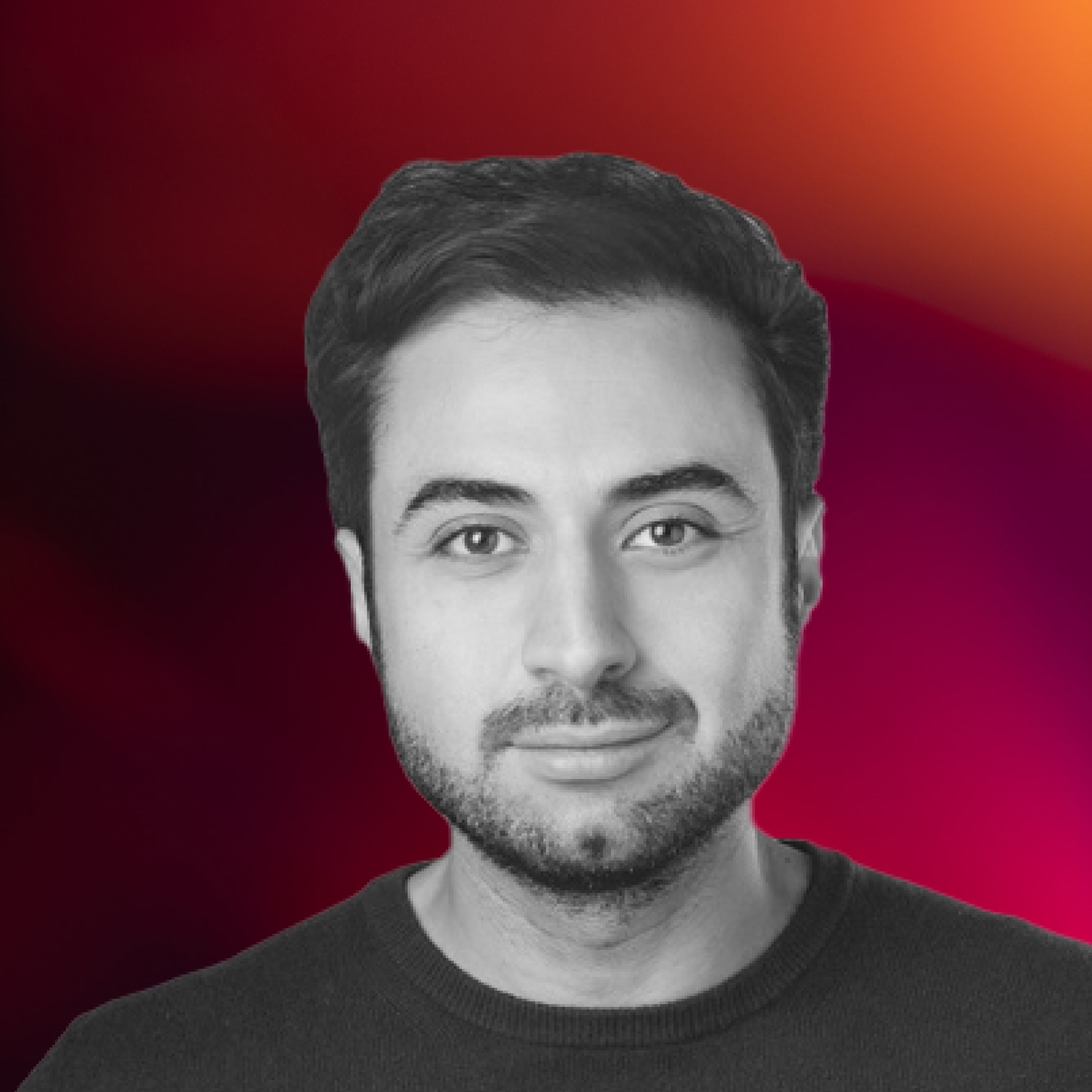
The Man Who Made the AI Say "Please"
Omar Shaya does not run a company that makes AI sound smarter. He runs one that makes AI do things - book the restaurant, block the calendar, turn the half-formed thought scribbled on a notes app into a finished plan with human follow-through if needed. The product is called Please. The name is deliberately polite, deliberately human, deliberately un-robot. That choice tells you everything about how he thinks.
The original name was MultiOn. Most people read it as "MUL-chun." Shaya called out the mispronunciation himself - publicly, in the rebrand announcement, as reason #1 out of five. It's a small detail that reveals a larger pattern: he builds for people who didn't grow up in the valley, who don't speak the jargon, who just want the thing to work. His target user is not a developer. It's the person who has twelve ideas before breakfast and completes maybe two of them by Thursday.
Shaya was born in Suwayda, a city in southern Syria that has been continuously inhabited for millennia. His mother is Venezuelan; his father is Lebanese. He grew up between Suwayda and Damascus before leaving for Göttingen, Germany, where he earned both a bachelor's and a master's degree in Computer Science, specializing in AI. German citizenship followed. Then Stanford, where he earned an MS in Management from the GSB and - more importantly - met his co-founder, Div Garg, who was deep in a PhD on reinforcement learning. They discovered they had independently been building toward the same problem.
Between Göttingen and Palo Alto, there were detours worth noting. He led product at LiquidM and Crealytics, two AI-driven marketing automation companies. He joined Microsoft's Search, Assistant, and Intelligence (MSAI) organization and contributed to what became Microsoft Copilot for the Office suite. Then Meta, where he ran product for Core Product Ranking - the machinery behind what surfaces in feeds. That's three very different contexts - European marketing tech, Microsoft's enterprise AI layer, and the world's largest social graph - before he built a company.
MultiOn launched in January 2023 as a browser-based extension. The premise: AI that takes action on the web, not just generates text about what actions you could take. Within months, more than 30,000 people were on the waitlist. General Catalyst led the seed round. Amazon's Alexa Fund joined. So did Samsung Next, Maven Ventures, Forerunner Ventures, and Blitzscaling Ventures. The round: $20 million. The valuation: $100 million. The company: less than 12 months old at the time.
The vision is to democratize access to help.
- Omar Shaya, Founder & CEO of Please (formerly MultiOn)Amazon's Alexa Fund was drawn in partly by MultiOn's ability to connect with virtually any device or interface on the internet - a capability that made it a natural fit for Alexa's own ambitions to do more than just set timers. There were reported discussions between the companies about deeper integration. Nothing was formally announced, but the interest was real enough to make Shaya's seed deck more interesting to other investors.
CES 2024 was a pivotal moment. MultiOn appeared as an Alexa Fund portfolio company, presented an AI that could autonomously handle web tasks end to end, and validated the thesis at the industry's biggest showcase. By that point the team was small - 33 people - but punching well above their weight class in terms of technical capability and media attention.
The rebrand came in January 2025. MultiOn became Please. Shaya listed five reasons publicly: the mispronunciation problem, the word "please" as a universal way to ask for help, the warmth it carries as opposed to the cold-tech feel of the original name, the signal that the product was for people rather than developers, and a fifth reason that points toward the company's vision of AI that feels more like a helpful friend than a command-line interface. The iOS app arrived in February 2026, with AI-powered idea capture, smart planning, and a human concierge service for when you need someone to actually make the reservation.
Shaya plays classical and flamenco guitar - seriously, not as a conversation piece. Both genres require years of deliberate practice before anything sounds remotely right. They reward patience and attention to the human on the other end of the music. It's an odd but fitting hobby for someone who keeps insisting that AI should feel less like a tool and more like someone who listens.
He has collaborated with Jusoor, a nonprofit founded by Syrian expatriates, supporting Syrian refugees through education and career development programs. This isn't an honorary board membership. It's a person who left a country in distress and decided to build backward connections when he could have simply moved on.
He holds several patents in AI applications, filed during his time in industry. He appeared as a panelist at TEDAI San Francisco. He has talked about meeting Bill Gates during MultiOn's rise - a data point he mentioned almost in passing during a podcast, which is exactly how people who've done genuinely impressive things often reference the most impressive parts of their story.
Please the product is now aimed directly at creative professionals - people whose main bottleneck is not ideas but execution. The app handles idea capture (so nothing disappears), AI-powered planning (turning rough notes into actionable structures), collaborative sharing (so plans can involve other people), and - the distinctive move - human "Please Pros" who can step in and handle the details that AI shouldn't attempt alone. Book the restaurant. Handle the reservation. Call the vendor. Shaya calls this bridging the gap between what people dream of doing and what they actually achieve.
It's a deceptively large ambition dressed up as a scheduling app. The word "democratize" appears frequently in his interviews. He means it specifically: personal assistants have always existed, but only for people who could afford them. His bet is that a well-designed AI layer, with human backup available on demand, can extend that access to anyone.
Suwayda to Palo Alto via Göttingen, Berlin, London, and Stanford. Four countries, three degrees, two languages minimum (probably more), one company that just turned two years old and is already worth nine figures on paper. The guitar player building tools for people who have more ideas than hours. He named it Please, because why wouldn't you.
Please (Formerly MultiOn)
Please launched on iOS in February 2026, under the entity Please Platforms. The product is positioned for people whose ideas consistently outpace their ability to execute - creative professionals, entrepreneurs, planners - anyone who ends a day with a head full of unfinished thoughts. The AI captures, organizes, and builds out plans. The human concierge service handles what AI can't: calling vendors, making bookings, handling logistics that require a real person. The combination is the product's main differentiator.
The Long Route to Palo Alto
Selected Quotes
Our AI is taking actions and not just generating text, so we're careful around safety.
- Omar Shaya, on the responsibility of agentic AIUnite great technology with great design, with the user at the center.
- Omar Shaya, on the company's design philosophyOur purpose at Please AI is to empower people to bridge the gap between what they dream of doing and what they actually achieve.
- Omar Shaya, on the Please AI mission