Omar Gabr and Moataz Soliman had built a website with a problem: people preferred one small piece of it. The platform was meant to connect mobile developers with people who could test their apps. Inside it was a shortcut for reporting bugs. Shake the phone, send the feedback, carry on. The rest of the proposition was having a considerably less enthusiastic reception.
For a founder, this is an awkward kind of encouragement. Someone likes your work, provided you remove most of it. Gabr and Soliman listened. They stripped away the surrounding features and made the reporting tool the business. A product that would eventually reach billions of devices began with the willingness to throw things out.
Today Gabr is co-founder and president of Luciq, the company long known as Instabug. His career connects Cairo University, Egyptian startup incubators, Silicon Valley investors and the ordinary annoyance of an app that refuses to behave. Its recurring subject is feedback: how to collect it, how to understand it, and how much pride to swallow when it points somewhere inconvenient.
Before the testing website, the pair had been working on an app for organising events. They wanted other people to try it before release. Looking for a way to arrange that testing led them into building the website; building the website led them into the reporting tool. Their eventual business lay two turns away from the thing they had set out to make.
They put a short demonstration online and shared it with Hacker News. Interest arrived before there was a finished product to sell. Developers wanted to know how to use it and what it would cost. The useful question had changed: how much further could this small feature go?
A shake travels better than a pitch
The gesture was easy to grasp. An irritated user could shake a phone and bring up a report, rather than leave the app to compose a separate explanation. Behind that simple action, the tool gathered technical context. The user could describe what had happened while the developer received information useful for investigating it. Less detective work, fewer exchanges asking which phone or software version had been involved.
The founders began the venture around the end of their university years in Cairo, in 2012. Flat6Labs supplied early support. In 2013 they won the MIT Enterprise Forum Arab Startup Competition and a $50,000 prize. A complicated product had become a short demonstration; that demonstration had become something judges, developers and investors could understand.
Getting to an audience was another matter. When the founders planned to present at MobileBeat in San Francisco in 2013, the closure of the US embassy during Egypt’s political upheaval prevented them from securing visas in time. A friend presented for them. Later they travelled to the United States and joined Blackbox Connect, a programme that helped them begin building a network there.
That episode gives the early company a less tidy geography than the usual startup postcard. The customers could be abroad while the builders were in Cairo. Travel, introductions and access had to be worked out alongside the software. A working demo was useful precisely because it could make an argument without requiring its inventors to be in the room.
Two founders, different jobs
Instabug joined Y Combinator’s Winter 2016 batch. Accel’s first investment came that year, at the seed stage. These became lasting relationships rather than a set of badges to collect: Accel would lead the $5 million Series A in 2020 and participate again in the $46 million Series B in 2022.
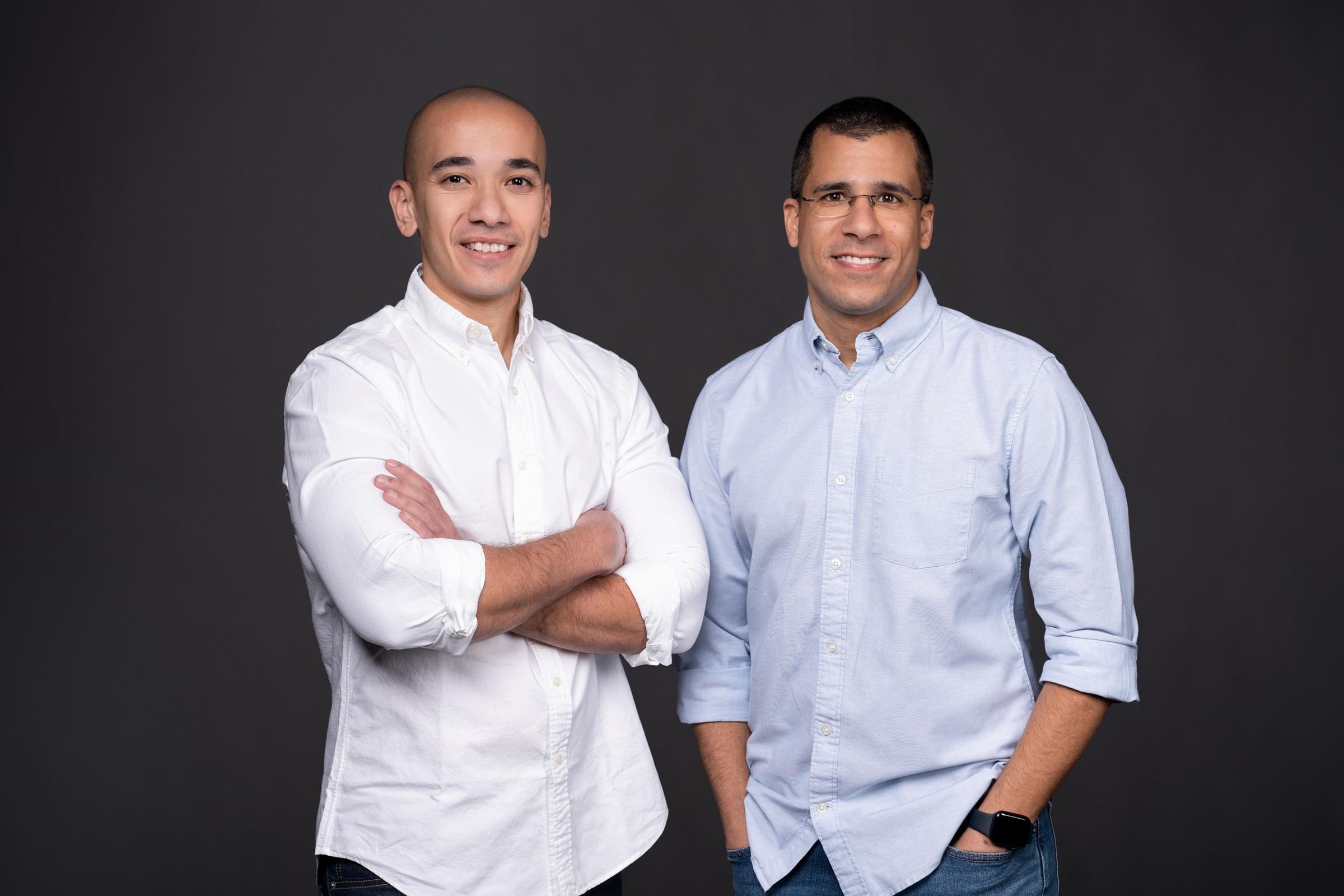
Gabr’s role increasingly centred on sales and marketing, while Soliman led engineering. In 2020 Gabr described dividing his time between Egypt and San Francisco. The division of labour mattered. Reaching international buyers and building a technical product required different kinds of attention, even when the founders shared an engineering background.
Asked which other startup he wished he had started, Gabr answered, “I would probably choose Instabug all over again.” He also credited a co-founder whose skills complemented his own. There is affection in that answer, and a useful absence of founder mythology. A partnership can be a practical arrangement before it becomes a line in a biography.
By then, the company reported that its technology ran across 25,000 apps and 2.5 billion devices. Those were 2020 figures, measuring the spread of software inside other people’s apps. They were never a count of people subscribing to a standalone Instabug app. Its reach depended on the developers who chose to put it into their own products.
“You’ll get there eventually”
The work of explaining a technical company also happened inside its office. Yasmine Helmy joined as a marketer in 2015 and found herself among developers speaking a vocabulary she was still learning. Her interview with Gabr had covered acquisition channels, onboarding and conversion rates. The questions were specific; the expectation was that marketing would have to understand how the business worked.
When the first company standup left her struggling with the technical conversation, Gabr offered a short reassurance: “Don’t worry, you’ll get there eventually.” He shared articles and guides with her through Slack, covering subjects from content and search to growth marketing. In another small demonstration, he showed her how a browser’s Inspect Element feature could change a webpage.
The scene is a useful companion to the founder on a conference stage. Here the job was to help a new colleague get enough footing to contribute. The person responsible for selling a developer tool was also explaining the developer’s world to someone sitting inside the company. Patient explanation was part of the work.
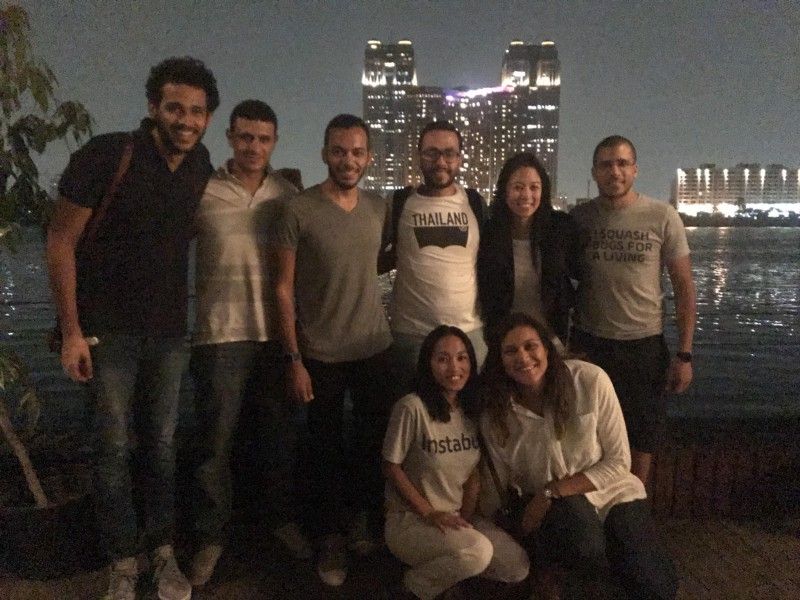
In 2017, Accel introduced executive-in-residence Elain Szu, whose previous work included product marketing at MoPub and Twitter. She had already been helping portfolio companies with positioning, segmentation and launches. A photograph from the announcement shows her with the Instabug team. Around the code, a business was acquiring more people who could help explain what it was for.
The office goes to Nepal
Gabr’s view of a team extended beyond its output. In 2018 Instabug took its staff to Nepal, following a retreat in Beirut the previous year. The group had doubled in size. Activities ranged from hiking and paragliding to bungee jumping, with quieter options for colleagues who preferred a holiday without an encounter with gravity.
He talked about the pleasure of building a company together, the memories made outside work and the chance for colleagues to meet people they had barely spoken to in the office. The practical arrangements were handed to Egyptian travel startup Gazef. A larger group needed a proper schedule and help with the logistics.
Asked about the ambition to become a unicorn, Gabr was cautious. “Getting too confident can break a business,” he said. The aspiration was there, but so was an insistence on small, consistent steps. He also told other founders that team building could start with a day away from the office. Nepal was optional. Knowing the people you work with was the point.
There is a pleasing tension between the pictures: the bug-reporting company heading out for adventure, while its chief executive argues for measured progress. The retreat made room for both. Some colleagues could jump; others could sit still. Even away from the product, the organisation left room for different preferences.
“Getting too confident can break a business.”
Omar Gabr · 2018
When the bug reporter became the dashboard
Inside customers’ organisations, the audience was changing too. Gabr described a gradual expansion in 2019: developers brought in their testing colleagues, employees submitted feedback, external beta testers joined in, and product managers began using the dashboard. The same opening that admitted a bug report could admit a wider conversation about the app.
That sequence helps explain why the company kept expanding beyond its first trick. A developer wanted to reproduce a fault. A tester wanted to report it accurately. A product manager wanted to understand what users were encountering. Once those people shared a tool, they brought different questions to it. Keeping the reporting gesture simple did not require keeping the business small.
The 2022 financing put $46 million behind a broader ambition: mobile observability and performance monitoring. In plain terms, the company wanted teams to understand what was happening inside their apps, including problems that users had never bothered to report. Gabr’s announcement set out the scale of the preceding year: more than 2.7 billion devices reached and 110 billion mobile sessions processed in 2021.
The founders described the move from testing before release to understanding apps in production, and from crashes to slower, less obvious frustrations such as sluggish launches and frozen interfaces. They were also addressing a human complication: in a large engineering organisation, someone must decide which team owns the offending code. Finding an issue is only useful if it reaches someone who can act.
In his 2020 account of the business, Gabr had emphasised close customer contact and financial discipline. He said paid plans launched in early 2015 and the company reached profitability that September. Those details add texture to the funding announcements: there were customers paying for the tool, and decisions about how to sustain it, well before the larger rounds.
A new name, a different chair
In February 2025 the company announced that Jim Douglas would take over as CEO, with Gabr continuing as co-founder and president. After roughly thirteen years at the helm, Gabr’s responsibilities were changing. The announcement described his continuing involvement in the company’s direction and innovation. It was another revision to something he had helped build.
Then, in September 2025, Instabug became Luciq. The new name accompanied a shift towards AI agents intended to detect, diagnose and help resolve mobile issues. The company called the approach agentic mobile observability. Behind the new vocabulary was the familiar commercial question: how can the people responsible for an app get from a problem to a useful response with less delay?
Gabr remains connected to the founder community as well. In September 2026 he was announced for Egypt’s Entrepreneurship Sector Diagnostic Report Summit in El Gouna, billed as Luciq’s co-founder and president. The career now includes sharing experience with other entrepreneurs alongside the company he started with a university friend.
The memorable detail in his story is still the smallest one. People looked at a website and wanted the shake. Gabr and Soliman let that reaction alter their plans. Years of hiring, selling, financing and rebuilding followed. The first consequential decision was wonderfully economical: keep the part people want.
Follow the conversation
- Luciq
- Omar on LinkedIn
- Omar on X
- Omar’s company essays
- Watch: the origin story with Julian Birkinshaw
- Read: the 2020 founder interview
- Read: Cairo and San Francisco, 2020
- Read: a marketer joins the team
- Read: the Nepal retreat
- Read: the early journey, 2015
- Read: the 2022 product expansion
- Read: Gabr’s 2022 funding announcement
- Read: the 2025 leadership change
- Read: Instabug becomes Luciq