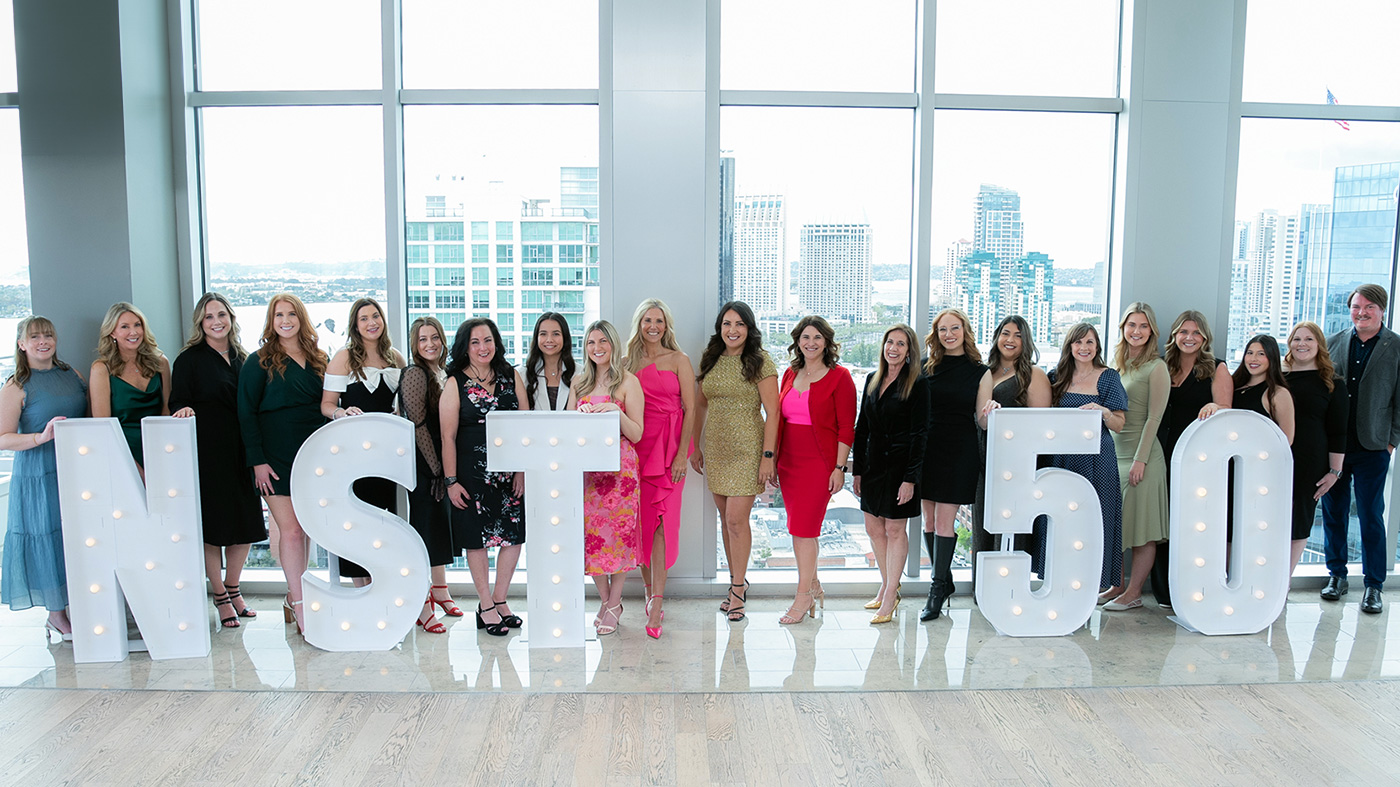
The first client was milk. In 1974, Dave Nuffer and Bob Smith opened a political campaign and special-projects shop inside the San Diego advertising agency Phillips-Ramsey. The Dairy Council of California hired them. Half a century later, after several leaders, three owners, a global pandemic and the invention of every modern social network, the council remains a client. This is either a charming bit of trivia or the entire business explained in one sentence.
Public relations firms are paid to make news, so their own biographies have a tendency to sound suspiciously eventful. NST's is more useful. It opened officially on April Fool's Day. Nuffer liked the joke. Smith was the analytical counterweight, remembered inside the firm as the man who insisted on due process and the high road. Kerry Tucker arrived in 1980 and pushed the agency deeper into agriculture and food. The mix - mischief, method and mud-on-the-boots subject knowledge - became harder to copy with every year.
The business of making specific things matter
Today, NST sells the broad menu expected of an integrated agency: strategic planning, media relations, public affairs, crisis work, social strategy, influencer programs, websites, SEO, video, design and content. It earns project and retainer fees, though neither its rates nor revenue are public. The customers range from consumer brands and nonprofits to state agencies and grower boards. WD-40 Brand, the Port of San Diego, McDonald's operators, the California Department of Food and Agriculture and the Downtown San Diego Partnership all appear in its portfolio.
The category list is not the differentiator. Plenty of agencies can design a website or pitch a reporter. NST's edge is knowing why a homeowner carrying a bag of backyard lemons across a county line can become an agricultural threat, which mechanic a WD-40 buyer trusts, and why a grower will speak candidly in a private interview but not in a crowded meeting. Its communications start one level beneath communications, in the incentives and anxieties of the audience.
“Our purpose is to build connections and enact change.”NST's stated purpose
Twelve creators and a can with a red straw
NST had already worked with WD-40 for nearly three decades when it reported results from the brand's fiscal 2023 influencer program. The agency managed 12 partnerships across automotive, farming, construction, maintenance and home improvement. The names included Donut Media, Throtl, Humble Mechanic and Fix This Build That. These were not general-interest celebrities rented for a day. They were practitioners with audiences predisposed to care about a squeak, a seized bolt or a stubborn part.
The program delivered more than 182 million impressions and 691,100 engagements, exceeding the impression target by 298 percent, with an average CPM under $50. The number worth copying is twelve. It suggests curation, not indiscriminate reach. NST briefed each creator, taught product uses, collaborated on assets and reviewed the work. Relevance did the scaling.
Attention delivered / selected public results
A similar discipline appears in the 2021 Don't Move Citrus campaign. The problem was not awareness in the abstract. It was movement: people transporting fruit or plants and potentially spreading the Asian citrus psyllid and the lethal tree disease it can carry. NST mapped priority counties, placed billboards on travel corridors, ran English- and Spanish-language radio, bought streaming audio and social ads, and localized earned-media pitches. The campaign recorded 128 million touchpoints and 153 earned stories. The ask was short enough to fit on a sign because the research behind it was not.
The workshop before the website
In 2020, the Downtown San Diego Partnership asked NST to rebuild CreateTheFutureSD.com, a site promoting downtown commercial and residential opportunity. The visible product was a website. The first deliverable was a two-hour workshop. NST used it to settle shared goals, technical needs, research questions and launch outcomes. Perception research then exposed content gaps; SEO and analytics made performance observable.
Traffic rose 2,324 percent in the first year. Later changes added another 190 percent over six months, and the site reached more than 4,000 monthly pageviews. An email program averaged a 44 percent open rate and 6 percent click rate after six months. The agency continued meeting the client twice monthly and reviewing analytics quarterly. The replicable idea is pleasingly dull: discovery, instrument, review, adjust.
Interview the people closest to the decision, not merely the people with the largest titles.
Do not move citrus. Visit downtown. Use the product this way. Clarity is a creative constraint.
Track behavior and attention, then keep changing the work after launch.
The crisis begins before the statement
The least glamorous case in NST's public archive may be its most revealing. After a serious workplace accident, local television crews arrived unannounced. Reports carried incorrect information and unauthorized footage of an injured employee pinned by machinery. The first thing to fail was the information environment. NST went to the facility, established the known facts, built a positioning and messaging platform, trained a spokesperson and worked directly with the outlets. Corrections aired, the footage stopped and executives could return attention to employees and safety.
For a national food recall involving more than 100,000 products, the sequence grew longer: identify affected products and retailers, write consumer scripts and retailer letters, coordinate release approval with the FDA, use the Associated Press for national distribution, and monitor media and social channels. Crisis communications here is not a clever sentence. It is logistics under scrutiny.
The useful boundary: this model depends on access. An agency cannot produce credible specificity when a client withholds facts, refuses measurement or wants a celebrity audience instead of the right audience. The agriculture playbook also relies on stakeholder legitimacy and regulatory fluency. Remove those conditions and the same tactics become decoration.
Friday the 13th, ownership day
On March 13, 2020, longtime employees Teresa Siles, Mary Correia-Moreno and Price Adams acquired NST. The date was a Friday. It was also the day the United States declared a national emergency over COVID-19. Celebration gave way to triage. The new owners held the announcement, moved the team through the shutdown and added four employees during 2020. Within a year the agency had added more than a dozen client partners.
A virtual retreat in early 2021 produced three priorities: people, partners and promotion. The phrasing is tidy; the interesting thing is who wrote it. Three employees with more than 15 years each at NST had become the owners. Their change of mind was not a rejection of the old firm but a decision to apply its planning discipline inward.
Culture can be foggy copy, but NST leaves fingerprints. Its values include “be candid and kind,” “seek diverse perspectives,” and the less polished “have fun and get shit done.” Its Make Things Better program lets the staff rally around a cause. In 2024, 95 percent of employees participated in food-security work, packing 7,300 pounds of food and helping fund more than 8,000 meals. This is a small agency's version of scale: not everywhere, but unusually present where it chooses to stand.
That is where NST sits in the market. It is smaller than a global holding-company agency and broader than a boutique that only pitches media. Worldcom membership supplies international partners without erasing independent ownership. The agriculture and food practice provides a moat. San Diego supplies memory. Competitors can buy the same analytics software and call the same creators. They cannot quickly recreate fifty years of knowing which questions a grower, regulator, mechanic or local reporter will ask next.