A user in Vladivostok wants a file from Dropbox. Tokyo looks like a sensible place to send the request: glance at a map and the choice seems almost beyond argument. Unfortunately, the internet does not consult an atlas. Dropbox’s engineers found that the network journey could be painfully indirect. The nearby destination was a poor destination. Somewhere between those two statements lies the business of NS1.
- NS1 uses DNS answers to steer users toward healthy, responsive application endpoints.
- Dropbox’s results show why measured network performance can beat physical proximity.
- IBM owns the business; subscriptions start at $99 a month, with advanced capabilities priced separately.
The map was perfectly reasonable. The connection was not.
In its published engineering account, Dropbox described Russian internet providers whose connections ran west, making Tokyo an awkward choice despite its proximity. At the 75th percentile, round-trip times in the example were roughly 300-400 milliseconds. The trouble was a routing assumption. A ruler had been handed a job that required measurement.
Working with NS1, Dropbox developed a mapping approach that connected resolver subnets to preferred points of presence. IBM’s customer account reports 10-15% latency improvements at the 75th and 95th percentiles, and reductions of up to 200 milliseconds for long-tail users. A previously underused Berlin location became fully utilized. These are results from a particular network, rather than a universal discount on waiting.
“The best way to improve DNS load balancing and avoid such corner cases is to 'teach' it about your network topology.”Nikita Shirokov · Dropbox Traffic Team
The lesson travels beyond DNS. Before buying more capacity, ask whether the capacity already purchased is receiving the right work. An idle server and a frustrated customer can coexist quite comfortably. They simply need bad directions.
A directory learns to make decisions
Ordinary DNS translates a domain name into information a computer can use, including an IP address. NS1’s managed authoritative DNS adds discretion to that answer. If an application has several destinations, the platform can choose among them using health, geography, performance and configured rules. The company’s expertise sits at the intersection of naming, measurement and application delivery.
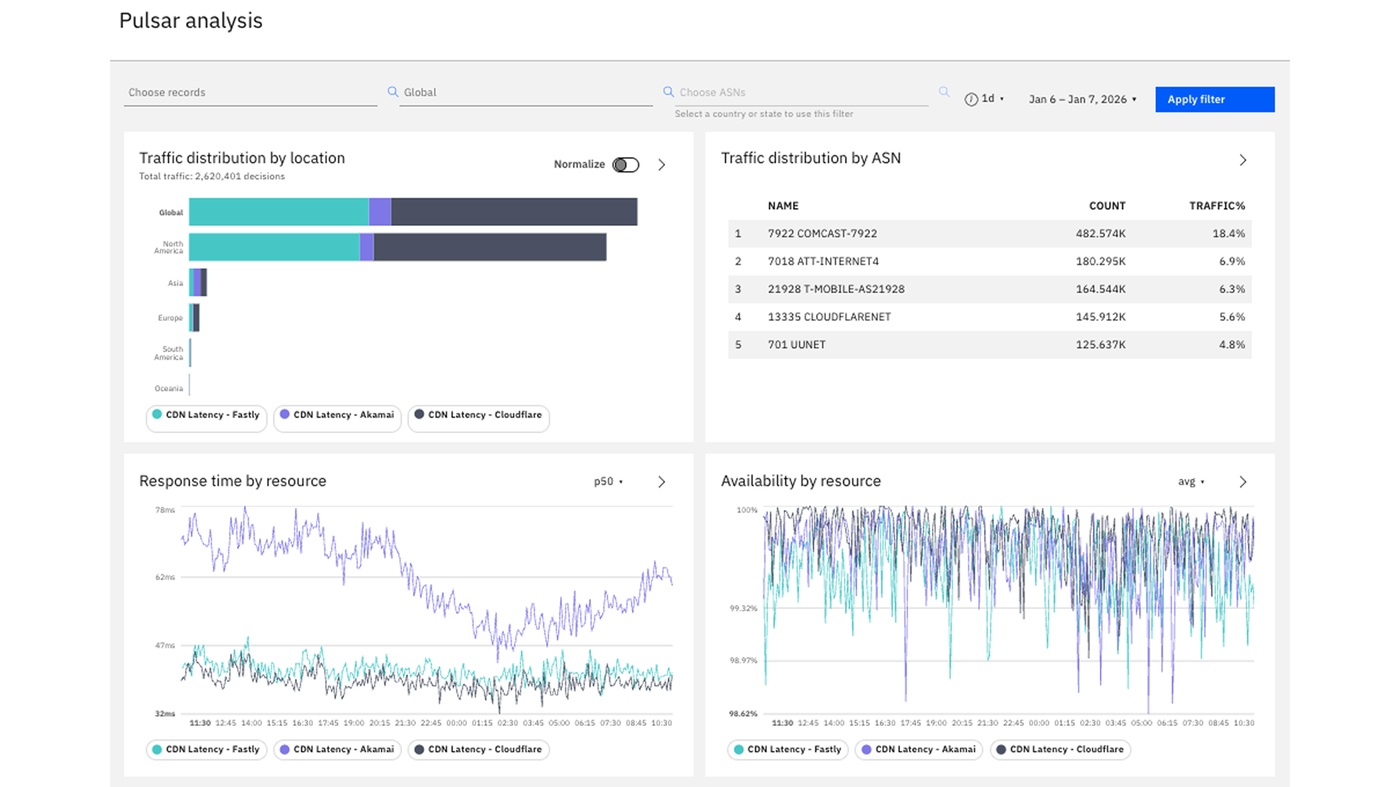
Its main product, IBM NS1 Connect, runs on a global anycast network. Filter Chains let teams combine routing rules. Health monitors help remove unavailable destinations from consideration. Pulsar brings real-user measurements into steering across clouds or content delivery networks. APIs make these settings programmable, a useful quality when deploying software is an everyday activity rather than an annual ceremony.
Netlify illustrates that audience. IBM’s case study describes its use of managed DNS and Pulsar for a platform serving millions of applications, with frequent programmatic deployments. Other public examples include Catchpoint, GlobalDots and IO River. The buyers are infrastructure, platform and reliability teams. Their customers usually have no idea NS1 exists, which is a respectable ambition for a company involved in loading screens.
The competition can make intelligent decisions too. Amazon Route 53 offers latency and health-aware routing; Cloudflare offers several steering policies and endpoint monitoring. NS1’s pitch emphasizes configurable decision chains and independence across cloud and CDN suppliers. Its place in the market is easiest to understand when a business has several plausible delivery paths and needs to keep choosing among them.
The investors bought a route to market
Kris Beevers, Jonathan Sullivan and Alex Vayl founded NS1 in 2013. By 2019, the company had raised a $33 million Series C led by Dell Technologies Capital, with Cisco Investments participating. A $40 million Series D led by Energy Impact Partners followed in 2020. Network infrastructure may lack the glamour of a consumer app; it has the compensating advantage of being necessary when the app succeeds.
Cisco’s account of its investment supplies a useful detail. NS1 wanted access as well as money. The partnership included an acceleration plan, integrations and eventual placement on Cisco’s Global Price List, bringing the product within reach of Cisco’s sellers. Distribution was part of the engineering company’s growth machinery.
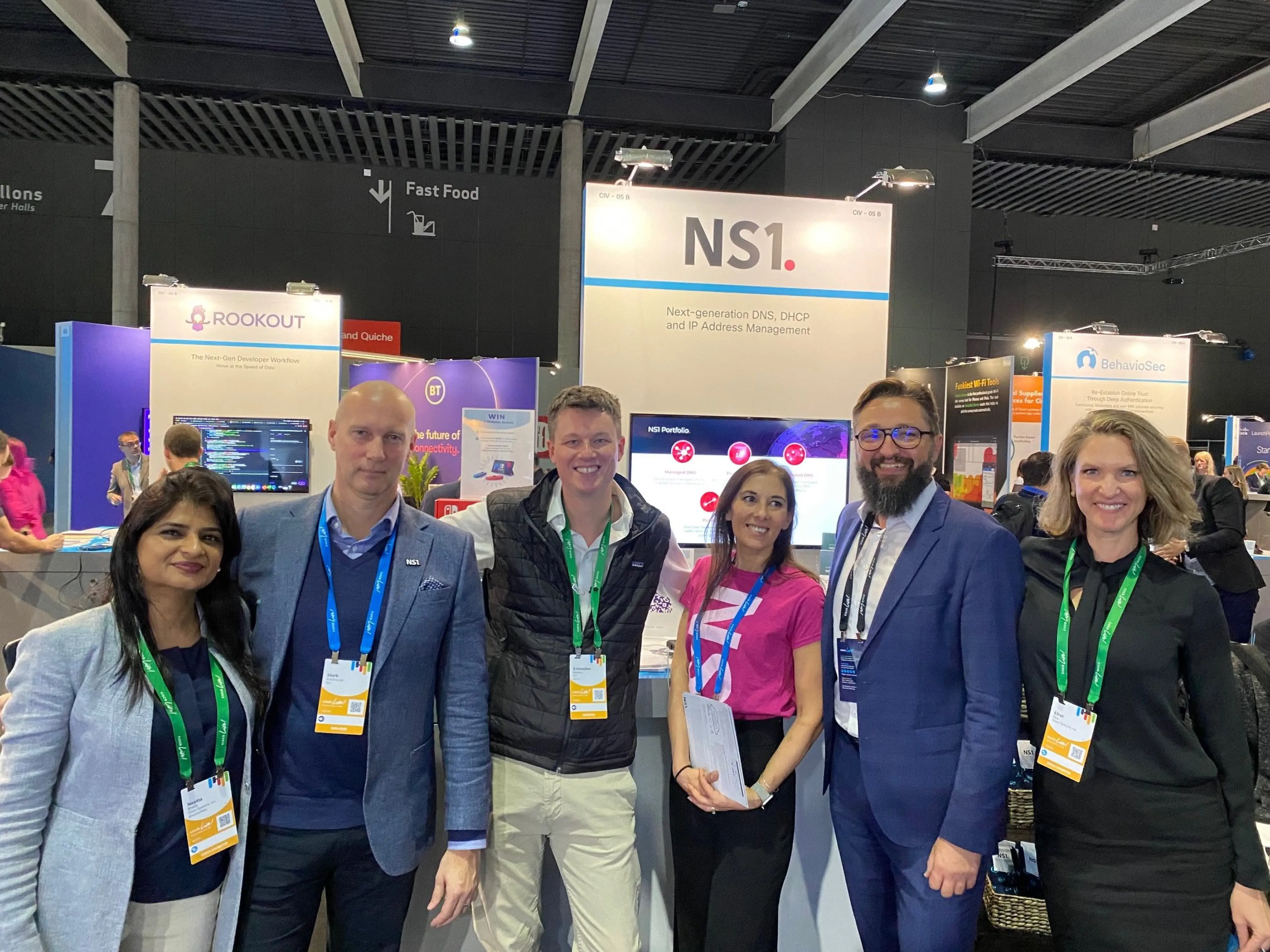
IBM acquired NS1 in 2023, adding its capabilities to a portfolio aimed at network automation and hybrid cloud. NetBox Labs separated as part of the transaction. IBM NS1 Connect arrived under its new branding that October. The acquisition placed a specialist routing business inside a company already selling enterprises the surrounding infrastructure.
The customer the pricing forgot
An unusually candid IBM Community post in June 2024 identified a packaging problem: NS1 had free developer accounts at one end and enterprise plans at the other. Growing smaller businesses occupied the uncomfortable middle. They wanted more capability without a procurement courtship. Essentials was introduced to give them an online purchase path.
Indicative USD starting prices, checked October 2026. Premium is quoted; usage, add-ons and taxes affect cost.
The business model is a subscription with allowances and options: queries, records, monitors and steering configurations help determine the package. Dedicated DNS, DNS Insights, China-specific delivery and RUM steering address more particular requirements. A 30-day trial lets a team test an actual configuration. The practical question is how much decision-making its application needs, rather than how impressive the longest feature list looks.
A routing policy needs somewhere to send you
The useful habit to copy is measurement before migration. Establish which users have poor connections, check endpoint health, then test a policy against the existing arrangement. A September 2026 IBM walkthrough shows Instana alerts and live load metrics feeding NS1 steering. It is an implementation example, with monitoring and configuration doing essential work behind the apparently simple answer.
There are limits. Steering requires a usable alternative destination. DNS caching also means a changed authoritative answer does not instantly replace every answer already stored elsewhere. Shorter time-to-live settings can make changes take effect sooner, while increasing query volume. A 100% DNS uptime SLA covers the contracted service; applications retain their own dependencies. For a simple site with one endpoint, elaborate steering offers little room to maneuver.
NS1’s most persuasive idea remains the one Dropbox made concrete. Distance is a clue. Performance is evidence. If your routing rules disagree with the road your customers actually travel, the rules are the cheaper thing to change.