Six months is an awkward unit of computer performance. Engineers usually prefer milliseconds. But in 2021, Nong Li was talking about data scientists who could spend six months getting access to a dataset they needed for their jobs. He called such delays horror stories. His verdict was brief: “And that’s just not right.”
By then, Li had spent years working on other kinds of waiting. At Cloudera, he helped build the machinery that executes queries. He was among the original authors of Apache Parquet, the file format used to organize data for analysis. At Databricks, he worked on making Spark faster. Then he co-founded Okera, where permission itself became an engineering problem.
It is a career best understood by following the queue. Sometimes the queue is inside a processor. Sometimes it sits between departments. A beautifully optimized engine can do little for an analyst still waiting for someone to hand over the keys.
A file format with several authors
Li studied computer science at Brown University, with his public education listing covering 2004 to 2008. His engineering background includes Microsoft, followed by Cloudera and Databricks. The work that makes his career distinctive is often several floors below the software a customer sees: execution engines, storage layouts, and the rules that let different programs interpret the same file.
In March 2013, an announcement introduced Parquet as a joint effort by Twitter and Cloudera engineers. The signatures included Li, Julien Le Dem, Marcel Kornacker, Todd Lipcon, Dmitriy Ryaboy, Jonathan Coveney, and friends. The closing phrase is a useful corrective to the habit of assigning an entire technical invention to whichever person happens to be in the photograph.
The premise was practical. Large analytical jobs could benefit from arranging information by column, with efficient encoding and compression. The format also needed to handle nested structures. And it was intended to serve different processing frameworks, data models, and programming languages. The announcement invited contributions. A common format would be more useful if other people could actually use it.
Name
NameCity
City
CityTotal
Total
Total
There is a smaller, less ceremonial record of Li’s involvement. On August 12, 2013, he authored a change to Parquet’s format documentation formalizing schema evolution rules. Among its instructions: how readers should treat a requested column that is absent from a file. Return null values. The change is modest enough to fit on a screen; its purpose is to make different pieces of software agree.
Such decisions help explain why infrastructure work can be difficult to turn into a conventional personality profile. A missing column produces no grand entrance. It simply needs an agreed answer. Li’s public work gives us something more concrete than an origin legend: decisions about what happens when real systems encounter imperfectly matching information.
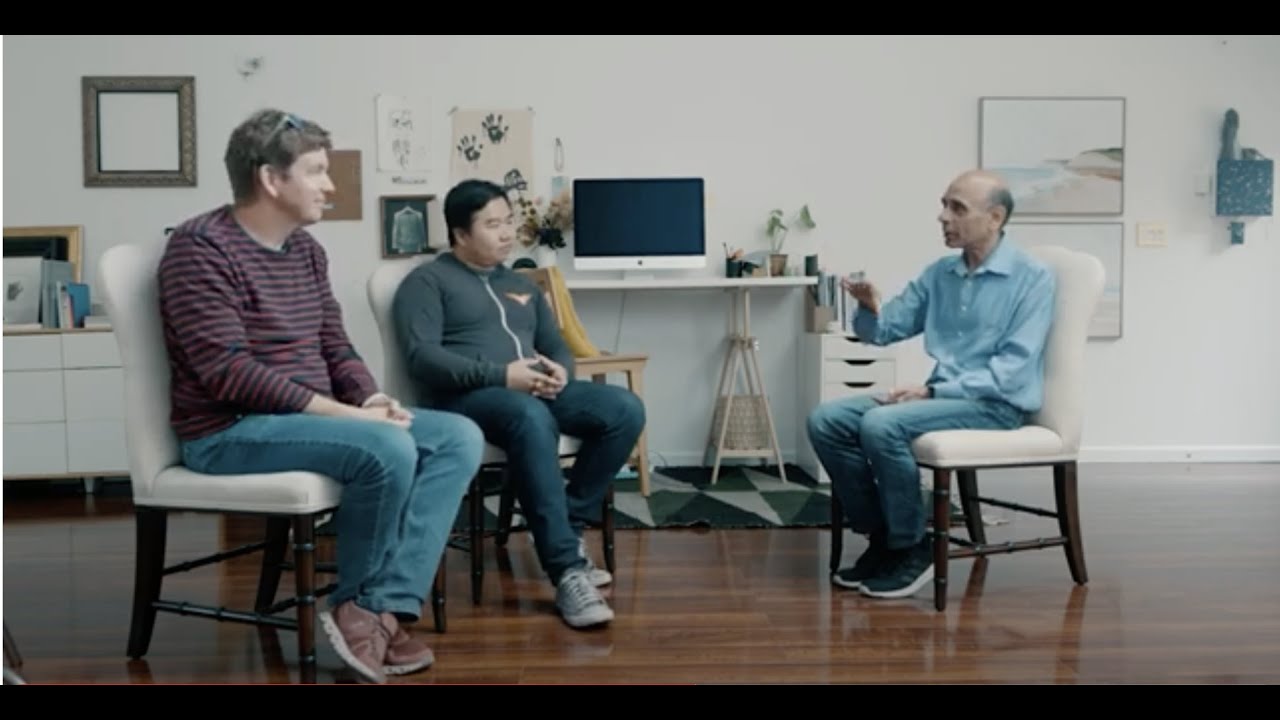
A decade later, Li and Le Dem sat down with Sanjeev Mohan to revisit Parquet’s beginnings. The setting was conversational, a few chairs rather than a product demonstration. By then, the file format had acquired a history worth remembering. The conversation placed two of its creators together, which is a sensible arrangement for discussing something built across company lines.
Making the engine answer sooner
At Cloudera, Li was technical lead for Impala’s core execution engine and the Record Service project. He also appears among the authors of the 2015 paper describing Impala, a SQL engine designed for analytical queries on Hadoop. Its concerns included low latency and many users running queries at once. These are the ordinary pressures behind an extraordinary amount of database engineering: somebody wants an answer, and other people want answers too.
His subsequent work at Databricks focused on Spark core and SparkSQL performance. Databricks later credited him with leading vectorized Parquet and code-generation efforts that contributed to Spark 2.0’s reported tenfold performance improvement. That is the company’s account of a broader engineering result, rather than a personal score attached to every query.
Storage and execution belong to the same conversation. How information is arranged affects the work required to read it. How an engine executes a request affects the time before an answer arrives. Li had worked on both. Okera would bring him to the organizational machinery surrounding those technical systems.
The queue outside the engine
Li co-founded the company that became Okera with Amandeep Khurana in 2016. It was originally called Cerebro Data. Khurana had worked with customers at Cloudera; Li brought experience inside the systems those customers used. Their backgrounds placed them on different sides of the same transaction: building a data platform and getting an organization to put it to work.
The beginnings had a familiar financial discomfort. In a 2017 interview, Khurana recalled unsuccessful fundraising while the founders were not yet working full-time on the business. They left their jobs and committed to it. This is Khurana’s account of their shared start, and it supplies a less polished detail than the usual founding date: the company first had to become the founders’ actual occupation.
Okera addressed a problem with an unusually large cast. Data teams wanted access. Security teams needed restrictions. Different applications and storage systems complicated enforcement. A company could buy software, hire people, collect information, and still struggle to let the appropriate person use the appropriate part of it.
“These regulations exist because citizens demand privacy.”
Nong Li · June 2022
Li’s explanations were grounded in what an analyst could see. A request might involve useful business information mixed with private identifiers. Filtering, masking, or tokenization could make a permitted version available while withholding sensitive values. The practical question was how to let useful analysis proceed under the rules.
He also argued for a universal approach to policy across platforms. Otherwise, each additional environment creates more work to define and enforce access. The attraction is easy to understand: an organization should be able to express a rule coherently, even when its technology collection has become rather less coherent.
In his own writing about data security, Li emphasized clear policies, classification, and automated enforcement. Manual oversight has costs and limits. Asking people to process each permission request can turn a necessary control into a permanent waiting room. The emphasis on automation fits his earlier engineering work: reduce repeated work where software can carry it out consistently.
An editorial map of the concerns behind Okera’s platform.
A title that kept changing
The executive history takes a few turns. Li began as co-founder and CTO. By 2019, he was being described as CEO. In April 2020, Nick Halsey became CEO and Li moved to CTO. In March 2022, Okera announced Li’s elevation to CEO again, retaining his technical role. Bobby Napiltonia joined as president, responsible for day-to-day operations.
That sequence matters because a single old biography can freeze him at almost any point in it. The actual record is more interesting than a straight march from engineer to chief executive. Technical responsibility persisted while the allocation of company leadership changed.
The product’s scope was changing too. Okera Spotlight, introduced in 2019, added visibility into data-lake activity. It combined audit information with analysis and metadata to help organizations understand usage. Permission is only part of the management problem. Once people are working with information, someone needs a way to see what is happening.
Back through a familiar door
On May 3, 2023, Databricks announced a definitive agreement to acquire Okera. It planned to bring the company’s governance technologies into Unity Catalog. For Li, the move also meant returning to a former employer. He greeted the announcement publicly: “Really excited about what’s next and coming back to Databricks!”
The timing placed Okera’s work inside the expanding discussion of AI. Databricks described the difficulty of governing workloads that extend beyond a conventional SQL environment, and the need to discover and classify sensitive information. Okera had been developing isolation technology intended to enforce controls across different workloads. The acquisition announcement described that technology as being in private preview.
Li’s stated purpose for founding Okera remained recognizable: speed up legitimate access while reducing risk. The ambition contains a tension that an acquisition cannot simply wish away. More people and applications want data. Rules must still distinguish among them. That makes authorization part of how a platform operates, every time it is used.
Still working on the wait
In June 2026, Li appeared among the authors introducing Databricks’ Lakehouse//RT, alongside Shoumik Palkar, Shant Hovsepian, Mostafa Mokhtar, and Reynold Xin. The announcement presented real-time serving within the lakehouse, tying responsiveness to shared data and centralized governance. His public Databricks speaker listing identifies him as an engineer.
There is a pleasing continuity in that credit. Parquet concerned the arrangement of data. Spark performance concerned its execution. Okera concerned permission and control. The later work puts speed and governance in the same architectural discussion. The connection is an interpretation of his work, but it rests on quite specific projects.
Six months remains a terrible query time. It is also a considerable portion of a person’s working year. Following Li’s career brings those two measurements into the same frame: the time a machine needs to produce an answer, and the time a person spends waiting to be allowed to ask.