He runs a 13-person company that manufactures a different cancer vaccine for every patient it treats. Then it published the data in Nature Medicine.
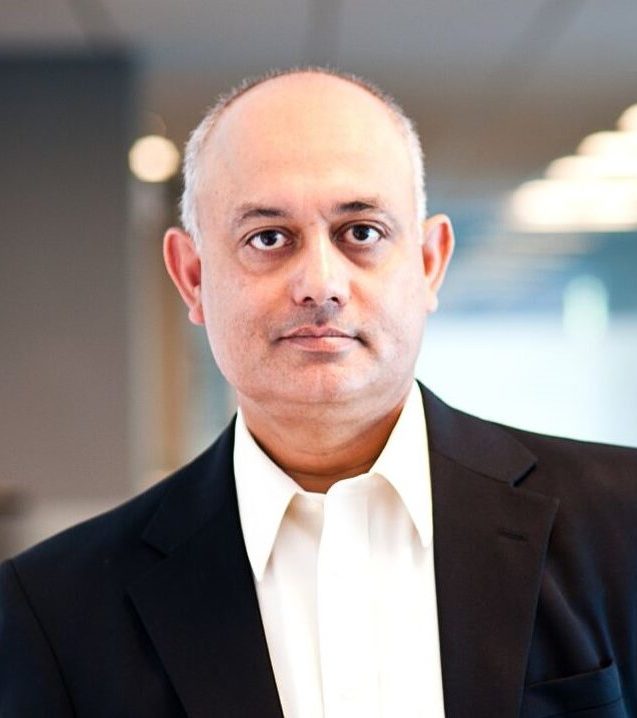
Most vaccines are made once and given to millions. Niranjan Sardesai's are made once and given to one.
At Geneos Therapeutics, the company he founded in 2016, a patient's tumor is sequenced, its private mutations are read off like a fingerprint, and a bespoke DNA vaccine is built to teach that person's immune system to hunt those exact mutations. No two vaccines are alike, because no two cancers are. It is personalized medicine taken so literally that the product ships with a single name on it.
Sardesai did not pick an easy proving ground. He aimed his flagship trial at hepatocellular carcinoma - advanced liver cancer, a tumor with a low mutation count and an immune system trained to look the other way. It is the kind of cancer that makes immunotherapy developers flinch. That, more or less, was the point. If the platform could move the needle there, it could move it anywhere.
In April 2024, the results landed in Nature Medicine. Complete responses. T-cell activation in every patient assessed. A mechanism-of-action trail connecting the shot to the shrinking tumor. For a company most people had never heard of, it was a very loud quiet.
The GT-EPIC platform turns a biopsy into a treatment. It reads the mutations that belong to the patient and nobody else - the neoantigens - and encodes them into a DNA plasmid delivered under the skin, paired with an IL-12 cytokine adjuvant and pushed into cells by electroporation. The goal is deceptively simple: hand the immune system a wanted poster it cannot ignore.
Read the patient's tumor and healthy DNA side by side.
➞Pinpoint neoantigens unique to that person's cancer.
➞Encode them into a bespoke DNA plasmid vaccine.
➞Intradermal shot plus IL-12, via electroporation.
➞CD4+ and CD8+ T cells learn to attack the tumor.
Before Geneos there was Inovio, where Sardesai spent years as Chief Operating Officer helping turn a scrappy outfit into a Phase III cancer and infectious-disease immunotherapy company. He reorganized it around DNA vaccines and immunotherapies and learned, in the way only an operator can, exactly how a drug moves from idea to clinic. When he left to start Geneos in 2016, he wasn't chasing a hunch. He was carrying two decades of scar tissue.
Earlier still, he directed research and development at Fujirebio Diagnostics. Along the way he collected the credentials of a scientist who also reads spreadsheets: a PhD in chemistry from Caltech and an MBA in entrepreneurship and finance from Wharton. Bench and boardroom, in one resume. It is a rare combination, and it shows up in how he talks about the work - equal parts T-cell biology and capital efficiency.
He has said the mission is personal. He has lost family members and colleagues to cancer, and he frames Geneos less as a startup than as an answer to a question that kept costing him people he loved. The company stayed small on purpose - roughly a dozen people - and let the data do the shouting.
Doctorate in chemistry from the California Institute of Technology - the hard-science foundation under everything Geneos builds.
An MBA in entrepreneurship and finance from the University of Pennsylvania's Wharton School.
Named one of the 100 most influential and inspirational leaders across the life sciences industry (2015).
Recognized for entrepreneurship, plus fellowships from Scripps Research Institute and MIT.
Author of more than 120 peer-reviewed manuscripts and holder of multiple patents.
Presented data showing the Geneos vaccine outperforming standard liver cancer immunotherapies.
Despite the small size of this study, our results are important for the advancement of the field.
The GT-30 trial assesses personalized cancer vaccines in a cancer with very low mutational burden and an immune-excluded phenotype - in late-stage disease.
Our mechanism of action data trace every step from vaccination to tumor reduction.
Sardesai wants personalized cancer immunotherapy to be efficacious, affordable, and fast enough to become mainstream - not a boutique experiment, but a treatment a hospital can actually order. The near-term path runs through a registrational trial in advanced liver cancer, with the durable responders from earlier studies serving as the proof that the approach can hold for years, not weeks.
In September 2025, Geneos reported glioblastoma and liver cancer patients on its monotherapy reaching five and even six years of recurrence-free survival. For a founder who measures success in people still here, those are the numbers that matter most.