Elizabeth Warren and Gwen Ifill were leaving a television appearance when they noticed something funny. Their blue jackets were nearly identical. Both had been made by Nina McLemore. The senator and the journalist laughed, according to a 2014 account. In another corner of fashion, matching outfits might qualify as a small emergency. Here, they looked like evidence that two women had independently solved the same problem.
That problem is familiar to anyone whose work involves being watched. Clothes must look considered, accommodate a body, survive a journey and avoid becoming the subject of the meeting. For women, the acceptable answers can feel maddeningly narrow. McLemore built a company around that particular irritation. Her customer already has a career. She would rather not acquire a second one managing her wardrobe.
- Premium jackets and separates for professional women.
- Generous fit, vivid colors and personal shopping advice.
- Online retail meets a commission-based trunk-show network.
The customer fashion forgot
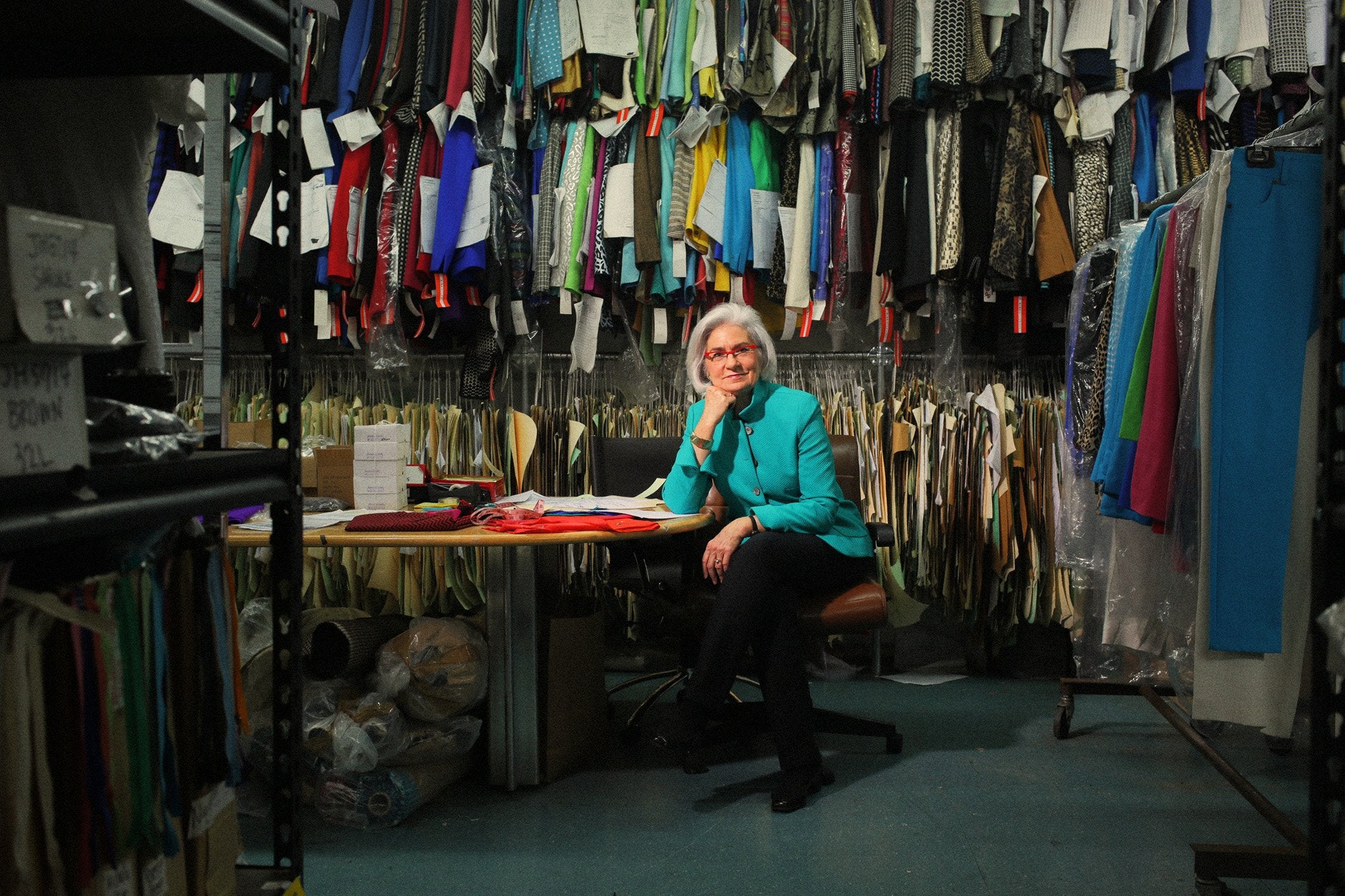
McLemore came to the business with a useful combination of skills. Growing up in Mississippi, she made her clothes with her mother. Later came department-store buying, Liz Claiborne Accessories, which she founded, and an MBA from Columbia. She also co-founded the private equity firm Regent Capital. She understood how a garment was assembled and how a business was financed.
In a 2016 NPR interview, she described noticing that the women Liz Claiborne had dressed as they entered the workforce were no longer being served adequately. They had advanced; the available clothing had failed to keep pace. It was an opening defined by the customer’s life, rather than by a season’s silhouette.
The label’s collection debuted in spring 2003, following early selling activity reported in 2002. It aimed at executives, professionals and community leaders. That last group matters: running a charity board can involve the same dinners, speeches and complicated travel as running a company. The occasion changes. The need for a reliable wardrobe does not.
Three inches of breathing room
The clothes make the argument in small, measurable ways. The sizing guide says jackets are approximately three inches larger than the wearer’s body measurements, leaving room for a shirt underneath. That is garment ease, a wonderfully unglamorous phrase for something a person sitting through a long meeting may appreciate more than a dramatic runway entrance.
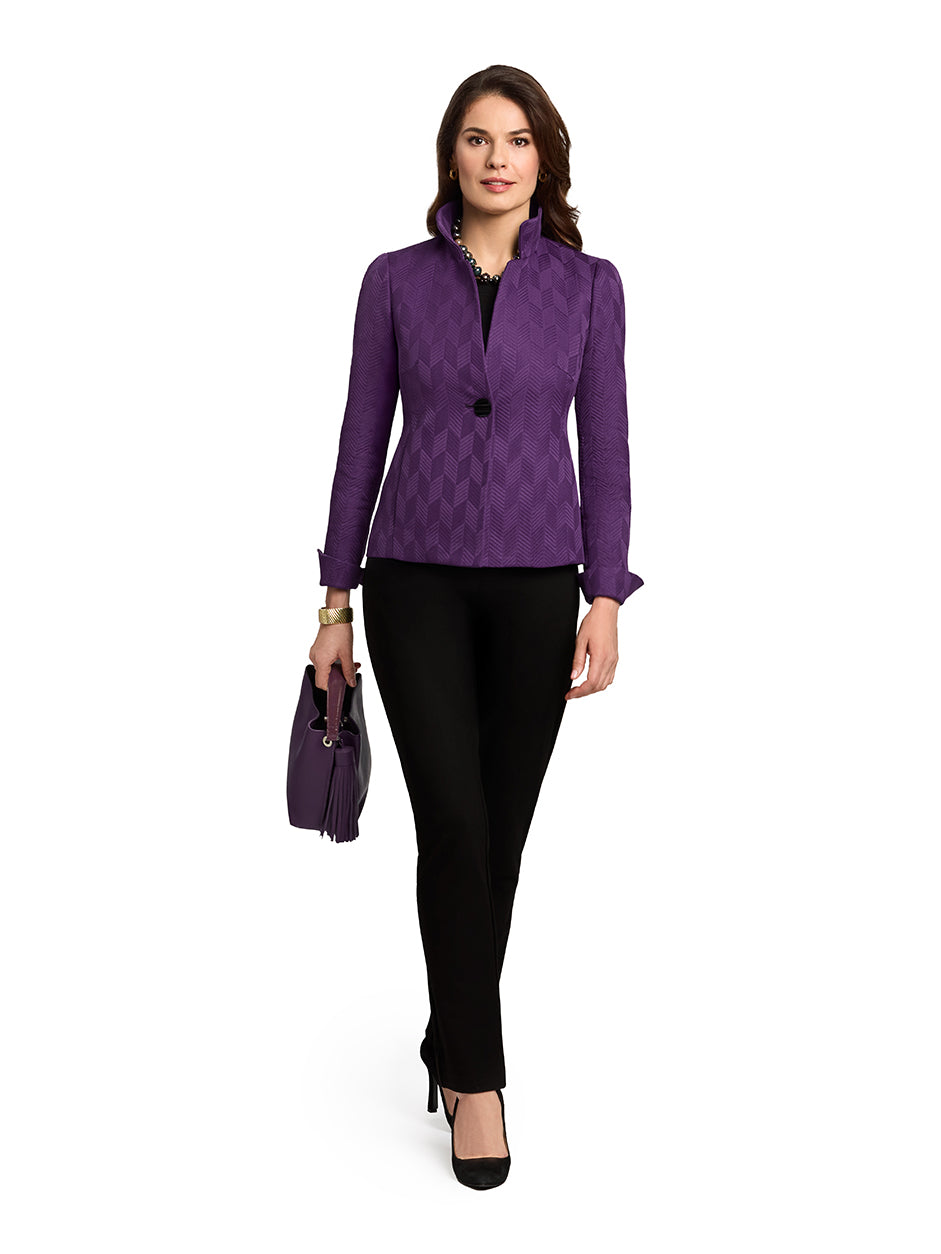
The FAQ describes a generous fit, with sizes 00 through 18. Suzanne jackets, longer car coats and knit pieces give shoppers different proportions to choose from. Bright color and raised collars are recurring features. In the NPR interview, McLemore recommended blue tending toward purple and argued that a jacket helps establish an authoritative appearance at a table.
Her theory has recognizable wearers. The company names Billie Jean King, Janet Yellen and Warren among them. These are examples of people who have worn the clothes, rather than evidence of paid endorsements. The distinction matters. The business serves a specific working situation; famous customers make that situation unusually easy to picture.
The occasion changes. The need for a reliable wardrobe does not.THE WARDROBE PROBLEM
An expensive jacket, with a practical assignment
At the time of this review, the online shop listed a Swiss Cotton Pique Suzanne Jacket at $895, a Ponte Knit Metro at $695 and a Cotton Matelassé Raj at $975. A Cotton No Iron Shirt was $175; pull-on ponte pants were $395. This is premium clothing. Calling it accessible without naming the price would be a rather fashionable omission.
The collection extends into dresses, silk tunics, casual separates and evening pieces. Its commercial center is a wardrobe that can be assembled repeatedly. A familiar jacket shape in a different fabric asks less of the shopper than discovering an entirely new way to dress every spring.
McLemore’s stated priorities include natural fibers, European textiles, Indian silks and New York manufacturing. The market position sits alongside designer professional wardrobes from labels such as Akris and St. John. Her pitch emphasizes fit, service and direct selling. The useful comparison is what a garment does in someone’s working week, as well as what it costs on the hanger.
The shop arrives with six rolling racks
The distribution model makes that service concrete. Customers can shop online, visit the listed New York and Washington-area locations, or attend private trunk shows. Independent consultants bring the collection into existing communities, where they can help customers choose fabrics and fit.
The recruitment page specifies a minimum of four trunk shows annually, six rolling racks and a venue. Shipping a collection totals $300. Consultants receive 25% of sales, including assisted online purchases. Those figures describe commission before expenses, rather than take-home earnings. Relationships and a suitable room are part of the infrastructure.
In July 2004, the company announced $3.7 million in growth financing, led by Aperture Venture Partners with Chazen Capital Partners, Slater Equity and individual investors. The money was intended to expand the client base and direct distribution. The founder reported growing from four cities to almost 30 markets in under two years. It was a plan to reach more of the same customer.
The zipper gets a vote
Even a carefully chosen niche depends on mundane parts. In 2022, cut jackets waited four months for zippers. Three cutting rooms the company used had closed. McLemore changed sourcing routines and bought elastic in bulk after concluding that the old supply system would not return. The episode exposes the limits of local garment production when essential inputs still arrive through vulnerable supply chains.
The broader lesson is useful beyond clothing. Choose a customer whose recurring needs you can describe precisely. Let the sales conversation tell you where the product pinches. Sell through people who understand the setting in which it will be used. Then pay attention to the small dependencies that can prevent a finished promise from becoming a finished product.
A jacket cannot make a workplace fair or confer expertise. The reasonable promise is narrower: fewer distractions, comfortable fit and one less decision before a demanding day. The achievement remains the customer’s.
For a shopper, the lesson is simpler: start with the actual calendar. A speaking engagement, an office day and an evening reception may justify a versatile jacket. A tight budget, a preference for close-fitting silhouettes or a size outside the offered range may point elsewhere. Try the measurements before buying the idea. McLemore’s proposition is persuasive because it is specific. The jacket has a job. Its wearer has rather more interesting ones.
Try the wardrobe. Hear the thinking.
Shop jackets; check sizing. Visit the website. Follow LinkedIn, Instagram, X and Facebook.
Watch NBC’s fashion interview or visit YouTube. Hear The Business of Joy; read Rita McGrathor the press archive.