For a while, the Replit partnership looked like the sort of good idea that politely declines to become a business. Neon supplied the database. Replit supplied a large population of people building software. The arrangement ought to have produced activity. Instead, Nikita Shamgunov watched a promising distribution channel remain rather quiet.
Then Replit launched its coding agent in September 2024. People could ask for an application in ordinary language, and software would begin making it. Those applications needed databases. An integration that had looked sleepy was suddenly busy. Shamgunov recalled his go-to-market colleague Arjun getting excited on a Zoom call: the company was having a moment.
The detail that mattered was stranger than a jump in traffic. People were generating applications cheaply enough to discard them. An app could have a short life while its creator remained an enthusiastic customer. For a database founder, that was an invitation to reconsider quite a lot.
Before the bots, the bugs
Shamgunov had spent years preparing for a different problem: how to keep up when the data would not stop arriving. He grew up and studied in Russia, earned a doctorate in computer science, and competed in programming contests. Later biographies recorded an ACM competition medal and database patents. His route into American technology ran through Microsoft’s SQL Server team.
There, he worked on the 2005 release, a long development effort that gave him an education in testing and debugging substantial software. He also saw work on a scalable transactional database that did not reach customers. The distance between an engineering possibility and a shipped product could be frustrating.
Facebook supplied a view of data problems at another scale. It also supplied a future co-founder. Shamgunov met Eric Frenkiel in engineering bootcamp; they stayed friends and shared commutes. In 2011 they left to build MemSQL, with Frenkiel as CEO and Shamgunov as CTO. A friendship formed while fixing somebody else’s software had become a reason to make their own.
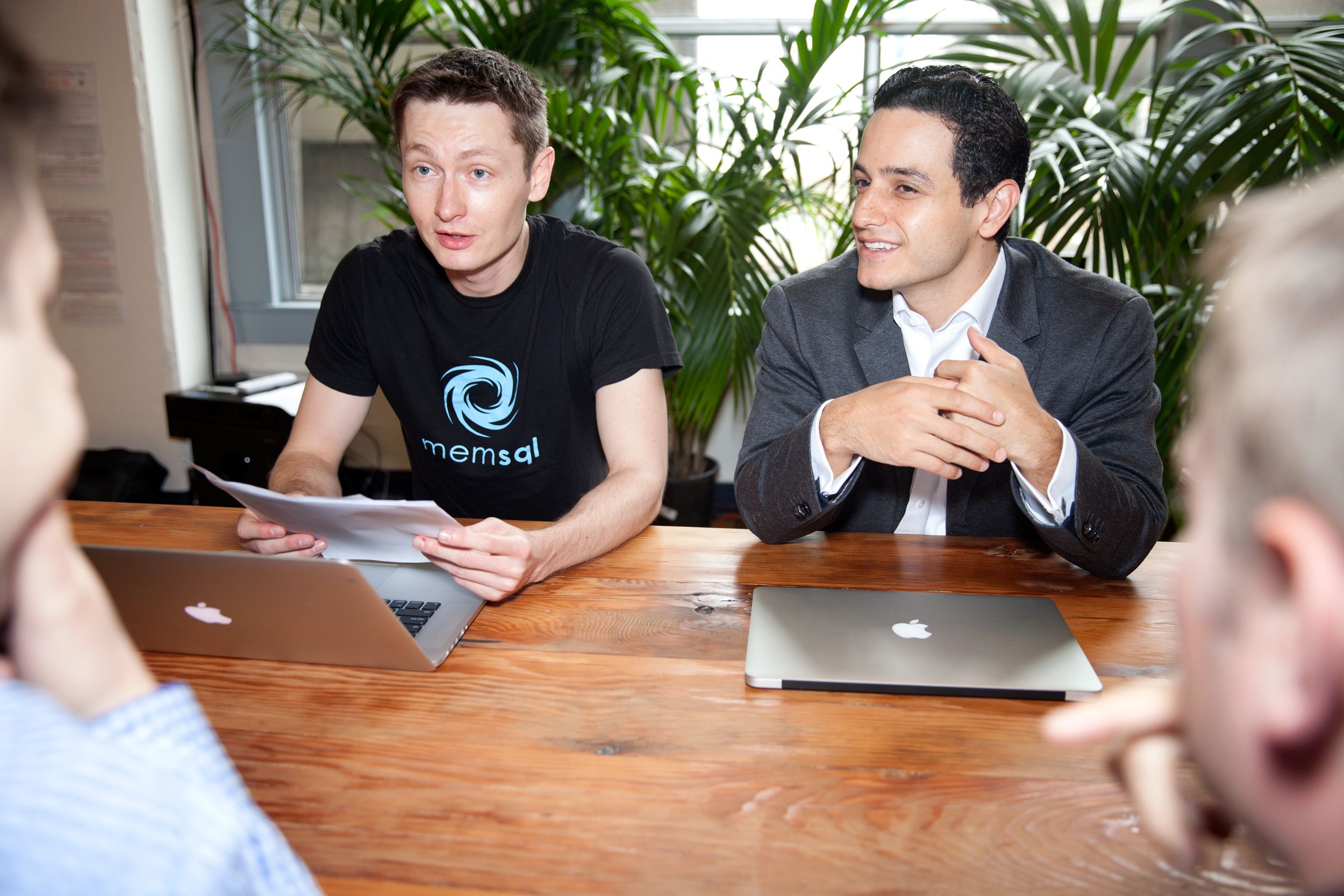
A different kind of debugging
MemSQL entered Y Combinator’s Winter 2011 batch. Its early proposition involved an in-memory database: an attempt to make transactional work move faster while retaining SQL, the language businesses already used to ask questions of their data. The founding announcement put Shamgunov in the technical seat. Eventually, he would need a wider view of the room.
In 2017 he became CEO. His account of the transition is refreshingly short on coronation. He needed help. He spoke to mentors, read business books and met people across the company to understand what had to change. He also acknowledged mistakes: expanding the sales team too early, and technology decisions that proved costly to undo.
His reading included Crossing the Chasm and The Hard Thing About Hard Things. The titles make a plausible syllabus for someone discovering that a company contains several kinds of difficult problem, only some of which can be reproduced in a debugger. Raj Verma later joined as co-CEO and became sole CEO in September 2020. A month later, MemSQL took the name SingleStore.
“Then be completely obsessed about your team.”
Nikita Shamgunov, 2018
An old database, a new arrangement
Shamgunov’s next database company started in 2021, with Heikki Linnakangas and Stas Kelvich. Their division of labor was explicit: Linnakangas worked on connecting the new storage engine to Postgres, Kelvich built storage and write-ahead-log streaming, and Shamgunov concentrated on product and company building. Neon brought together people who knew different parts of the machinery.
The choice of Postgres mattered. Developers already used it, understood it and had tools built around it. Neon would retain that familiar database while changing the arrangement underneath. Storage and compute would be separated, allowing the processing resources to change without requiring the data to move along with them.
At a 2023 database keynote, Shamgunov presented this as a route to cloud Postgres that could scale with demand while retaining its open-source roots. The argument had a useful modesty of form: keep a familiar interface, reconsider the expensive plumbing. For a developer, the result could be as simple as a connection string. The engineering required to produce that simplicity was considerably less simple.
Scales with the work
Persists when compute rests
A conceptual view of Neon’s storage / compute separation.
The cost of doing nothing
In June 2022, Shamgunov introduced Neon publicly with a post titled “SELECT ’Hello, World’.” The website had already appeared on Hacker News ahead of the planned introduction. A database startup had experienced the internet’s customary interpretation of a launch schedule.
His explanation spent considerable time on cost. Traditional arrangements could force customers to overprovision either storage or compute, and redundancy brought further expense. Neon’s design used local storage and object storage rather than treating operating economics as a detail to revisit after the engineering was finished.
An idle database is an unusually good test of that philosophy. Its owner may be doing nothing while the infrastructure continues to generate a bill. In a 2024 explanation of free-tier economics, Shamgunov described the pain of a user starting a database and walking away. Turning compute off, while keeping the data and bringing service back when needed, changes the arithmetic. The abandoned side project can stop running up the tab.
That concern looks especially practical when software can create experiments faster than a person can decide which ones deserve to survive.
The quiet integration gets loud
Neon pursued partnerships with platforms including Vercel, Retool and Replit. The attraction was straightforward: put the database where people were already building. The Replit integration became more consequential when the platform added an agent that generated applications from prompts.
By the time Neon announced its Databricks deal in May 2025, its founders said that more than 80 percent of newly created databases were being created by AI agents. That figure describes database creation on Neon at that point. It says something specific about a distribution channel and a workload, rather than measuring all software development.
of new databases created by AI agents, according to Neon’s founders.
Share of database creation, not revenue or active users.For Shamgunov, the changing behavior meant experiments needed somewhere inexpensive to happen. It also changed how the company interpreted retention. An individual application might disappear quickly while its creator continued building others. Judging that customer entirely by the survival of a single app would miss the pattern.
The database was becoming part of a production line for trials, revisions and discarded ideas. The founder had to learn to read the scrap pile.
Give the experiment a way back
At the 2025 IA Summit, Shamgunov described a response that involved several bets rather than a single immaculate prediction. The team pursued eight major initiatives. Four were transformational, he said, while two or three failed. The others fell between those outcomes. It was a portfolio of attempts made while the customer was still changing.
Branching and rollback fit that world. A branch gives an experiment a separate version of database state; recovery provides a route back after a mistake. These capabilities let developers arrange work so that an agent’s attempt need not immediately become an irreversible change to the working application.
His interest in the surrounding environment also reached research. Shamgunov is a co-author of the app.build paper, first submitted in September 2025 and revised in January 2026. It examines application generation using structured environments and layers of validation. The question underneath the work is practical: what should surround a model so that its output becomes usable software?

The company after the handshake
Neon announced that it would join Databricks on May 14, 2025. The relationship had roots before the deal: the teams had exchanged architectural ideas, and Shamgunov had helped get Databricks’ Belgrade office started. Familiarity had accumulated around the technical work.
By December, he was among the authors of a Lakebase update covering autoscaling, branching and the ability to stop idle compute. The themes survived the change in ownership. In August 2026 he announced another addition: Electric would join the Neon team within Databricks, bringing PGlite and real-time synchronization expertise.
There was a small circle closing in that announcement. PGlite, a lightweight Postgres implementation that can run inside an application, began as a proof of concept by Neon co-founder Kelvich. Electric had developed it further. Now those people would be working together. The ambition extended beyond a cloud database toward more of the backend that applications and agents require.
A place on the agent’s shopping list
In October 2026, speaking with WorkOS founder Michael Grinich, Shamgunov was considering the next distribution problem: getting an agent to choose your product. Documentation, integrations and placement inside the software directing the agent all affect that decision. A developer tool now has to be legible to a reader that may never visit its homepage.
He also described the danger of remaining a useful component for too long: it can become somebody else’s feature. Joining Databricks supplied a broader platform and enterprise distribution that Neon would otherwise have needed time to build. His stated destination was becoming default Postgres, an ambition he distinguished from the company’s present position.
Years earlier, addressing aspiring founders at ITMO, he had offered a temperament for this kind of uncertainty: “You need to be pessimistic for the short term and optimistic for the long term.” His advice paired trust in a team with a readiness to confront whatever was breaking next.
The new customer may be software. The awkward decisions about what to build, whom to trust and when to change direction still land with people. Shamgunov has spent a career underneath the application. He keeps finding that the interesting work begins when someone upstairs changes their habits.
Follow the work
Conversations, company writing and places to keep up.
- Nikita on LinkedIn ↗
- Nikita on X · @nikitabase ↗
- Neon ↗ · SingleStore profile ↗
- Watch: WorkOS init() conversation, October 2026 ↗
- Watch: Function Calls interview ↗
- Read: SELECT ’Hello, World’ ↗
- Read: Neon and Databricks ↗
- Read: Electric joins the Neon team ↗
- Interview: the transition from CTO to CEO ↗
- Archive: MemSQL’s Facebook beginnings ↗
- Conversation: when AI becomes the customer ↗
- Research: app.build ↗
- Lecture: starting a company ↗