A login box is an excellent hiding place for a bad estimate. Two fields, one button: how much work could it be? Then someone forgets a password. A corporate customer wants single sign-on. Another wants a second factor. The small rectangle begins consuming an unreasonable amount of the engineering calendar. Auth0 built its business inside that discrepancy.
- Auth0 handles identity for applications, from customer login to access permissions.
- Developers get managed infrastructure with room for custom business logic.
- Okta bought the company in 2021. AI agents are its next identity problem.
The checkbox that kept growing
Eugenio Pace and Matias Woloski founded Auth0 in 2013. Pace was in the United States; Woloski was in Argentina. Their opportunity was a familiar developer irritation becoming more complicated. Applications were moving into the cloud, phones were multiplying the places people signed in, and identity had to travel between services written in different languages.
The proposed exchange was straightforward: connect your application to Auth0 and let a specialist handle authentication. Developers could spend more time on the software their customers came for. Identity would become a service they integrated, with support for established standards such as OpenID Connect and SAML.
There was a stubborn obstacle. Many potential customers already had a login system. In a 2019 GeekWire interview, Pace described existing, internally built authentication as the company’s main competitor. The persuasive argument was maintenance: new attack methods, devices, and customer requirements keep reopening a supposedly finished job.
Pace had already experienced a startup that failed before his years at Microsoft and his return to entrepreneurship. Auth0 was another attempt focused on identity. Its later success should not erase the uncertainty at the beginning: someone still had to decide that outsourcing identity was worth paying for.
The exception became the product
Early enterprise customers complicated Auth0’s own tidy proposition. They needed integrations and behavior specific to their businesses. A standard service could handle the common work, but somebody still had to accommodate the exceptions. Woloski’s retrospective identifies those requirements as the reason Auth0 implemented Webtask, its serverless runtime, in 2014.
That decision explains the company better than a feature checklist. Buying infrastructure did not extinguish a developer’s need to customize it. Auth0 needed to absorb complexity while leaving a controlled place for customer code. Today, Actions provide versioned Node.js functions that execute at defined points in identity flows.
“Let’s build a company we’d love to work for.”
Eugenio Pace · writing about Auth0’s beginnings, 2018

A company built across time zones
The founders’ geography made remote work a starting condition. By 2020, Auth0 was publishing advice drawn from seven years of operating that way: trust colleagues, document clearly, respect concentration, and stop assuming every message deserves an immediate reply. These were practical instructions for people who could not settle everything by walking across an office.
Pace’s 2018 culture essay offers a revealing early detail: the entire company once reviewed his blog posts. Growth made that level of personal involvement impossible. The task became transmitting judgment through culture and processes. For another founder, the useful thing to copy is the handoff of context as the organization grows.
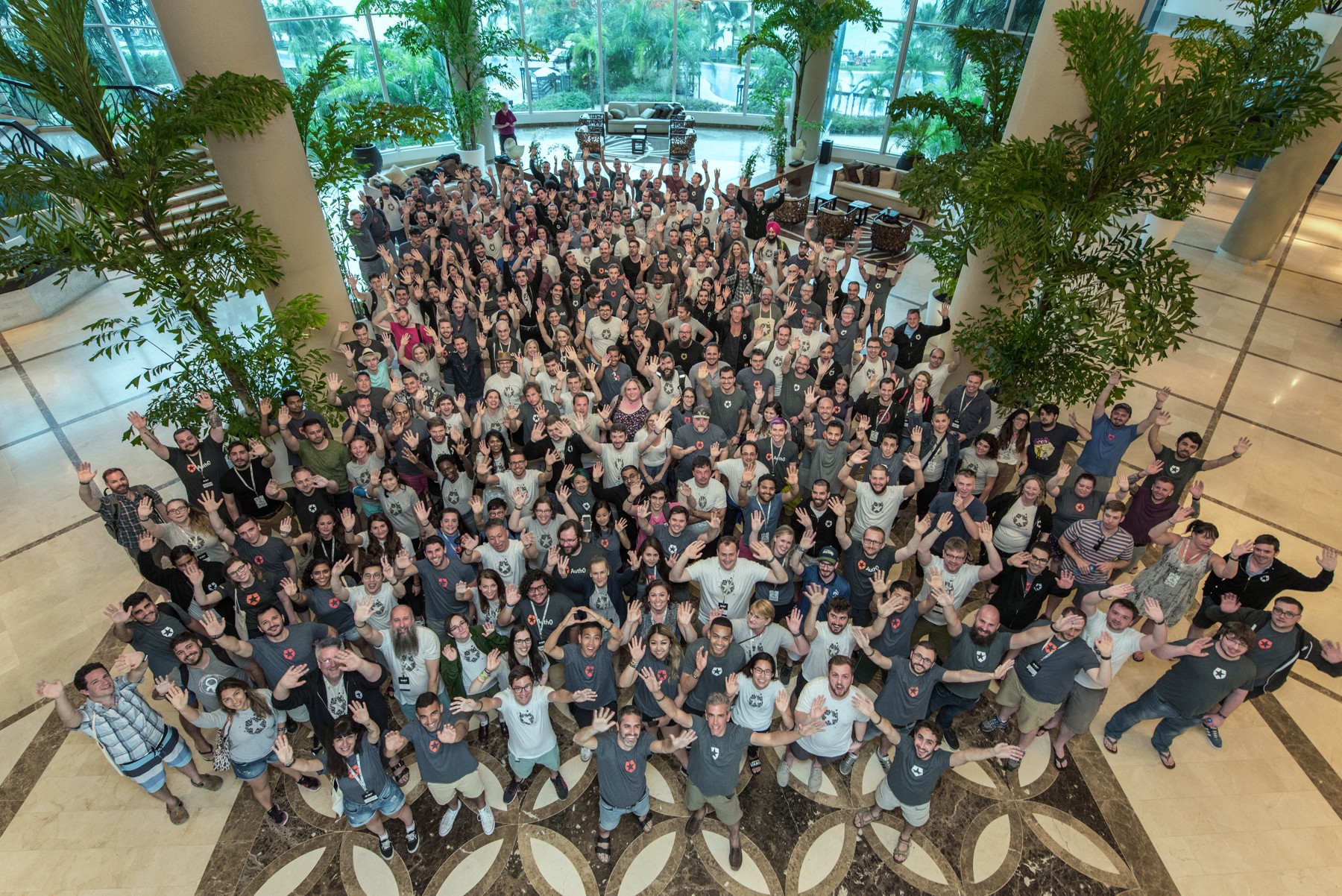
What the login actually buys
Auth0 sits in customer identity and access management. Its buyers include consumer businesses, B2B software companies, and enterprise development teams. The current homepage features brands including Siemens, McLaren, Zapier, and Arduino. In a published customer account, Schneider Electric used Auth0 for global single sign-on and connecting previously separated identity systems.
Universal Login makes the mechanism concrete. An application redirects someone to an Auth0-hosted login flow, then processes the response. Teams can introduce social login or multifactor authentication through the centralized service. They can customize its appearance while avoiding separate implementations of every login method in every application.
A successful login establishes identity. The application must still enforce access permissions.
The surrounding products handle different pieces: Organizations for B2B customer structures, passwordless options, attack protection, and fine-grained authorization. SDKs and documentation help developers connect those pieces. Auth0’s distinction is the combination of managed identity, enterprise integrations, and extensibility. It competes with Amazon Cognito, Clerk, and self-hosted options such as Keycloak; the right comparison depends on the application.
Consider a software business selling to several companies. One customer wants employees to enter through its existing identity provider; another needs different roles for administrators and ordinary members. Auth0 supplies building blocks for these arrangements. The developer still has to model the customer boundaries and connect the resulting identity to application behavior.
The price of handing over the keys
Auth0 earns subscription revenue. Its pricing page, checked October 26, 2026, lists a free tier supporting up to 25,000 monthly active users. The default B2C view shows Essentials at $35 a month and Professional at $240, each at 500 monthly active users. Enterprise pricing is negotiated.
Those numbers need their conditions attached. Paid plans purchase different capabilities and limits, so the free tier’s larger user allowance does not make it equivalent to a paid subscription. B2B requirements, enterprise connections, support, add-ons, usage, and billing choices affect the bill. Start a comparison with required features and projected traffic.
The company raised more than $330 million by July 2020. Okta’s acquisition, completed May 3, 2021, was announced at approximately $6.5 billion. That purchase price was a separate event from venture fundraising. Auth0 became part of a larger identity business.
Buying remains a judgment call. Auth0’s own build-or-buy guide concedes that a simple application using one or two social providers can be easy enough to build yourself. Teams requiring direct operational control may prefer another architecture. Outsourcing identity also creates a service dependency; developers still own secure configuration and enforcement inside their applications.
Now the visitor is a bot
The new complication is software acting for people. Auth0 announced general availability of Auth0 for AI Agents in November 2025, combining user authentication, managed third-party tokens, human approval flows, and permission-aware retrieval. In July 2026, Agent as Principal entered Early Access, giving agents distinct identities and audit trails.
An assistant retrieving company documents illustrates the stakes. A relevant search result may still be a document the user cannot read. Permission checks must follow the user into the retrieval process. A convincing answer is not evidence that access was authorized.
October brought Terraform modules for recurring B2B identity setups and expanded client-registration tools for agent ecosystems. The customer’s problem keeps changing shape. An app needs to know who arrived, what they may access, and whose authority they carry. The rectangle on the screen was always the easy part.