In May 2020, Nicolas Dessaigne did something that makes the usual founder biography awkward. He hired someone else to run the company he had helped create. Algolia had grown to roughly 350 people under his leadership. Its search technology was serving businesses around the world. Bernadette Nixon would become CEO, and Dessaigne would stay on the board. The founder was making room in a company that had once consisted of two engineers.
There is a temptation to arrange a career like this into a straight line: technical education, promising idea, investment, expansion. Dessaigne’s is more interesting when the changes of direction remain visible. Algolia’s first product needed a different market. Its culture needed different working arrangements. Eventually, its next stage needed a different chief executive. Each decision required giving up something that had previously seemed to work.
That makes his later move to Y Combinator feel connected to the earlier story. Today, as a General Partner, he works with people facing their own uncertain beginnings. He has experience to offer, along with a reason to be careful about turning experience into instructions.
An engine looking for a market
Dessaigne’s preparation was lengthy and technical. He graduated from ESIEA in 1999 and earned a doctorate in computer science at the University of Nantes. Before Algolia, he spent twelve years working in information retrieval at Exalead and Thales. Search was a field he had worked in long before it became the subject of a startup pitch.
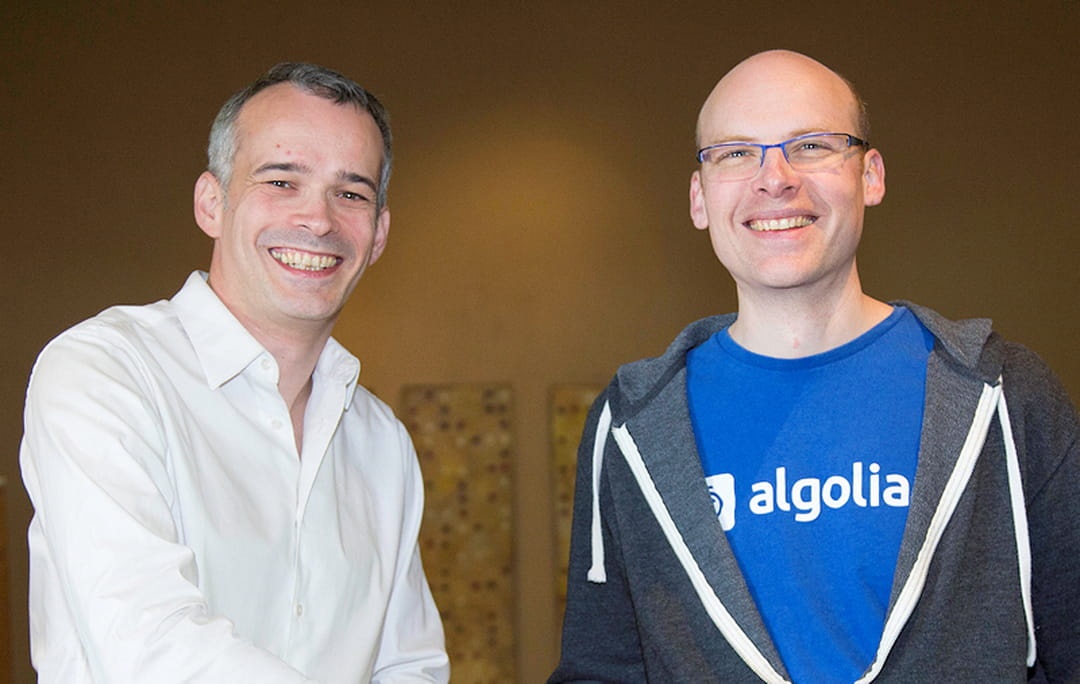
He and Julien Lemoine had been colleagues, working on text mining, algorithms and search engines. They founded Algolia in 2012. The initial idea was search that could run locally inside mobile applications, without a connection to a remote server. This imposed demanding constraints: a phone had less room for indulgence than a server, and the results still needed to arrive quickly.
The technical achievement did not produce a clear market. The founders changed course, building a hosted service that developers could connect to their websites and applications through an API. Their experience with fast search survived the move. The original delivery model did not. A piece of engineering had become the basis for a different business.
Socialcam became the first customer while Algolia was still in beta. Dessaigne recalled an initial refusal, followed by a demo and testing the next day. The customer gave an unfinished product a serious examination. Its vice president of engineering later became an early angel investor. For a young infrastructure company, a customer willing to try the software was also a customer willing to lend it credibility.
The ocean was part of the org chart
Algolia joined Y Combinator’s Winter 2014 batch. The company was founded in France, but its opportunity was international. That distinction had consequences beyond fundraising. A product used by developers in different countries needed a company capable of working across those countries, too.
English was Algolia’s working language from the beginning, even when the early team had no native speakers. It is a wonderfully unromantic detail. The company did not wait for international expansion to make communication inconvenient and then appoint a committee to discover English. It accepted the inconvenience while the team was small.
By 2017, Algolia described customers in more than a hundred countries and offices in San Francisco, Paris, New York and Atlanta. Employees were encouraged to travel between offices. Language and travel served the same purpose: reducing the chance that geography would produce separate companies sharing a name.
The scale was becoming substantial. In a 2019 interview, Dessaigne described more than 6,000 paying customers and a workforce exceeding 300. San Francisco held the headquarters; Paris remained the technical center. Customers ranged from developers signing up directly to larger organizations needing help with implementation. Serving both meant handling a self-service product and relationships that required people, time and explanation.
His expectations for search were expanding as well. He talked about personalization, recommendations and conversational interfaces. Users accustomed to good search elsewhere would expect the same experience inside a retailer’s site or a media application. The search box might remain small. The work behind it kept growing.
A company of owners still needs managers
Before their first hire, Dessaigne and Lemoine discussed the kind of workplace they wanted. Both had experience of larger organizations. They wanted people who would take initiative and treat decisions as their responsibility. “We wanted to create a company of owners,” Dessaigne said.
At roughly ten employees, that ambition needed a written explanation. New hires brought habits from previous jobs. The founders put their meaning of ownership into a single wiki page. Around thirty or forty people, the arrangement needed another revision: some employees had understood ownership to mean the company should remain flat. Managers now looked like a violation of the founding promise.
Dessaigne separated the company’s values from its methods. Trust, care, candor, humility and grit could persist while reporting structures changed. A company could introduce managers without asking everyone to surrender initiative. The practical details needed adjustment as the team grew. Treating every early habit as sacred would have made growth an exercise in disobedience.
“We wanted to create a company of owners.”
Nicolas Dessaigne, speaking with Edith Harbaugh
There was evidence that this concern reached beyond the founders’ vocabulary. Lucas Cerdan, Algolia’s first product manager, described the founders as accessible and empathetic. He said the values appeared in hiring through specific questions about candidates’ experiences. The aim was to make them part of decisions, rather than leave them available for admiration on a wall.
Dessaigne’s reading also hints at his interests. He named Creativity, Inc. as a favorite book in a 2016 interview. It is an apt choice for someone repeatedly discussing how to let people do good work together. Even an infrastructure business has to contend with the delicate machinery of people accepting criticism, offering ideas and admitting that something needs fixing.
Write down what ownership means.
Make room for managers.
The scale reached under Dessaigne as CEO.
Different organizational moments, not a headcount growth chart.
Hiring for the chair he occupied
In 2019, Algolia announced a $110 million funding round led by Accel, with Salesforce Ventures joining the investors. The company described about 8,000 customer organizations. Much of its workforce, including research and development, remained in Paris, while its business extended across the United States, Europe and Asia-Pacific.
More financing created room to build, and more company to manage. In May 2020, Algolia announced Nixon’s appointment. She had been CEO of Alfresco, with earlier roles spanning software sales and business leadership. Dessaigne explained the choice in terms of the experience the company needed for its next phase. The hiring decision applied to the position he already held.
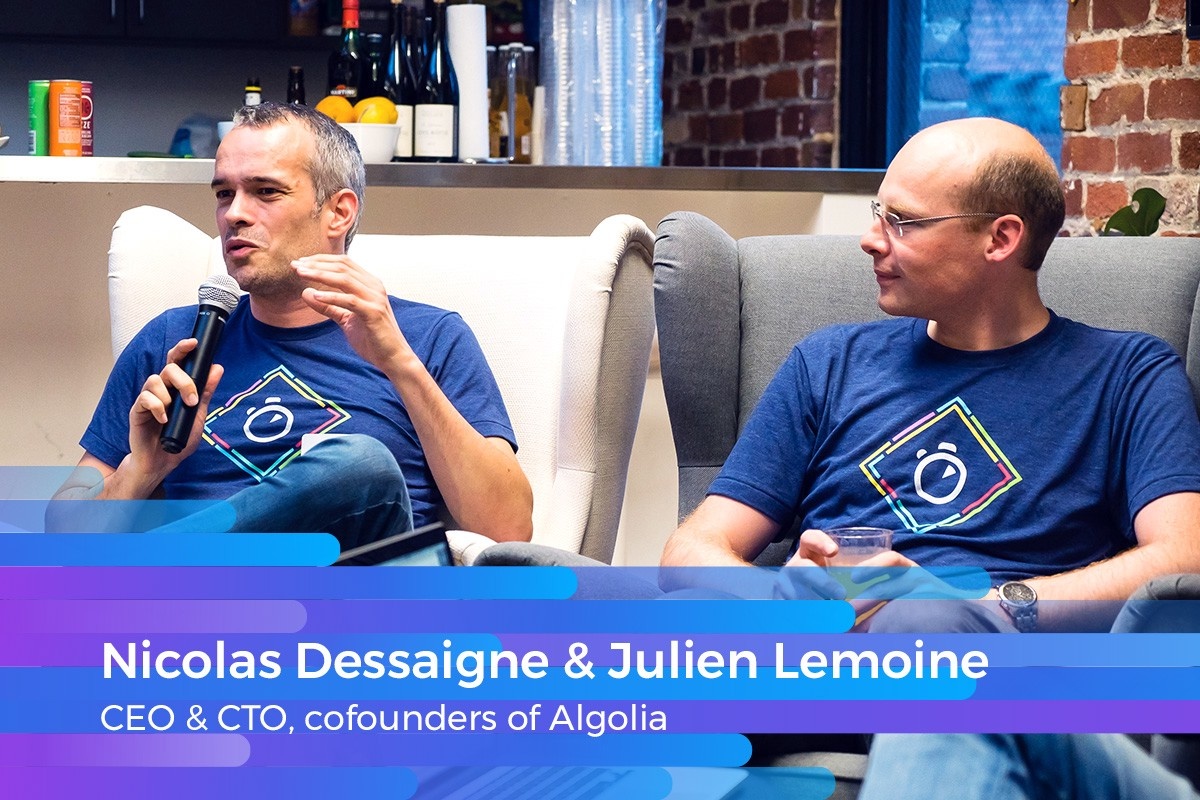
His collaboration with Lemoine had required deliberate attention, too. The two reserved four hours on Wednesdays for conversations without an agenda. Across an ocean, the calendar protected a relationship that everyday urgency could otherwise consume. A standing meeting sounds bureaucratic until the alternative is two founders discovering, rather late, that they have been thinking about different companies.
The departure also had a pleasingly ordinary detail. On his final day in an operational role, Dessaigne was working at home when his assistant arrived with croissants. A company can generate elaborate announcements, financing documents and succession plans. Someone still has to bring breakfast. It is a warmer image of the transition than a photograph of an empty executive chair.
Back to the beginning, across the table
Dessaigne joined YC as a visiting partner in 2020. In November 2021, the accelerator announced that he was becoming a full-time Group Partner after two batches in the visiting role. The work included reading applications, interviewing teams, holding office hours and helping founders prepare for Demo Day. A former participant was now helping people through the program.
His current title is General Partner. YC’s profile credits him with more than 3,000 office hours across twelve batches. The subjects have widened along with the companies. His public video conversations cover starting developer-tool businesses, spending startup money, using AI, pivoting and hiring. The engineering background is still relevant, but the question on the table may have little to do with a search algorithm.
He has also acknowledged an early mistake in advising: offering lessons that fitted Algolia too closely. Another company could have different needs. Recognizing that limit matters. A useful adviser needs enough experience to recognize a pattern and enough attention to notice when the resemblance is misleading.
In October 2025, he returned to the SaaS Connection podcast to discuss how AI was changing startup formation, growth and defensibility. By Fall 2026, YC listed him as primary partner for companies including RightNow, working on GPU kernel optimization, and Covera, building software for insurance brokers. His working world now contains many starting points.
His public discussions keep returning to the business around the technology. An early podcast conversation covered hiring, fundraising and the difficulty of keeping a company’s culture intact during growth. Those concerns now sit beside questions about AI. The setting has changed from one search company to a succession of young teams, but the work still involves deciding where to spend attention. Product choices, people and money compete for the same limited hours.
There is a wider concern alongside that work. As a Founders Pledge member, he has spoken about how building a company can crowd out attention to the greater good. It fits a career repeatedly requiring a longer view than the immediate technical task. Dessaigne began by helping people find things inside software. The recurring question in his own work has become what a company needs next, and who should help it get there.
Continue the conversation
Interviews, talks and public profiles.
- Nicolas at Y Combinator Official profile
- LinkedIn Professional updates
- Twitter / X @dessaigne
- GitHub Developer profile
- The Algolia archive Writing and company history
- How to Start a Dev Tools Company Watch on YouTube ↗
- Building a Culture That Scales SaaStr conversation ↗
- SaaS Connection, October 2025 Listen in French ↗
- The Listener, July 2026 Read the interview profile ↗
- Algolia’s 2020 CEO announcement The handover ↗
- Founders Pledge A wider perspective ↗