Cervin Ventures closes $162M Fund V in 2023's bruising market Neeraj Gupta backed LaunchDarkly at seed - the company raised $330M+ total Cervin portfolio: 50+ companies, 12+ exits, $335M+ AUM Two-time founder turned GP: Cymbal exit to Patni, Nexient built from scratch Kauffman Fellow who later co-founded the firm where he trained Punchh, EdCast, Tynker - Cervin exits span restaurant tech to edtech to enterprise Focus: enterprise software, data & AI, cybersecurity, DevOps, cloud, networking Cervin Ventures closes $162M Fund V in 2023's bruising market Neeraj Gupta backed LaunchDarkly at seed - the company raised $330M+ total Cervin portfolio: 50+ companies, 12+ exits, $335M+ AUM Two-time founder turned GP: Cymbal exit to Patni, Nexient built from scratch Kauffman Fellow who later co-founded the firm where he trained Punchh, EdCast, Tynker - Cervin exits span restaurant tech to edtech to enterprise Focus: enterprise software, data & AI, cybersecurity, DevOps, cloud, networking
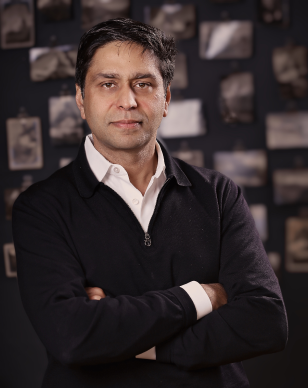
Neeraj Gupta, Co-Founder and General Partner at Cervin Ventures
Co-Founder & GP
Venture Capital • Enterprise Software • Palo Alto

Neeraj
Gupta

Co-Founder and General Partner, Cervin Ventures

He wrote a seed check into LaunchDarkly when it was a PowerPoint. He sold two companies before he turned investor. And in September 2023 - when most VCs were hiding - he closed a $162M fund. Neeraj Gupta operates at the intersection of operator instinct and capital patience.

Founder x2 $335M+ AUM Kauffman Fellow Enterprise SaaS Data & AI Seed & Series A
$335M+ Assets Under Management
50+ Portfolio Companies
12+ Successful Exits
5 Flagship Funds

The Operator Who Learned to Write Checks

Neeraj Gupta arrived in San Francisco Bay Area not as a venture capitalist, but as an engineer. His first employers - Octel Communications and Genesys Telecom - were both acquired by telecom giants before he had a chance to run anything bigger than a product line. That pattern of building, then watching someone else write the big check, turned out to be formative. He decided he'd rather be on the other side of that table.

He founded Cymbal Corporation in the early 2000s: a consultancy wiring up telecom operators when the industry was still figuring out what IP meant for voice. He ran it as CEO and sold it to Patni Computers, an NYSE-listed Indian IT services firm, where he stepped into the executive suite and took responsibility for global sales and marketing carrying roughly $700 million in top-line revenue. That's not a rounding error. Managing revenue at that scale changes how you think about what a startup's market opportunity actually means.

In 2009, while still close to Patni, he started Nexient - a digital experience consulting shop. Different thesis, same operating mode: build deliberately, stay capital-efficient, grow without burning. He ran it as CEO for several years, long enough to understand the rhythm of founder life in all its unglamorous detail.

The Kauffman Fellows Program, Class 20, was where the pivot became official. During his fellowship, he trained under Preetish Nijhawan - the veteran investor who would become his partner. The mentorship became a co-founding relationship. They launched Cervin Ventures together, out of Palo Alto, targeting early-stage enterprise technology companies that most institutional VCs found too unsexy or too specific.

Cervin's first several years looked like what happens when operators underwrite operators. They backed LaunchDarkly at seed in June 2015, when feature flags were a niche engineering concern nobody in Sand Hill had a slide for. LaunchDarkly went on to raise more than $330 million. They backed Punchh, which built CRM and loyalty software for brick-and-mortar restaurants - not a category anyone was racing to fund. Punchh sold to Par Technologies. They backed EdCast, Tynker, and a dozen others that exited cleanly before anyone was paying attention to Cervin's track record.

The investment thesis isn't complicated. Cervin goes where enterprise software has a real, large, fast-growing problem - and where a disciplined founder is building the category, not chasing the hype cycle. Gupta has said explicitly that he avoids "short-lived hype cycles," which in the venture world is a minor act of courage. The willingness to pass on the wave that everyone else is riding is harder than it sounds when your LP base is watching portfolio marks quarterly.

The firm's fifth flagship fund, at $162 million, closed in September 2023 - a moment when the broader VC market was contracting sharply, late-stage marks were collapsing, and many firms were telling LPs to expect the next fund to be smaller. Cervin raised its largest fund in that environment. Co-founder Preetish Nijhawan called it validation of a "disciplined approach to turning disruptive technologies into enduring businesses." Gupta's interpretation was more hands-on: he announced alongside the close that Cervin was launching a portfolio services team - led by a former marketing executive from Sapphire Ventures and Google and Facebook - to give founders systematic go-to-market support post-check.

That move is telling. Most seed funds write checks and wait. Cervin is building internal operating capacity to do what Gupta and Nijhawan have always done on a handshake basis: help founders think through their market strategy. "One of my favorite parts of the job," Gupta has said, "is working with entrepreneurs to build their market and competitive strategies." The services team is that preference, systematized.

The portfolio now spans more than 50 companies across the US, Israel, and India. Current bets include names across DevOps infrastructure, AI applications, cybersecurity, and networking. In March 2026, Cervin led the $15 million Series A into Qurrent. The fund's investment range runs from $200K to $2 million, with a stated sweet spot at $700K - a precision that reflects a deliberate view of how much early dilution a founder should take from a first institutional check.

Outside the portfolio, Gupta hikes, travels widely, and reads. Not just business books - he goes deep on Stoicism, leadership philosophy, and public policy. Marcus Aurelius alongside cap tables. The combination is not accidental: Stoic philosophy is, at its core, about distinguishing what you control from what you don't. For a seed-stage investor whose bets take 8-12 years to resolve, that's a practical operating framework as much as a personal one.

He's a member of Indiaspora, the network connecting and amplifying the Indian diaspora across industries and geographies. His own arc - from Punjab University to University of Alabama to Silicon Valley board seats - is exactly the kind of story that organization was built to recognize.

The details accumulate into a consistent picture: an investor who built things before he backed them, who raised a big fund when others were cutting, who hires a marketing team because he remembers what it feels like to not have one. Whatever Neeraj Gupta is building at Cervin, it is not a typical venture fund.
"We listened to the feedback from entrepreneurs and created a portfolio services team to help provide more consistent support."
- Neeraj Gupta, on closing Cervin's $162M Fund V, September 2023
Cervin Ventures - Scale at a Glance
Total AUM
$335M+
Fund V Size
$162M
Portfolio Cos.
50+
Exits
12+
Flagship Funds
5
Portfolio Highlights

Companies He's Backed

LaunchDarkly
Feature management - Seed 2015 - $330M+ raised
Punchh
Restaurant CRM - acq. Par Technologies
EdCast
Learning experience platform - Exit
Tynker
Coding education for kids - Exit
Replay
Developer tools - Exit
Qurrent
Series A Mar 2026 - $15M
Paystand
B2B payments infrastructure
Celona
Private 5G networking
ClientSuccess
Customer success platform - Seed 2018
Bolster
On-demand executive talent
Causely
AI-powered root cause analysis
OwnID
Passwordless authentication
Bedrock Analytics
Revenue analytics - board observer
FireCompass
Attack surface management
Vendelux
Event intelligence platform
AiFi Inc.
Autonomous retail AI - observer
"Avoid short-lived hype cycles. Partner with disciplined entrepreneurs building tools, applications and infrastructure products that address large, rapidly expanding markets."
- Cervin Ventures Investment Philosophy
Perspective

Three Things That Set Him Apart

🏗
He Built Before He Backed
Two exits - Cymbal and Nexient - before he ever wrote a check as a GP. When he sits across from a founder struggling with go-to-market, he's drawing on scar tissue, not slides.
📈
$700M in P&L Before VC
Running global sales at Patni with $700M top-line responsibility means he sees a startup's market sizing claims differently than most seed investors. The number that impresses founders rarely impresses him.
He Hired a Marketing Team for His Founders
The portfolio services team launched in 2023 was not a PR move. Gupta knows exactly which problems early-stage B2B founders hit in months 18-36. He built institutional support for exactly those moments.
Five Details Worth Knowing
  1. His Kauffman Fellowship mentor, Preetish Nijhawan, became his co-founder at Cervin - the apprenticeship became a partnership.
  2. Cervin's $700K investment sweet spot is precise enough to suggest a considered opinion about early-stage dilution math, not a range they picked from a competitor's pitch deck.
  3. He backed Punchh's founder twice - first at Punchh (acquired by Par Technologies), then again at Tote.ai. When operators repeat themselves, he follows.
  4. The entire Cervin team has operating experience at category-defining companies: Akamai, Nutanix, Aviatrix. The fund is staffed like a small portfolio company, not a traditional VC shop.
  5. He reads Stoicism alongside cap tables. Marcus Aurelius on distinguishing what you control from what you don't turns out to be useful when your seed investments take a decade to resolve.
Behind the Resume

The Story Under the LinkedIn

The standard VC origin story runs like this: Stanford MBA, investment banking, one analyst year at a fund, then partner track. Neeraj Gupta's story runs in roughly the opposite direction.

He started as an engineer at Octel - a company building voicemail infrastructure at the moment when voicemail was still exciting. Octel was acquired by Lucent. Then Genesys Telecom, acquired by Alcatel. Two exits he watched happen to him, rather than ones he engineered. That pattern repeats in his career until he decides to be the one engineering it.

Cymbal Corporation was the first time he ran something from scratch to sale. A telecom consultancy targeting operators when telco was still a growth market - not glamorous, deeply specific, and apparently very well executed, since Patni paid to own it. He spent the years after the acquisition inside Patni, close enough to a $700M revenue base to understand what "scale" actually requires in a sales organization.

Then Nexient, a second founding. A digital consulting firm, built during a period when "digital transformation" was transitioning from buzzword to budget line. He ran it long enough to build it, then joined Kauffman Fellows to learn the investing side formally - under Nijhawan, the person who would become his partner.

The detail that gets overlooked in Gupta's profile is the Kauffman-to-co-founder move. Most fellows complete the program and go work for the firm that mentored them as a junior investor. Gupta reversed the polarity: the mentorship became peer-level co-founding. That suggests something about how Nijhawan saw him - and how Gupta was willing to frame the relationship once the formal period ended.

Cervin's geography is worth noting. Palo Alto, not San Francisco. That's a choice, not just a zip code. The firm's portfolio companies are headquartered across the US, Israel, and India - Gupta's international experience from Patni (including assignments in the UK and India) shapes who he can credibly back and where.

The 2023 fundraise is probably the most clarifying data point. Raising $162M in that market, with institutional LPs, means someone believed the track record was real - exits at Punchh, EdCast, Tynker, Replay, and others weren't lucky sector timing. They were chosen, structured, and managed by people who knew the operators they were backing.

Outside the office: hiking and travel. Stoicism, leadership, public policy. The reading list suggests someone who thinks systematically about how organizations fail and why humans make the decisions they do under pressure. Not a bad lens for an early-stage investor whose job is to assess founder judgment under conditions of uncertainty.

Find Him

Profiles & Resources