Before Greg Lindsay met Neal Goldman at New York’s Penn Station, he had already looked him up in Goldman’s own software. Schools, affiliations, mutual acquaintances: the database had supplied the ingredients for an unusually well-prepared hello. Lindsay opened with a greeting from their shared connection, the author Parag Khanna. Goldman paused, trying to place the pieces. His product had arrived at the meeting ahead of him.
The encounter, recounted in 2014, is a good place to enter Goldman’s working life. Here was a founder selling a way to make introductions less accidental, discovering what it felt like to be on the receiving end. A name on a screen had become a name spoken across a crowded station. Between those two things lay the territory he would spend years exploring.
The spreadsheet had a sequel
Goldman came through finance. He worked in private equity at Lincolnshire Management and in investment banking at Lehman Brothers. His education included a bachelor’s degree from the University of Pennsylvania and an MBA from Columbia Business School. These were places where information mattered, introductions mattered, and the hours spent assembling the former could leave precious little time for the latter.
In 1998, he started Capital IQ. The opportunity grew out of the repetitive research work surrounding financial analysis: collecting company information, getting it into a usable form, and doing it again for the next assignment. A better system could spare skilled people some of that assembly work. Goldman had encountered the problem from inside the business he intended to serve.
Capital IQ became a financial information platform for investment professionals. In September 2004, McGraw-Hill acquired it for its Standard & Poor’s division, in a transaction valued at approximately $225 million. The buyer’s annual reporting records the acquisition date as September 17. For Goldman, six years separated the start of the company from its sale.
That number belongs to the company’s transaction, rather than a personal fortune. Its significance here is what it established about Goldman’s work: organizing professional information could support a business substantial enough for an established financial publisher to buy. The next question was whether information about people could become similarly useful.
A directory with a different ambition
Relationship Science, usually shortened to RelSci, was founded in 2010 and publicly launched in early 2013. Goldman’s proposition concerned the connections scattered across a professional life: former employers, university ties, board service, investments and charitable affiliations. Those fragments could be assembled into paths between people who might have reason to work together.
There was an immediate complication. The people a customer wanted to reach might have little interest in filling out another online profile. Goldman’s answer was a researched database. RelSci could include someone without waiting for that person to join, polish a biography, or accept a request. The familiar online ritual of collecting connections was largely beside the point.
By August 2013, the database contained about 2.5 million entries, including people and organizations. Individual access began at $3,000 annually. Goldman said the business used its own system to win customers and was approaching its 250th client. Selling software for finding prospects gave him an unusually direct way to demonstrate the product: use it to sell the product.
“We used the system ourselves.”
Neal Goldman, 2013
For the customer, the attraction was the difference between recognizing a name and knowing where to begin. An employer, a board colleague or an investor could supply a route that a search for the target’s name alone would never make obvious. The practical unit was the introduction.
The donor at the other end
The same problem existed outside the dealmaking world. A nonprofit could have a persuasive mission and a polished presentation, yet struggle to reach a prospective supporter. Goldman’s company found customers among organizations for which access meant the possibility of funding work already under way.
Andrew Bernstein, then major gifts director at the YMCA of Greater New York, described using RelSci at the beginning of his research into an individual. Other early nonprofit customers included the Nature Conservancy, Yale University and the World Economic Forum. Board recruitment was another application. A relationship already present somewhere in an organization could become visible to the person who needed it.
At the Robert Toigo Foundation, president Nancy Sims tested a list of hoped-for supporters and discovered first- and second-degree connections within her organization. It was an appealing reversal of the usual fundraising predicament: the people seemed far away until someone drew the intervening lines.
The software still left users responsible for making contact, generally through a mutual acquaintance. A plausible pathway supplied a starting point. Whether the introduction was welcome, and whether the conversation deserved anyone’s time, remained a matter for the people involved. Even a well-researched database could not do the courtesy for them.
Two people, two kinds of expertise
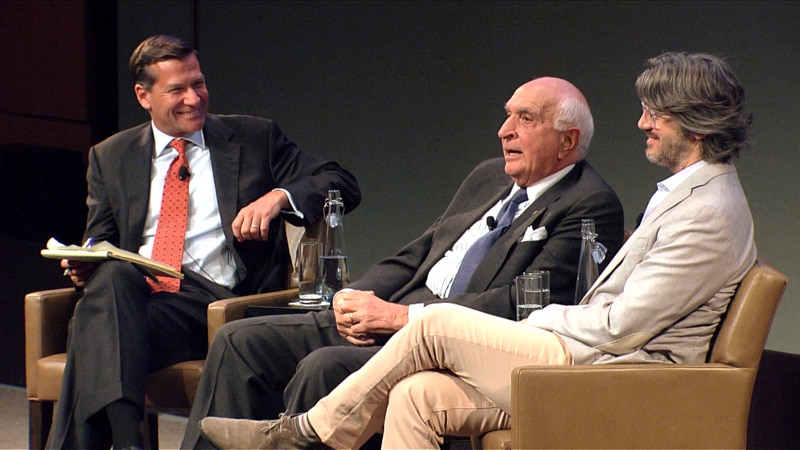
In April 2015, Goldman appeared with Home Depot co-founder Ken Langone at a Goldman Sachs discussion about relationships. The pairing brought the subject down to human scale. Langone had spent a career building the kinds of relationships Goldman’s technology was designed to help people understand and navigate.
Goldman talked about a service economy in which people already carried powerful computers in their pockets. Relationships were another part of company life where technology could improve how work got done. Langone emphasized truth and humility, and the judgment required once a prospective client was within reach.
The distinction is useful when considering Goldman himself. Building a map required a founder’s willingness to treat a familiar business habit as a product problem. Using that map required the patience and discretion of a person asking another person for a favor. His company sat between those activities, with all the awkwardness that implies.
The company outgrows its founder’s title
RelSci’s later history also matters. By 2020, Domenic Graziosi was its CEO; Goldman’s earlier chief executive title belongs to an earlier chapter. In May 2021, Euromoney acquired the RelSci business. The acquisition brought relationship mapping into a larger collection of information services.
The transaction advisor described a platform serving more than 600 large enterprise clients, with coverage extending across millions of people and organizations. Financial institutions, law firms, corporations and nonprofits had become customers for the same basic proposition. Goldman’s idea had developed into an institutional research tool, beyond the founder personally explaining why a warm introduction might be worth paying for.
His own affiliations had long crossed business and public life. He became a World Economic Forum Young Global Leader in 2007 and a Henry Crown Fellow at the Aspen Institute. He also taught at Columbia Business School. Teaching, investing and building information businesses offered several vantage points on how a promising person becomes an effective leader.
From mapping relationships to sitting in the room
In April 2024, Vortexa announced Goldman as its new board chairman. The company provides analytics for energy and freight markets, another business built around making complicated information usable. Goldman said he had invested in every funding round since its inception. The appointment extended an existing relationship rather than beginning one with a ceremonial title.
Vortexa’s announcement also credited him with more than 20 patents involving financial information collection and workflows. That detail adds something to the familiar founder biography. His interest in systems had produced specific inventions as well as companies. The work included the mechanisms through which information became useful.
Today, he coaches venture-backed CEOs, chairs Vortexa and serves on Copper Technologies’ board. Spider Capital lists him as an operating partner. Coaching gives the relationship question a different setting: a recurring conversation with someone responsible for a company, rather than a screen showing the route to someone outside it.
His aim is to help founders become the CEOs their growing companies require. Hiring, board discussions, financing and management processes become subjects for practical work. The founder who could once personally handle everything eventually needs other people to handle important things well. That transition gives Goldman’s long interest in relationships a particularly demanding application.
A book, and an occasional mountain
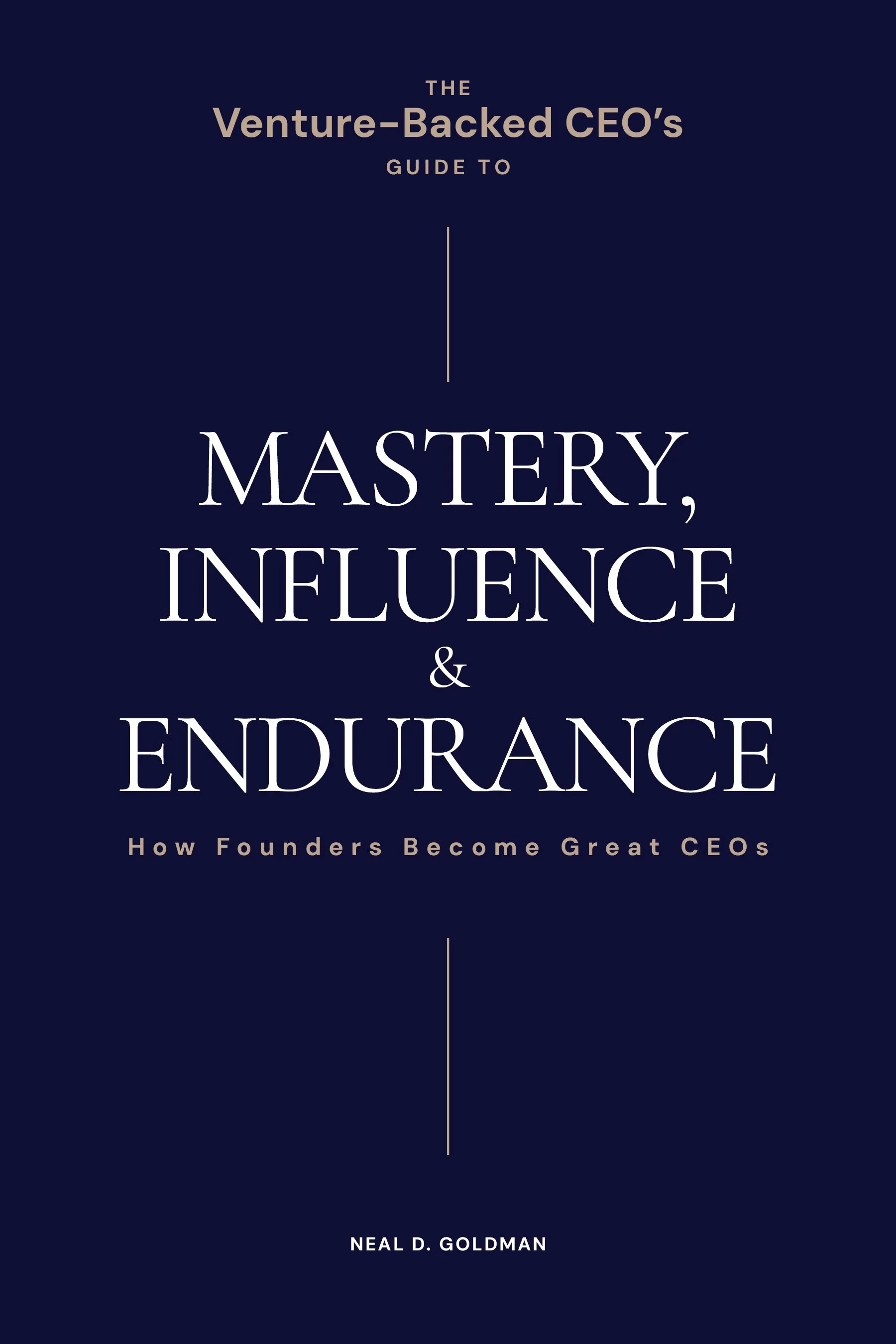
His 2026 book, The Venture-Backed CEO’s Guide to Mastery, Influence & Endurance, develops that concern. It addresses founders whose businesses demand abilities beyond those that got them started. The three words in the title organize the work around understanding oneself, earning trust across a company’s relationships, and staying effective through a long venture journey.
Reid Hoffman, LinkedIn’s co-founder, supplied an endorsement. The connection is a pleasing detail in a career often explained through comparisons with LinkedIn: Goldman’s later work earned support from someone associated with the very platform used to explain his earlier one. The subject had moved from locating people to leading them.
Goldman also invites clients on outdoor expeditions. His descriptions of past trips range from Kilimanjaro and Everest Base Camp to skiing in the Alps and Japan. These outings give CEOs time together beyond their regular business settings. There are trails to follow, meals to share and opportunities to compare experiences without a presentation on the wall.
His account of an Ecuador expedition includes an early descent because of avalanche risk, which he admits did not disappoint him terribly. His Courchevel description gives considerable attention to lunch. For someone whose products have tried to make professional life more efficient, he allows a welcome amount of room for an afternoon to be enjoyable.
The train-station encounter began with a database helping one person approach another. Goldman’s work has since taken him into boardrooms, coaching conversations and mountain outings. The setting changes. A familiar question survives each move: once you have found the people, how will you make good use of the time together?