The useful thing about a switch is that it cannot bluff. A packet arrives. A rule applies. Something moves, or it does not. Navindra Yadav has spent three decades working outward from that clean little bargain, through systems that became larger, stranger and harder to see. He wrote compilers, worked on satellite communications, designed network switches, helped make networks programmable, and built a platform meant to illuminate a data center in real time. Now he runs Theom, where the object under examination is no longer merely the machine or the network. It is the data moving through both.
The job title is co-founder and CEO. The more revealing description may be serial mapmaker. In public conversations, Yadav returns to a handful of questions with the persistence of someone checking instruments in a cockpit: What data do you have? Who has access? What are they doing with it? For what purpose? Where is it flowing? These are ordinary words attached to an unruly problem. Enterprise data now drifts through warehouses, lakehouses, SaaS applications, clouds and AI models. The valuables have learned to travel.
One question, four layers
I. Learning the machineryThe career before the category
Yadav was born in India in 1974 and studied computer science and engineering at Maulana Azad College of Technology, now Maulana Azad National Institute of Technology. His early career had the cheerful variety of an engineer collecting hard problems: computer-telephony interfaces at Siemens, C-language compilers for digital signal processors at Lucent's Bell Labs, and satellite communications at Lockheed Martin's COMSAT Laboratories. A master's degree at Lehigh produced a thesis on SmartTCP, a context-aware transport protocol. At Johns Hopkins, he continued advanced work in computer science and telecommunications.
Then came Cisco. Over roughly eleven years, Yadav rose from software engineer to principal engineer and chief architect for the Catalyst 2000 and 3000 switch lines. Those beige and gray boxes rarely receive literary treatment, but they are where corporate life becomes electricity and protocol. Designing them meant balancing performance, cost, power and reliability across a product used at daunting scale. It also offered a durable education: infrastructure earns trust by behaving predictably when nobody is admiring it.
At Google, beginning in 2011, the scale widened again. His work touched cybersecurity, software-defined networking and programmable network hardware. He collaborated with Stanford researchers and contributed to the early thinking behind P4, a language that lets engineers program how network chips process packets. The premise was quietly radical. A switch did not have to arrive with its behavior carved in silicon forever. The network could become something more like software.
II. Turning on the lightsThe Palo Alto skunkworks
In 2012 Yadav joined Insieme Networks, a Cisco-backed spin-in, as a founding engineer. He helped develop the Application Centric Infrastructure switch fabric, a system intended to make data-center networking more responsive to what applications needed. Cisco absorbed Insieme, and Yadav returned with another problem in view. Modern data centers produced torrents of signals, yet operators still struggled to understand which applications depended on which services, where policy had drifted, and why a failure had started.
Tetration grew from that frustration. For 18 months, a compact team worked in a private Palo Alto lab, often at night and on weekends. The secrecy had the romance of a caper and the diet of a deadline. When Cisco unveiled the project in 2016, Yadav described the team as a skunkworks and gave the mission a line any operator could appreciate: “We're going to turn on the lights.”
The platform gathered fine-grained telemetry from across a data center and analyzed relationships among applications, workloads and traffic. Visibility was not the finish line. The system could help model policy, simulate changes, spot anomalous behavior and reduce the attack surface. Yadav had moved from building the roads to watching the city move across them.
The patent record is unusually broad. It includes inventions around anomaly detection, root-cause analysis, network-policy simulation, smart-grid communications and enriched network-flow data. Counting patents is a clumsy way to measure a person; it rewards paperwork as well as invention. Still, the subjects reveal a pattern. Yadav likes systems that observe themselves, explain what changed and make policy executable.
III. Follow the valuablesA company built one layer higher
Yadav left Cisco in 2020 and co-founded Theom with colleagues whose backgrounds span Tetration, Yahoo, Sun Microsystems and enterprise investing. The company began in December of that year and emerged from stealth in 2022. Its argument starts with a reversal. Security departments have traditionally organized around infrastructure and access: secure the network, harden the endpoint, manage the identity. But a company does not ultimately care about a server because it is a handsome server. It cares about the customer records, financial models, product plans and operational history sitting inside.
“In the AI era, data is the new perimeter,” Yadav said when Theom announced a $20 million Series A in May 2025. The phrase is neat; the implementation is not. Data can be copied, transformed, queried, embedded in a model, exported by an application or granted to a contractor. A control written for one warehouse may not survive the journey. Theom's platform builds an inventory, observes access and usage, maps movement, assigns context to risk and helps enforce policy across cloud, SaaS and AI environments.
An architectural choice makes the pitch more concrete: Theom analyzes data inside the customer's environment instead of extracting the data into its own. “None of their data leaves their jurisdiction,” Yadav has said. For regulated companies, location is not a philosophical detail. It is part of the threat model, the compliance model and sometimes the law.
The company has found early traction among enterprises where a vague answer about data can become an expensive answer. Publicly named customers include Fiserv, Tradeweb and JetBlue. The 2025 round was led by Wing VC, with participation from Snowflake, Databricks and SentinelOne. Rivals in parts of the data platform market arrived at the same cap table, an amusing bit of coalition-building made possible by a shared customer problem.
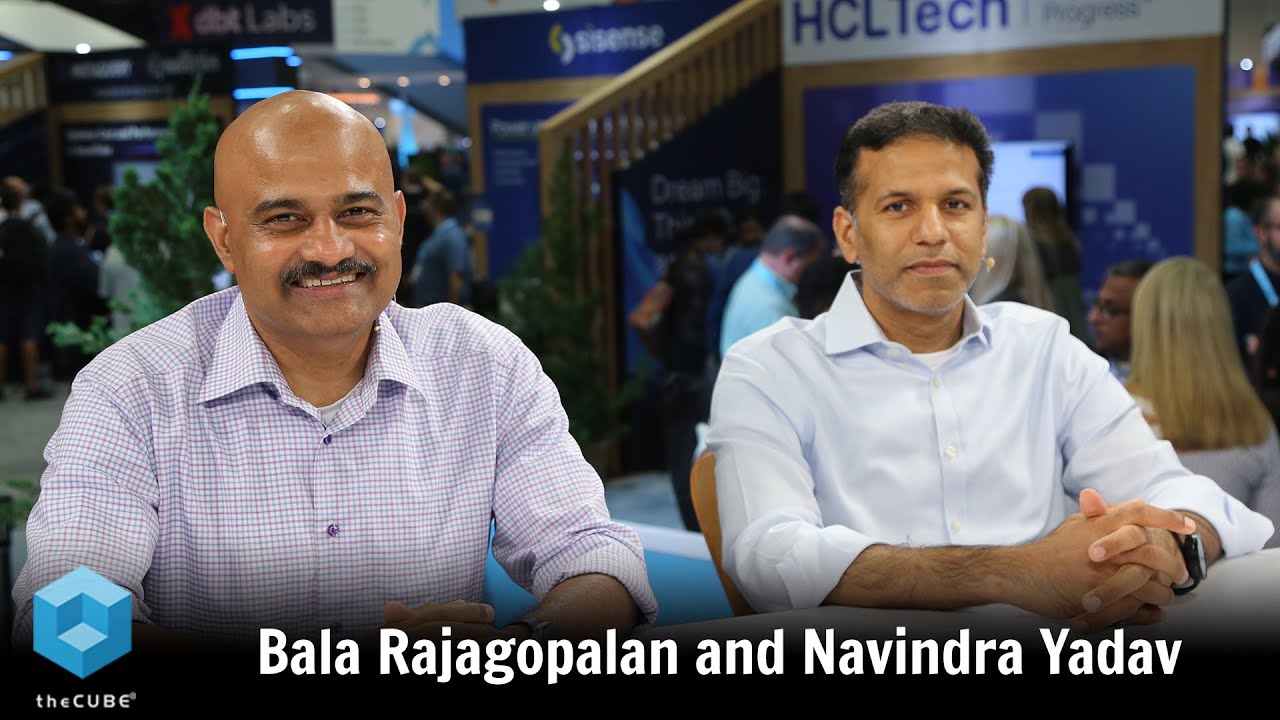
Watch: Data governance in the AI eraNavindra Yadav and Bala Rajagopalan · Snowflake Summit 2024IV. The founder as instrument makerClarity before control
Yadav's public manner is more engineer than oracle. He tends to explain a product through the objects it observes and the decisions it enables. Even Theom's broader ambition is phrased as a sequence of inspectable questions. That habit matters because AI governance attracts soft language. Words such as trust, responsibility and safety can float pleasantly above the machinery. Yadav drags them back toward access logs, data lineage, policy and purpose.
Colleagues add another dimension. Public recommendations describe him as creative, humble and kind, with an ability to make teammates want to do their best work. That portrait fits the repeated team-building in his career. Tetration was not simply an invention with Yadav's name attached; it was a team recruited, protected and pushed through a secretive build. Theom is another ensemble, with co-founders and engineers carrying experience from the earlier system into a new market.
In June 2026, Theom opened a Hyderabad office and said it planned to hire more than 50 people during the quarter across engineering, product and innovation. Yadav called it a new chapter in the company's global scale-up. It is also a return of sorts: an India-born engineer building a larger technical team in India after a career spent constructing the hidden layers of American technology companies.
There is no final perimeter in this story. Hardware gave way to programmable hardware; networks became fabrics; traffic became telemetry; workloads became maps; data became the thing to follow. AI will make that data more active, more duplicated and more difficult to govern. The work ahead is less like building a wall than maintaining a live chart of a coastline that keeps changing.
Yadav's advantage may be that he has seen this movie at several levels of the stack. First make the system observable. Then give operators context. Then turn policy into something the machinery can actually do. The language is sober because the systems are not. Somewhere, another packet has arrived. Somewhere else, a model is asking for a table it may or may not need. The lights had better be on.