BreakingPT0511 Phase 1 first patient dosed ·Series B extension closes at $77M ·PAQ Therapeutics targets KRAS via autophagy ·30+ patent applications and counting ·Burlington MA · 12 employees · Clinical-stage ·BreakingPT0511 Phase 1 first patient dosed ·Series B extension closes at $77M ·PAQ Therapeutics targets KRAS via autophagy ·30+ patent applications and counting ·Burlington MA · 12 employees · Clinical-stage
Profile · Biotech · Founder

Nan Ji

The Harvard-trained chemist teaching cancer cells to swallow their own KRAS - through the autophagosome, on purpose, in Burlington, Massachusetts.

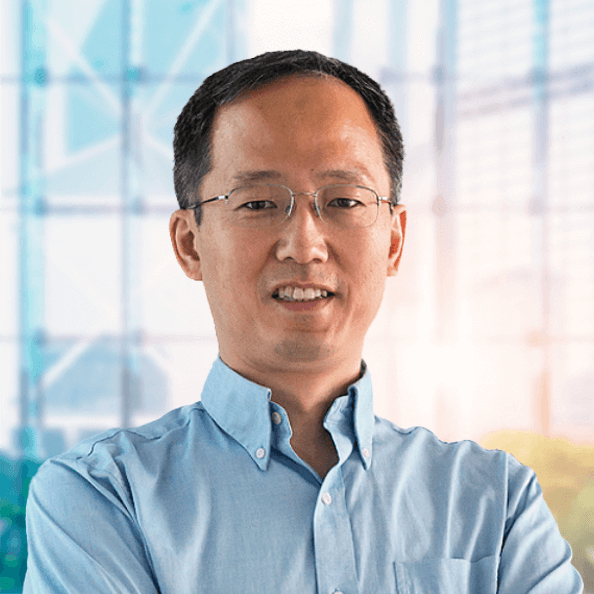
Nan Ji, PhD

A chemist in a small office off Route 128. Somewhere behind him, twelve people are trying to feed a protein to a lysosome.

RoleCo-Founder, President, CEO
CompanyPAQ Therapeutics
HQBurlington, MA
Raised$111M
StageClinical (Phase 1)

The Verb Is Degrade

KRAS was called "undruggable" for forty years, which is the kind of thing chemists say when they haven't found the right verb. Nan Ji thinks the right verb is degrade.

PAQ Therapeutics, the company he co-founded in June 2020 with the neuroscientist Boxun Lu and the biologist Huaixiang Hao, does not try to block KRAS. It tries to take KRAS away. The mechanism is autophagy, the cell's built-in trash program, in which the cytoplasm rounds up unwanted contents inside a double membrane sack called an autophagosome and delivers the whole package to a lysosome for digestion. Autophagy is fundamental biology. It is also, until recently, not something anyone treated as a drug delivery system.

PAQ's molecules, a class Boxun Lu and colleagues introduced in a 2019 Nature paper, are called autophagosome-tethering compounds. ATTECs. They are small, they are bifunctional, and their job is essentially to write an address label on a bad protein and stick it to the autophagosome. What happens next is metabolism. What happens after that, if it works, is a tumor that no longer has any KRAS to run on.

Ji, a Peking University undergraduate who went to Harvard for a PhD in organic chemistry in 2000 and stayed for a postdoc, has spent his career on molecules like this. Seven years at Novartis Institutes for BioMedical Research got him through a bench-scientist apprenticeship and multiple clinical candidates. A short stint at Mitobridge, later acquired by Astellas, gave him mitochondrial biology. Then in 2017 he joined Kymera Therapeutics as its head of chemistry when Kymera had barely any employees and barely any furniture. Three years later he was Vice President of Chemistry and Kymera had gone public. He left to start PAQ.

The founders' meeting was on Zoom. It was 2020. Ji was in Boston. Lu was in Shanghai. Hao was somewhere in between. The company incorporated during a pandemic, raised $30 million in Series A the following year led by biotech's usual suspects, and then, in a familiar pattern, went quiet for a while. Biotech is a slow business. Autophagy chemistry is slower.

Five years after founding, PAQ has two disclosed programs. PT0253 is a KRAS G12D degrader. PT0511 is a pan-KRAS degrader, meaning it does not care which mutation, meaning it goes after the whole protein family. In May 2025 PAQ announced a $39 million Series B financing and initiated a Phase 1 trial. In January 2026 the company extended that round to $77 million and dosed the first patient. Cumulative venture capital raised: $111 million. Employees: about twelve. The efficiency is unusual.

Also unusual is the target choice. KRAS is the most-mutated oncogene in human cancer, present in perhaps a quarter of all tumors, and until 2021 there was no approved KRAS drug of any kind. The first two, sotorasib and adagrasib, are inhibitors, and they only work against KRAS G12C, which is one specific mutation, mostly in lung cancer. The rest of KRAS - the G12D that shows up in pancreatic cancer, the G12V, the G13D, the amplifications - remains the target the whole industry wants and no one has finished. Small molecule inhibitors of KRAS G12D are in the clinic, but the case for degraders is that inhibition leaves the protein there, still capable of assembling signaling complexes and driving resistance. Degradation removes the substrate. Ji's pitch is that this matters.

The Kymera experience is relevant here. Kymera pioneered targeted protein degradation using E3 ligases, the ubiquitin-proteasome system's tagging machinery. That is a proteasomal degradation strategy. Ji ran the chemistry that produced Kymera's earliest degraders. When he left to start PAQ, he did not change the game. He changed the delivery mechanism. Same verb, different door in the cell.

Ji is on more than 30 patent applications. He has assembled, per press materials, an international group of autophagy experts. The company operates lean. It is doing the thing that lean, technical, chemist-founded biotechs do: file, dose, disclose, repeat.
Total Raised
$111M
Series A + B
Employees
~12
as of 2026
Patent Filings
30+
Ji as inventor
Founded
2020
during pandemic

How An ATTEC Works

The molecule is a chaperone. It has a hand for the target and a hand for the autophagosome. It walks the target over. The cell does the rest.

Substrate
KRAS
Bifunctional Molecule
ATTEC
Compartment
Autophagosome

Simplified. The lysosome is downstream, and does most of the work. The ATTEC does not participate in the digestion. It just handles introductions.

An expert at building an organization from the ground up. Three years at Kymera from seed stage. Seven years at Novartis. Thirty-plus patents. - PAQ Therapeutics · corporate materials

The Lineage

Three institutions worth remembering, in the order he passed through them.

01 · 2008-2015

Novartis

Seven-plus years at Novartis Institutes for BioMedical Research in Cambridge, MA. Investigator II, then Investigator III. Contributed to and delivered multiple clinical and preclinical development candidates. This was the apprenticeship.

02 · 2017-2020

Kymera Therapeutics

Joined at seed stage. Rose from Director of Chemistry to Executive Director to Vice President and Head of Chemistry in three years. Drove scientific strategies, platform-building, and business development in targeted protein degradation.

03 · 2020-present

PAQ Therapeutics

Co-founded with Boxun Lu and Huaixiang Hao. Serves as Co-Founder, President and CEO. Two clinical-stage programs: PT0253 (KRAS G12D degrader) and PT0511 (pan-KRAS degrader, first patient dosed 2026).

The Cap Table, In Bars

Two rounds and one extension, plotted against each other.

Series A (2021)$30M
Series B - initial (2025)$39M
Series B - with extension (2026)$77M
Cumulative$111M

Investors include MRL Ventures Fund (Merck's venture arm), Bayland Capital, Johnson & Johnson Innovation - JJDC, LAV Fund, BioTrack Capital, and Sherpa Health Partners.

Career Timeline

1996 - 2000
B.S., Organic Chemistry, Peking University
2000 - 2006
Ph.D., Organic Chemistry, Harvard University
2006 - 2008
Postdoctoral Fellow, Harvard
2008 - 2015
Investigator II / III, Novartis Institutes for BioMedical Research
2015 - 2017
Senior Scientist then Associate Director, Mitobridge (later Astellas)
2017 - 2020
Director → Executive Director → VP, Head of Chemistry, Kymera Therapeutics
June 2020
Co-founds PAQ Therapeutics
2021
$30M Series A closes; collaboration with Insilico Medicine announced
May 2025
$39M Series B; Phase 1 trial initiated in KRAS-driven cancers
January 2026
Series B extension to $77M; PT0511 first patient dosed

Small Details

Note

Founded on Zoom

Ji, Lu, and Hao co-founded PAQ in June 2020, when incorporation ceremonies had been replaced by video calls across three time zones. The company's initial round closed a year later.

Note

The Boxun Lu paper

Co-founder Boxun Lu, a professor at Fudan University, published the seminal 2019 Nature paper describing ATTECs. PAQ is the company that commercialized his academic finding.

Note

Lean by design

Twelve employees, roughly. $111 million raised. Two clinical-stage assets. The ratio is unusual for a small-molecule oncology company running its own Phase 1.

Note

Same verb, different door

At Kymera, Ji worked on proteasomal degraders. At PAQ, autophagic ones. The strategy is the same: get rid of the protein. The machinery is different.

Questions People Ask

Who is Nan Ji?

Nan Ji is the co-founder, president and CEO of PAQ Therapeutics, a clinical-stage biotech in Burlington, Massachusetts focused on autophagy-based drug degraders.

What does PAQ Therapeutics do?

PAQ develops autophagosome-tethering compounds (ATTECs), a class of small-molecule degraders that hijack the autophagy pathway to eliminate disease-causing targets, with a lead focus on KRAS-driven cancers.

Where did Nan Ji work before founding PAQ?

He was VP/Head of Chemistry at Kymera Therapeutics from its seed stage, worked at Mitobridge (acquired by Astellas), and spent 7+ years at Novartis Institutes for BioMedical Research.

How much has PAQ Therapeutics raised?

PAQ has raised over $111M in total, including a $30M Series A in 2021 and a Series B that closed at $77M with a 2026 extension.

What is PAQ's lead clinical candidate?

PT0511, a pan-KRAS degrader that dosed its first patient in a Phase 1 trial in early 2026, alongside PT0253, a KRAS G12D degrader in earlier development.

Elsewhere

Share this profile
LinkedIn Twitter / X Facebook Instagram