The modern data stack has a small, embarrassing secret. It can collect a company’s activity, clean it, model it and turn it into a dashboard with the poise of a concert pianist. Then, on the evening before a business review, a well-paid analyst begins taking screenshots. A chart is copied into PowerPoint. A number is nudged three pixels to the left. Someone asks whether this is the final final deck. It is not.
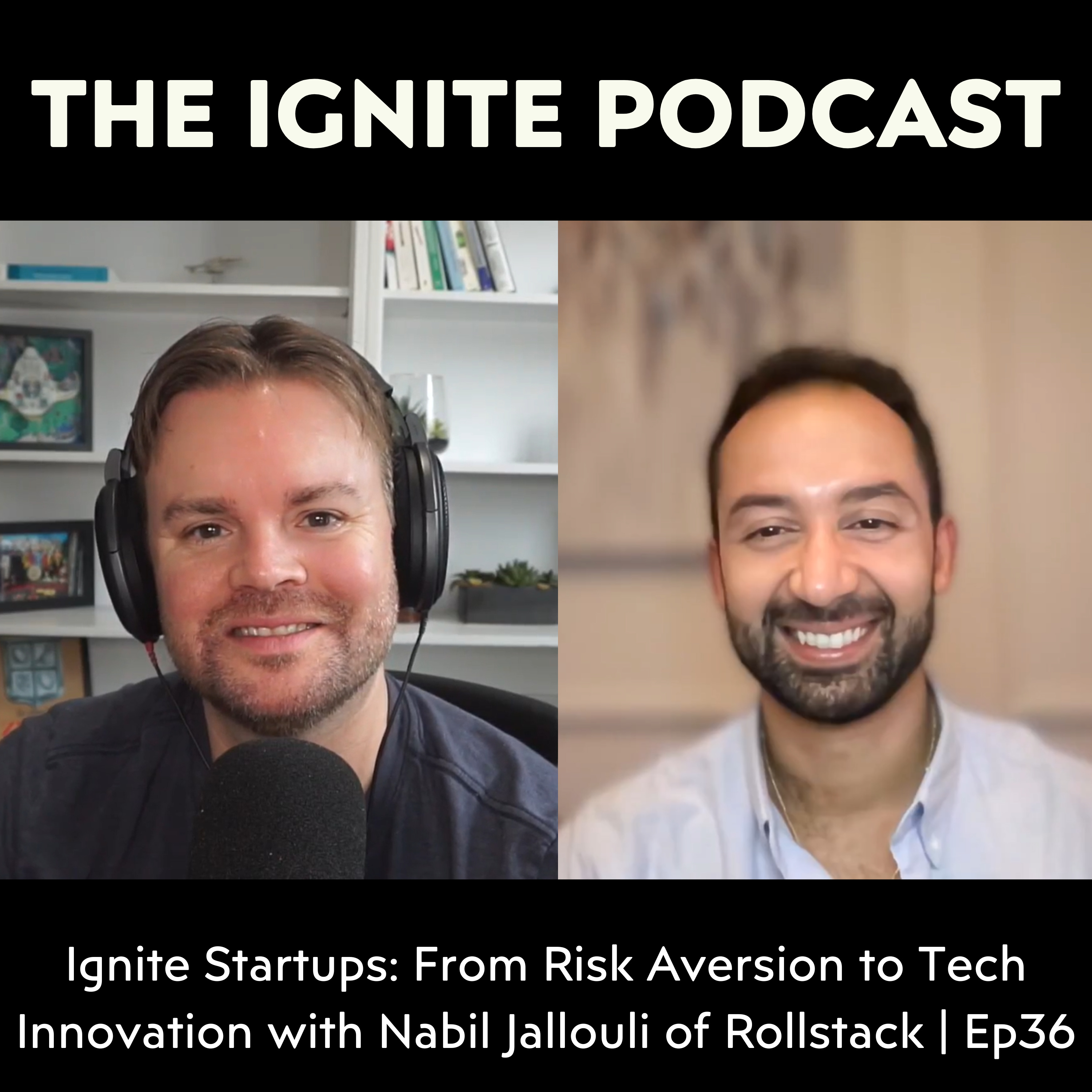
Nabil Jallouli kept meeting this ritual in increasingly sophisticated companies. He worked in data science at AgilOne, consulting at BCG, international analytics at Groupon, strategy and operations at Pinterest, and global revenue operations at Deel. The logos changed. The manual handoff survived. Teams had invested in the machinery of knowledge, yet the last few feet between a dashboard and a decision were still traveled by clipboard.
Rollstack, the company he now leads as co-founder and CEO, was born in those last few feet. Its software links business-intelligence tools and data sources to the presentations and documents that leadership teams, clients and partners already use. Refresh the source, and the recurring artifact can refresh with it. The chart keeps its place. The template keeps its manners. The analyst gets an afternoon back.
The opportunity was hiding in the work that began after the dashboard was finished.
A problem with excellent camouflage
Repetitive reporting is easy to overlook because it rarely looks catastrophic. It arrives as twenty minutes here, an hour there, a late correction before a meeting. Each action is survivable. Together they form a tax on every week, month and quarter. In Rollstack’s 2024 funding announcement, Jallouli wrote that data analysts can spend 20 to 30 percent of their time copying charts, taking screenshots and manually moving data into documents.
The business insight was not that executives needed to be rescued from slides. Slides remain stubbornly useful. They travel well, carry commentary, preserve a sequence and behave predictably in a meeting. Dashboards invite exploration; documents deliver a considered version of events. The opportunity was to respect that habit while removing the clerical labor around it.
The long route to the obvious idea
Jallouli’s path began before corporate reporting entered the picture. His father was an engineer and brought internet access into the family home when Nabil and his twin brother, Younes, were five. The technology was an invitation to explore. At École Al Jabr in Casablanca, Nabil received an honorable mention in the 2008 Concours Général, a French academic competition, for Arabic. He also spent seven years studying music theory and playing guitar at a conservatory.
He later studied engineering at École Centrale Paris, now part of CentraleSupélec, in subjects spanning operations research, technological innovation, computer science and mathematics. The early career that followed moved between the quantitative and the organizational. Data science taught him how information is built. Consulting showed him how it is packaged. Operating roles showed him how people actually use it when the calendar says the meeting starts at nine.
The repetition across those jobs mattered more than any single title. At Groupon, Pinterest and Deel, he saw advanced teams maintain recurring presentations despite modern analytics infrastructure. The gap followed him until it no longer looked like an annoyance. It looked like a category.
Learning to make the less cautious choice
The founder route was not the one Jallouli had been trained to regard as sensible. In a long podcast conversation in 2024, he described a middle-class upbringing organized around security. Study hard, enter a respected profession, build a stable future. It was practical advice, offered with care. It also made entrepreneurship feel like a departure from the script rather than its obvious next page.
The tension gave his early jobs a double purpose. They were careers in their own right and a gradual education in what a technology company could be. AgilOne exposed him to Silicon Valley and data science. BCG provided the compressed education of consulting. Groupon gave him an international analytics remit, Pinterest brought strategy and operations at consumer scale, and Deel put him close to revenue during a period of rapid company building. The sequence replaced an abstract fear of startups with specific knowledge about customers, teams, metrics and execution.
It also sharpened his view of risk. Staying with a familiar workflow can feel safe even when the workflow quietly burns thousands of skilled hours. Starting a company looks risky because its uncertainty is visible. The cost of continuing as before is dispersed across calendars and payroll, which makes it easy to ignore. Rollstack’s premise reverses that accounting: the recurring screenshot is not harmless merely because everyone knows how to take one.
This helps explain why Jallouli speaks about execution as readily as invention. His idea depended on integrations working repeatedly inside documents that senior teams would notice the moment they broke. A report sent to leadership with an old number is not an interesting experiment. It is simply wrong. The company therefore paired an automation pitch with attention to reliability, permissions and enterprise controls. The future-facing part of the product had to earn its place through the decidedly unromantic discipline of getting Tuesday’s deck right.
There is something pleasantly circular in the result. An engineer father offered two young brothers access to the internet. Years later, those brothers used their technical fluency to attack a very adult form of digital housekeeping. Childhood curiosity met the recurring business review. Software history is full of grand visions; office life is full of filenames. A useful company must occasionally understand both.
Family, friendship and the useful argument
Jallouli did not start the company alone. He built it with Younes, his twin brother, and Saad Bahir, one of his closest friends from engineering school. This is usually the point in a founder story when a tidy parable about complementary skills arrives. The more interesting detail is less tidy: these people had already laughed, traveled, argued and grown up together before cap tables entered the friendship.
Jallouli has been frank about the risk. Building a company with people one cherishes can put the relationships themselves under pressure. His conclusion after working through 2025 was that the same history had become an operating advantage. There was less filter, less corporate politics and more direct conversation. Decisions moved quickly because the people making them did not have to invent trust from scratch.
“They say you should never mix business with family or friends. I did both.”
Directness is not a guarantee of wisdom, of course. It merely shortens the distance to the real disagreement. For a company selling the removal of unnecessary handoffs, the founding team’s taste for plain conversation feels appropriately on brand.
A modest medium, an ambitious destination
Rollstack entered Y Combinator’s Winter 2023 batch and announced a $1.8 million seed round later that year. In October 2024, it announced an $11 million Series A led by Insight Partners, with continued participation from Y Combinator. By then, the company said it served teams ranging from mid-sized businesses to public companies, with customers using the platform for business reviews, financial reporting and client presentations.
Its integrations reveal the bet. Tableau, Looker and Power BI on one side; PowerPoint, Word, Google Slides and Google Docs on the other. Rollstack occupies the border between systems designed to calculate and formats designed to communicate. It preserves templates, schedules updates and creates variations at scale. Generative AI adds suggested narratives and contextualized insights, but the company’s original discipline remains visible: first make the recurring number arrive correctly.
Jallouli’s recent writing pushes the argument further. Large language models, he believes, are reorganizing business intelligence rather than merely adding a chat box to it. His focus on the semantic layer and trusted business context points toward a more complicated future for Rollstack. Once software can update the chart, the next question is whether it can help explain why the chart matters without loosening the controls that make enterprise data trustworthy.
The document is where the decision lives
There is a pleasing lack of romance in automating a recurring deck. It does not require pretending that every spreadsheet is a revolution. It requires noticing that expensive systems and capable people are connected by a ritual nobody enjoys. The useful founder sees the ritual clearly enough to count it.
Jallouli’s career supplied the count. Data scientist, consultant, analytics leader, strategy operator, revenue operator: each role offered another view of the same handoff. His co-founders supplied a relationship sturdy enough for blunt decisions. The market supplied thousands of presentations whose numbers would need changing again next month.
The aspiration now is larger than a faster refresh. Jallouli wants organizations to spend less time assembling evidence and more time interpreting it. The finished report should not be the residue of a long copying session. It should be the beginning of a better conversation.
Boardrooms will probably keep their slides. People like sequence, narrative and something they can send afterward. Rollstack’s wager is that familiarity need not include the old drudgery. The deck may survive. The Sunday-night screenshot deserves a retirement party.