A $24.6 billion grocery merger is an awkward thing to stop with a small team. It comes wrapped in economic forecasts, promises about prices and armies of lawyers. When Washington state challenged the proposed combination of Kroger and Albertsons, it brought in Munger, Tolles & Olson. In December 2024, the firm and the state attorney general’s office obtained a permanent injunction. The transaction had found an obstacle it could not simply negotiate around.
MTO’s role puts its business in focus. This is a firm companies and institutions hire when a legal question threatens something larger: a transaction, a business model, a board’s decision or the ability to keep operating on acceptable terms. Its public client roster includes Berkshire Hathaway, Google, Disney, Amgen and Bank of America. Yet its national practice operates from just three offices, with more than 200 lawyers.
That combination makes the firm interesting. Its proposition depends on the people assigned to a problem, their experience and the responsibility they are allowed to carry. The grocery case also supplies a useful corrective to any romantic account of compact teams. Small does not automatically mean inexpensive.
One partner, roughly one associate
In a 2022 interview, firm chair Brad Brian described MTO’s staffing ratio as roughly one partner for every associate. In law-firm terminology, that is low leverage: relatively few junior lawyers for each partner. Brian argued that this structure avoided unnecessarily large case teams and made early responsibility possible. It is a description of the firm’s operating philosophy, not a promise about the staffing of every engagement.
The economic choice is consequential. A partner-heavy practice puts experienced judgment close to the work, but that judgment has a price. It also asks more of junior lawyers. Someone who owns a substantial piece of a case needs access to colleagues who can catch a weak argument before an opponent does.
MTO’s recruiting helps explain how it attempts this. The firm says roughly 75% of its lawyers have clerked for federal or state judges, and lists 15 former U.S. Supreme Court clerks. Clerking means seeing how a court handles arguments, evidence and competing demands on its attention. That experience is especially relevant to a business built around consequential disputes. Credentials remain an input; the work still has to persuade.
Firm-reported figures, September 2026. These measure prior experience, not case outcomes.
The merger’s price was not the lawyer’s bill
Washington’s challenge gives that staffing philosophy a concrete assignment. MTO’s team included antitrust lawyers Glenn Pomerantz and Kuruvilla Olasa. Alongside the attorney general’s office, they helped secure the state-court injunction against the Kroger-Albertsons combination. The Federal Trade Commission pursued a separate federal case; the Washington result should not be confused with that proceeding or credited to one law firm acting alone.
The cost developed as the case did. Reporting in June 2024 put Washington’s agreement with MTO at up to $2.5 million and identified hourly rates of $1,190 for two partners. By July, the Seattle Times reported that a June 21 authorization allowed spending of up to $6 million. These were spending authorizations, not a published final invoice.
The budget was not the only uncertainty. Before trial, the state judge had expressed doubts about his authority to block the transaction nationwide. Washington also faced questions about duplicating a federal effort. The state pressed ahead with its own case, and ultimately obtained its injunction. The practical lesson is less glamorous than the eventual win: a major lawsuit needs resources and a strategy that survives procedural uncertainty.
Value of the proposed Kroger-Albertsons merger
Washington’s authorized MTO fee budget by June 2024
Transaction value and authorized legal spending are different measures. Neither is a damages award.
A law practice with a boardroom attached
The courtroom story can obscure MTO’s other work. Its corporate practice advises on acquisitions, investments, joint ventures, securities obligations and governance. Clients include public and private companies, financial sponsors, family offices and wealthy individuals. Boards and special committees can engage the firm on fiduciary duties and difficult decisions involving competing interests.
For those buyers, the deliverable may be a negotiated agreement, a financing structure or advice that changes a decision before litigation begins. A transaction can demand corporate, regulatory and litigation judgment at once. MTO’s range allows it to work across those questions, although the exact team depends on the assignment.
Its broader practice list includes intellectual property, labor and employment, privacy, restructuring and white-collar investigations. The market position is best understood as an established national practice for demanding matters. Depending on the brief, a buyer might also consider a litigation specialist such as Quinn Emanuel or Williams & Connolly, or a broad corporate firm such as Gibson Dunn or Latham & Watkins. That is a comparison of service choices, not a league table.
Appeals add another dimension. Donald Verrilli, the former U.S. solicitor general who joined in 2016, has handled Supreme Court victories at the firm including Moore v. Harper and California v. Texas. The work gives MTO a presence where a ruling can affect institutions far beyond the immediate parties.
The people came before the office
The firm began in Los Angeles in 1962 with seven founders, including Charlie Munger, Roy Tolles, Roderick Hills and Carla Anderson Hills. Munger later concentrated on investing; Berkshire Hathaway became an enduring part of the firm’s client story. Ronald Olson, whose surname now appears on the door, joined as an associate in 1968. He was not one of the original seven.
The expansion story is unusually revealing. San Francisco opened in 1991. Another quarter-century passed before Washington, D.C. In a 2016 interview, Olson said the firm had repeatedly considered and rejected Washington arrangements. Verrilli, Michael DeSanctis and Chad Golder changed the calculation because the firm believed they would fit its culture.
“This is all about getting the right people.”Ronald Olson, on opening in Washington, 2016
That sequence suggests a useful discipline for other professional firms: identify the people and work that justify an office before committing to an expansion target. It also has limits. A compact footprint suits some assignments better than businesses requiring a large, permanent presence across many jurisdictions. The model depends on clients valuing the particular team enough to hire it across distance.
Responsibility needs somewhere to land
MTO says attorneys can build workloads around their interests and active matters. Most partners were promoted internally. Twice-weekly office lunches bring colleagues together with speakers ranging from public officials to screenwriters and chefs. The lunch table is a modest piece of infrastructure for a firm that wants lawyers to know whom to call.
There is more formal support, too. Its mentoring program has separate tiers for newer and midlevel attorneys. Training covers depositions, jury selection, witness examinations and writing. Lawyers can gain trial experience through four-month pro bono placements with specified prosecutor or public defender offices. Those are concrete mechanisms behind the promise of early responsibility.
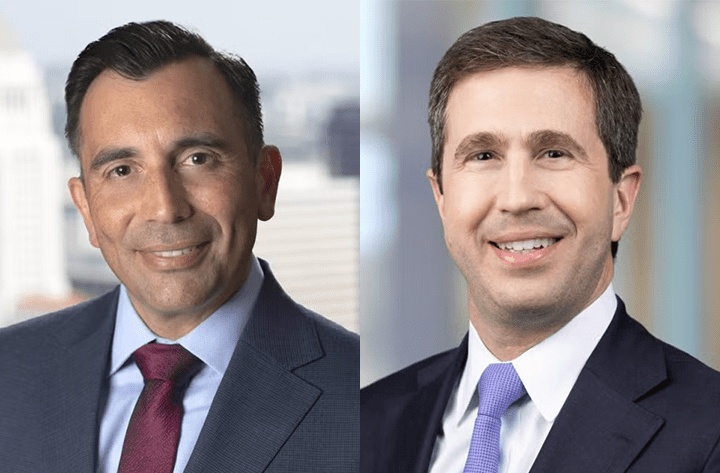
The current leadership reflects that connection between public service and private practice. Martin Estrada and Daniel Levin became co-managing partners in November 2025. Estrada previously led the U.S. attorney’s office for the Central District of California; Levin served as an assistant U.S. attorney and clerked for Justice Ruth Bader Ginsburg. Both brought trial and government experience to the management job.
There is a version of this system another employer can copy: give a junior colleague a meaningful task, name an experienced person who will review it and make time for that review. Merely removing layers of management would leave out the expensive part: accessible expertise.
The paperwork that contradicted the pitch
A profile of MTO’s culture also needs its 2018 arbitration controversy. After an incoming summer-associate agreement circulated publicly, the firm faced criticism over mandatory arbitration of employment claims, including sexual harassment claims. Bloomberg Law reported that the firm announced it would stop requiring employees to sign such agreements less than 24 hours after the criticism surfaced.
“In this case, we were wrong, and we are fixing it.”Munger, Tolles & Olson, March 2018
The episode exposed a gap between a culture of responsibility and the terms offered to employees. The documented response was specific: a policy change. It is a more useful account of correction than a claim that a strong culture prevents mistakes. For another employer, the copyable step is to examine whether its contracts support the values it asks people to believe.
The time that never becomes a client bill
Pro bono work is a measurable commitment at MTO. The firm says more than 8% of attorney time goes to that work and more than 90% of associates participate. Its lawyers pursue matters involving housing, civil liberties, criminal justice and other public-interest issues. The time has an opportunity cost, even when the client receives no bill.
In August 2026, MTO announced its twelfth first-place finish on The American Lawyer’s A-List. The ranking considers revenue per lawyer, pro bono, inclusion, midlevel associate satisfaction and women equity partners. It is evidence across several dimensions of a firm, rather than a prediction about the next lawsuit.
The practice continues to change. Patent litigator Matthias Kamber joined the San Francisco office in September 2026, following Andrew Radsch’s arrival the previous November. That is a concrete investment in technology disputes. The recurring business question remains how much experienced attention a consequential problem deserves. MTO has built its practice around supplying that attention. The grocery case shows why clients buy it, and why they must budget for it.