Six weeks is an awkward amount of time for a banking technology company. Long enough to be asked for results; short enough to make an implementation plan look suspiciously cheerful. In January 2024, Fimple announced that its core banking platform had been launched at Dünya Katılım in 1.5 months. For co-founder and chief executive Mücahit Gündebahar, the number gave an otherwise abstract argument a useful unit of measurement.
His business was built around a proposition that sounds reasonable until a bank has to act on it: financial institutions should be able to change their products without making every change an exhausting reconstruction. The deployment supplied a concrete example. It also made a good place to start understanding its founder, whose working life had already taken him through software consulting, bank technology management and the leadership of a banking software company.
Fimple’s reported core banking deployment time for this project.
A project result, rather than a promise for every implementation.Learning the problem from the inside
Gündebahar was born in Aksaray in 1976. He graduated in computer engineering from Istanbul University in 1997, completed an MBA at Istanbul Bilgi University in 2002 and earned a doctorate in business administration at Haliç University in 2016. The sequence moves from building systems to understanding the organizations that pay for them. His career would repeatedly put those two interests in the same room.
From 2005 to 2009, he worked at Microsoft Türkiye as an application development consultant. He then moved to Kuveyt Türk, managing enterprise architecture and research and development between 2009 and 2012. In 2012 he became the bank’s IT group manager and CIO. By the time of his 2016 conference biography, he had worked in different roles on transformation projects at five Turkish banks.
These are jobs in which an elegant technical answer must survive an institutional question: can we actually use it? The later Fimple pitch would address precisely that meeting point. A bank’s technology has to accommodate the bank’s business, while remaining capable of changing with it. Gündebahar had spent years encountering that requirement from inside the institution.
In a January 2018 interview, he described younger customers who wanted to conduct their banking through mobile channels, with as little need as possible to visit a branch or make a call. He also discussed opening the bank’s APIs, the interfaces through which outside developers could connect to services. His interest extended to the people building around the bank. Lonca, Kuveyt Türk’s entrepreneurship center, and the funding available to startups were part of the same conversation.
There was a distinctly practical complaint in his view of the Turkish startup scene. He argued that the shortage of investment depth was holding businesses back. Technological ability alone could not sustain an ecosystem. Years before his own venture’s funding announcements, he was already talking about the money needed to keep young companies alive.
Leaving the institution, keeping the problem
Gündebahar went on to lead Architecht, the banking technology business associated with Kuveyt Türk. When Architecht announced his departure in 2022, it said he had decided to continue his professional life in his own venture. The announcement thanked him for his work toward making Architecht an international technology company. The next job would preserve the international ambition and change who owned the undertaking.
He co-founded Fimple with Abdurrahman Çınar in 2022. A London company followed that year, after a $2 million pre-seed investment. Gündebahar described London as the base for taking the company’s cloud-based financial technology into overseas markets. Europe was an early priority; Central Asia, the Middle East and Africa also figured in his plans. This was an international business proposition near the beginning, before expansion could become a retrospective explanation for success.
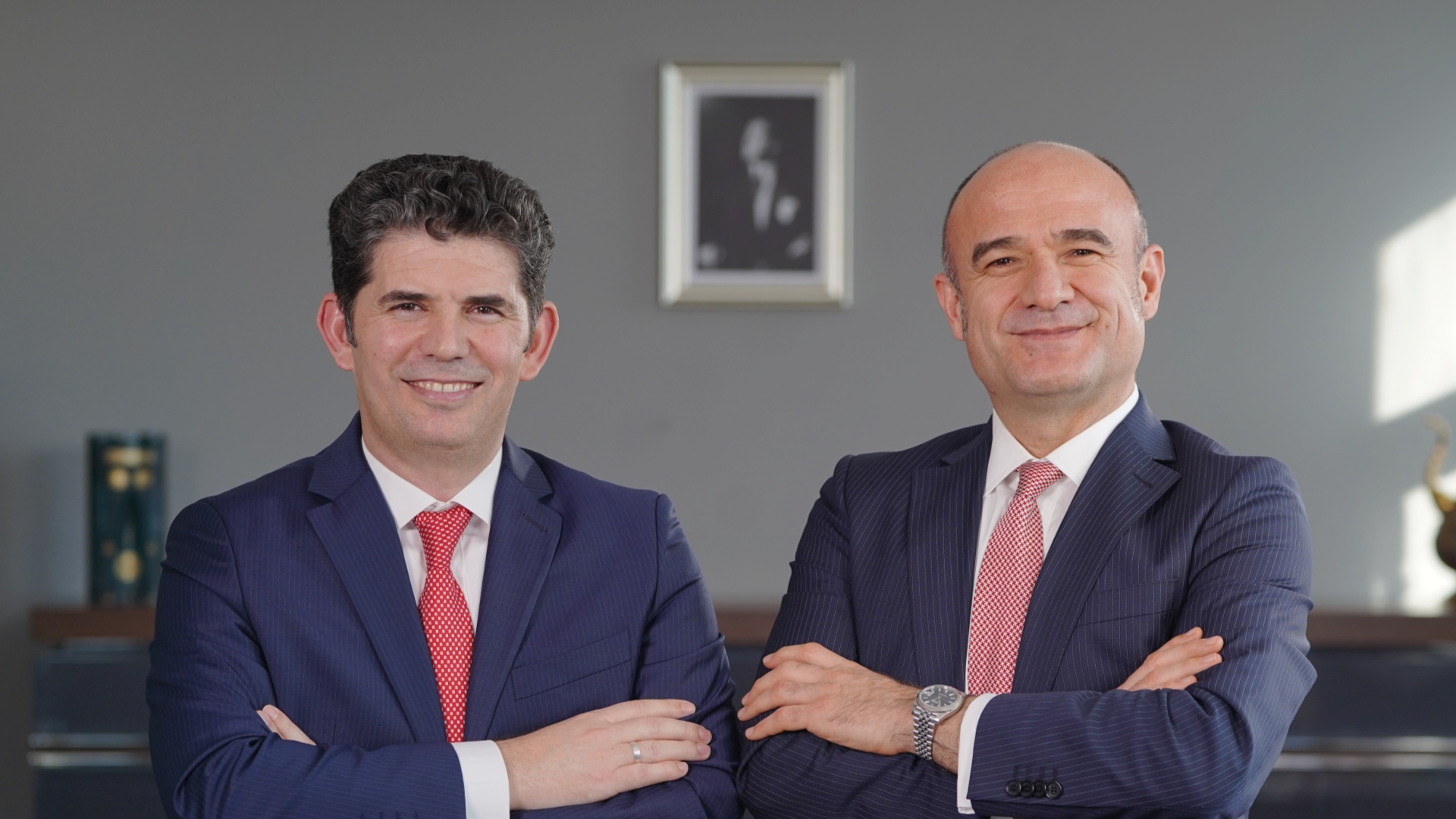
Çınar and Gündebahar were building in a field where customers must entrust software with consequential work. Familiarity with banks mattered, but it could only carry a new company so far. The six-week Dünya Katılım implementation gave the enterprise something more tangible than its founders’ résumés: a completed deployment that could be discussed with the next prospective customer.
The business of making room
Fimple’s chosen vocabulary includes “composable,” a word that requires a little unpacking before it earns its place outside a product presentation. The platform lets an institution select and configure banking capabilities and connect them through APIs. Its offering covers banking and lending, with deployment options in the cloud or on the institution’s own infrastructure. The premise is that customers should have room to assemble what they need.
In May 2024, that approach appeared in a partnership with Misyon Bank and its subsidiary MisyonTech. Their banking infrastructure, called tOrk, combined Fimple’s functions with MisyonTech’s experience. At the signing, Gündebahar pointed to more than 5,500 API services and described Fimple’s participation in Misyon Bank’s development. His counterpart, Muhammet Cerit, emphasized microservices, cloud solutions and flexibility for serving multiple institutions.
The arrangement shows what Gündebahar is selling more clearly than a string of architectural adjectives. A customer brings its own business model and knowledge. Fimple supplies capabilities that can be put to work within it. The platform’s usefulness depends on how well those pieces meet. Software architecture becomes a commercial question about how much freedom the institution retains.
A product takes shape
- ChooseThe banking capabilities an institution needs
- ConfigureThe product and its operating rules
- ConnectChannels, partners and existing systems via APIs
An old argument meets new capital
In February 2025, Fimple announced a $12 million Series A led by DN Capital and Smartfin, with APY Ventures and Tera Portfolio also participating. The company named Aytemiz Investment Bank, Misyon Bank, Hedef Investment Bank and Q Investment Bank among its customers. Product development and expansion into the Middle East, North Africa and the CIS region were on the investment agenda.
A $10 million follow-on investment arrived in January 2026, led by Ak Asset Management’s venture capital fund alongside existing investors. The stated focus included strengthening Gulf operations, following the opening of Dubai and Riyadh offices. Banking, digital lending and Banking as a Service were part of that regional push.
There is a pleasing continuity between the executive discussing inadequate startup capital in 2018 and the founder deploying it several years later. The argument now came with obligations. Investment could support product work and market entry; institutions would still decide whether the platform deserved their business. Funding enlarged the opportunity to attempt the work. It did not complete the work on his behalf.
The Gulf brings its own questions
Gündebahar’s background in participation banking connects directly with Fimple’s Gulf strategy. The company offers an Islamic Banking Suite alongside conventional banking capabilities. In August 2025, he described the opportunity as helping institutions meet conventional and Sharia-compliant requirements while developing new services. The proposition traveled with knowledge acquired in an earlier part of his career.
At Finnovex Middle East in Dubai in November 2025, he took up trade finance. His opening question asked why it remained slow while other activities accelerated digitally. The discussion covered disconnected operations, paperwork, onboarding and the duplicated workflows that can separate Islamic and conventional banking. His proposed answer centered on reusable components and shared services.
“Trade finance doesn’t need more complexity; it needs intelligent flexibility.”
Mücahit Gündebahar · Finnovex Middle East, 2025
The same month, Fimple announced two IBSi awards for its work with Dunya Islamic Bank, covering its core banking platform and Islamic profit distribution solution. It had also been included in CB Insights’ 2025 Fintech 100. Those acknowledgments placed attention on the business, but the interesting connection to Gündebahar’s story is more specific: participation banking experience had become part of a product intended for customers across borders.
By autumn 2026, Fimple reported more than 35 customers in 10 countries. Its announcement of fourth place in Deloitte Technology Fast 50 Türkiye cited revenue growth of 1,110%, following second place in the previous year’s ranking. These are company figures. For its co-founder, they put scale behind the international plan he had described in 2022.
The checkout is part of the brief
His recent public arguments also reach beyond bank technology departments. In an October 2026 article about embedded finance in the Gulf, Gündebahar discussed retailers, airlines and other brands adding financial features to customer journeys. He argued for involving marketing and customer-experience teams at the beginning, when the service itself is being conceived.
“Stop treating embedded finance as an IT project that marketing promotes at launch,” he wrote. The questions he wanted asked concerned the intended customer, the problem being solved, the experience and the measure of success. A payment option has to make sense where someone encounters it. A feature can be technically available and still feel like an uninvited guest at checkout.
In an October interview, he also described an ambition for banking AI to move from pilots into daily operations. He emphasized data, the ability to act through APIs and governance, with human approval for the platform’s agents. The engineer’s concern with how a system works remains present alongside the chief executive’s concern with where the business goes.
The through line is the distance between a proposed improvement and something an institution can use. Gündebahar has approached that distance as a consultant, a bank executive, a software company leader and a founder. Six weeks gave one implementation a memorable number. The continuing task is to make the next institution’s idea workable, under its own requirements, with its own customers waiting.