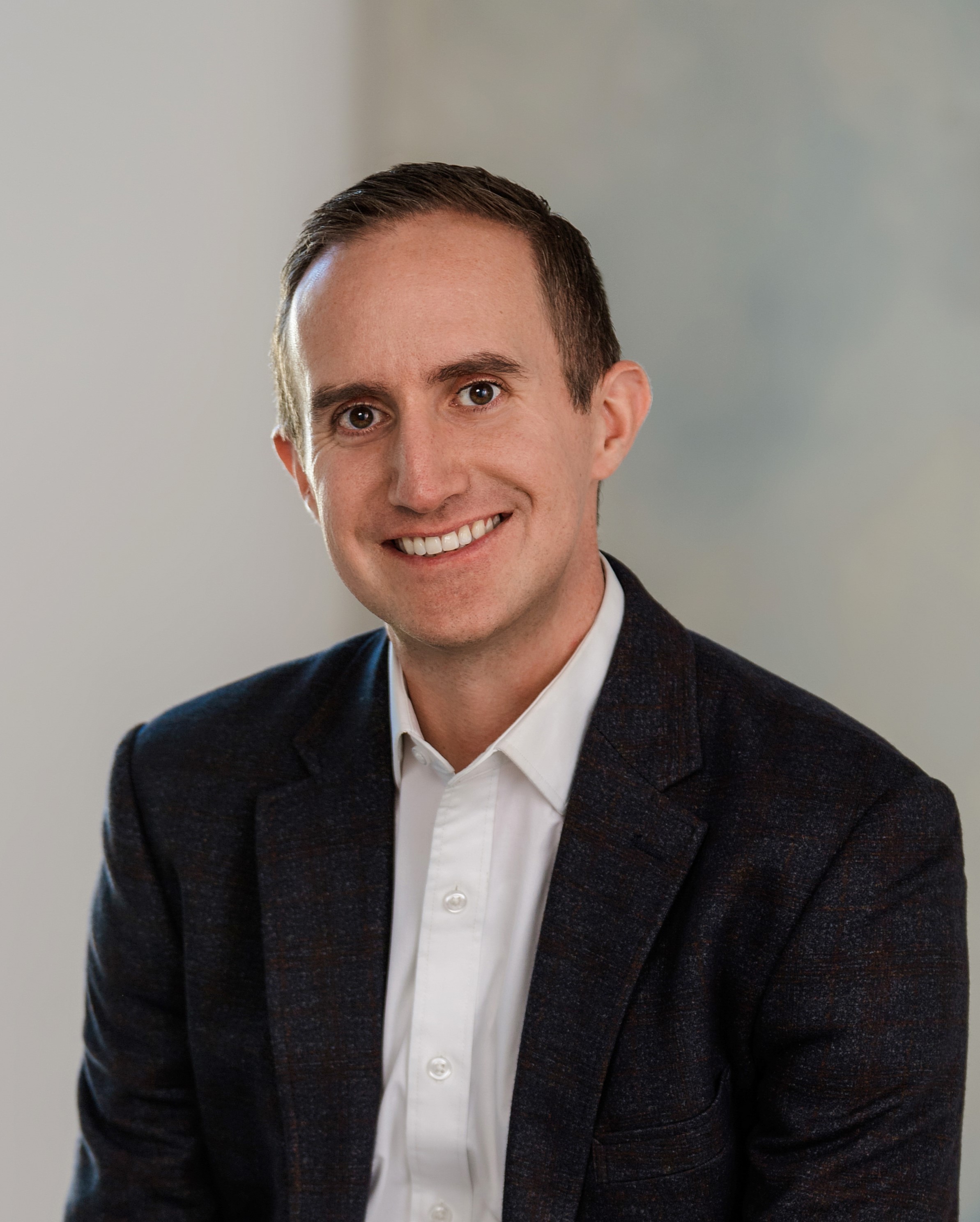
The Man Who Reframed Money
Most finance writers sell certainty. Morgan Housel sells something harder to find: clarity about why certainty is the wrong thing to want. He is the partner at Collaborative Fund who somehow became the most-read personal finance author alive - not by teaching formulas or predicting markets, but by pointing out that the way you think about money is the thing most likely to make or break you.
His 2020 book The Psychology of Money arrived quietly and then didn't stop. It crossed a million copies, then five, then ten, then eleven. It now exists in over sixty languages, on nearly every continent, in the bags of people who have never read a finance book before and probably won't again - because Housel gave them what they actually needed: a mirror, not a spreadsheet.
The core argument is almost offensive in its simplicity: financial outcomes are driven less by intelligence than by behavior. How you respond to a bear market. Whether you can sit still. Whether the gap between your ego and your income is wide enough to accumulate savings. "Doing well with money has little to do with how intelligent you are," he wrote, "and everything to do with how you behave." That sentence has been screenshot more times than most economists write in a career.
Spending money to show people how much money you have is the fastest way to have less money.
- Morgan HouselFrom Valet Lot to Bestseller List
Housel grew up near Lake Tahoe, California, the son of an ER doctor and an ER nurse who had met on a hippie commune in Tennessee in the 1970s. His parents still live on farmland in Northern California, growing about two-thirds of their own food. The child of that household was, predictably, not destined for a straightforward Wall Street trajectory.
In his early twenties, before any of the books, before the awards, he parked cars at a high-end Los Angeles hotel. Ferraris rolled in. Lamborghinis. Rolls-Royces. Housel loved cars from childhood - always had. But standing in that valet lot, watching these vehicles arrive driven by men who were clearly buying status as much as transportation, something crystallized. The relationship between money and identity, between what we buy and what we want people to think of us, would become the gravitational center of everything he later wrote.
He graduated from USC with an economics degree in 2008 - which is to say he entered the job market at the precise moment global finance was melting down. He had started writing for The Motley Fool while still a student, covering banking for a few dollars per article. The financial crisis didn't end that career. It sharpened it. Watching the machinery of markets break in real time forced him toward the questions that machines can't answer: why do rational people make irrational financial decisions, and what can we do about it?
The Craftsman's Approach
Sixteen years as a professional writer. Over four thousand blog posts at Motley Fool before the books. Two Wall Street Journal bylines. Two Best in Business awards from the Society of American Business Editors and Writers. A Sidney Award from the New York Times. Two Gerald Loeb Award nominations - journalism's version of the Oscars for business writing.
That output wasn't the product of inspiration. It was the product of a system. Housel writes the way good journalists write: he finds the story first, then finds the lesson in it. His sentences don't explain finance; they explain humans. He reaches for history - the Apollo missions, World War II, the 1960s space race - rather than quarterly earnings calls. He has said he almost never reads business or investing books. He reads about how people behave under pressure, across centuries, in situations that have nothing to do with stock markets. The patterns transfer.
In 2016, he became a partner at Collaborative Fund, the venture capital firm that backs companies at the intersection of capital and culture. He writes there still - essays and newsletter posts that regularly go viral among finance and technology communities, available on their Substack to tens of thousands of subscribers. In 2021, he was appointed to the board of Markel Corporation, the specialty insurance and investment company sometimes called the next Berkshire Hathaway.
Use money to gain control over your time, because not having control of your time is such a powerful and universal drag on happiness.
- Morgan HouselSame As Ever, and What Came Next
His second book, Same As Ever (2023), extended the inquiry into pure human behavior, stripped of financial context. Twenty-three essays about the patterns that don't change across centuries - about risk, about the gap between expectations and reality, about how people underestimate the role of randomness in outcomes. "Risk," he wrote there, "is what's left over after you think you've thought of everything." The book landed on the New York Times bestseller list.
In October 2025, he published a third book: The Art of Spending Money. Where The Psychology of Money asked why we save and invest badly, The Art of Spending asks why we spend badly - how envy and social comparison and status anxiety corrupt our financial decisions at the point of purchase. The central equation is characteristically simple: wealth equals what you have minus what you want. Change what you want, and you've changed your wealth without earning a single extra dollar.
There's a personal honesty in that book's premise. Housel has written openly about buying his Seattle home in 2020 for roughly fifty percent above his original budget - not because the math worked, but because the emotional pull of having a family overrode the calculation. The man who wrote the book on financial behavior did the human thing. He includes himself in the diagnosis.
The Bigger Picture
What separates Housel from most finance writers is that he keeps his eye on the thing behind the money: time. Freedom. The ability to wake up and decide what your day holds. The books are about money the way a good map is about roads - the road is just the surface, and the point is where you're trying to go.
He speaks at conferences for fees in the range of $20,000 to $50,000, then writes essays arguing that money should buy you control over your hours, not a louder car. He serves on corporate boards while insisting that the boring investor beats the brilliant one. He works at a VC firm and is also, genuinely, one of the most prominent voices telling people that compound interest over time beats clever market timing every single time.
His parents still grow their own vegetables on the Northern California coast. His father finished his undergraduate degree when Morgan was one month old, became a doctor by the time Morgan was in third grade. The lesson of that childhood - that meaningful things take time, that the gap between today's sacrifice and tomorrow's reward is where wealth actually lives - is the lesson in all three books. It just took eleven million readers to confirm it was worth telling.