By the time MOCA Systems entered the Wyoming State Capitol restoration, the glamorous part was over. The 1888 landmark had deferred maintenance, aging systems and a renovation that had stalled. The projected overrun had climbed past $50 million. No dashboard could negotiate the competing demands of lawmakers, preservationists, contractors and a public that rightly considered the building its own.
MOCA helped the state, JE Dunn Construction and HDR re-plan the job. The team revisited scope, rebuilt the implementation plan and kept decisions tied to a shared definition of success. The finished restoration opened on time and $1 million under budget. It also restored the chamber where the nation’s first women’s suffrage law was passed and enlarged public hearing rooms that had kept citizens at the edges of their government.
The total cost of the engagement was not publicly disclosed. What is public is the before-and-after that earned the project a 2025 Recognition of Special Achievement from the National Academy of Construction. The first thing to fail was not a beam or a boiler. It was alignment: the scope, budget, schedule and stakeholder expectations no longer described the same project.
A simulator learns to run a meeting
MOCA’s origin is almost comically academic for a company now obsessed with jobsite promises. MIT professor Sarah Slaughter founded the business in Boston in 1999 to commercialize research in construction simulation. Her group modeled individual tasks, durations, resources and risks so a team could test how an idea might behave before trying it with concrete, cranes and payroll.
Simulation was the clean room. Construction was the weather. A mathematically credible plan still had to survive incomplete information, late deliveries, trade dependencies and people with different incentives. MOCA’s eventual answer was a split business: MOCA Services for judgment-heavy work around owners and complex programs, and MOCA Software for patterns that could be repeated across thousands of planning cycles.
Construction-simulation research becomes a company.
Touchplan launches as a collaborative planning platform.
Touchplan connects field plans with Primavera P6 master schedules.
MOCA acquires QuikCal’s analog-to-digital planning technology.
BoardScan and Precision Time Planning reach customers.
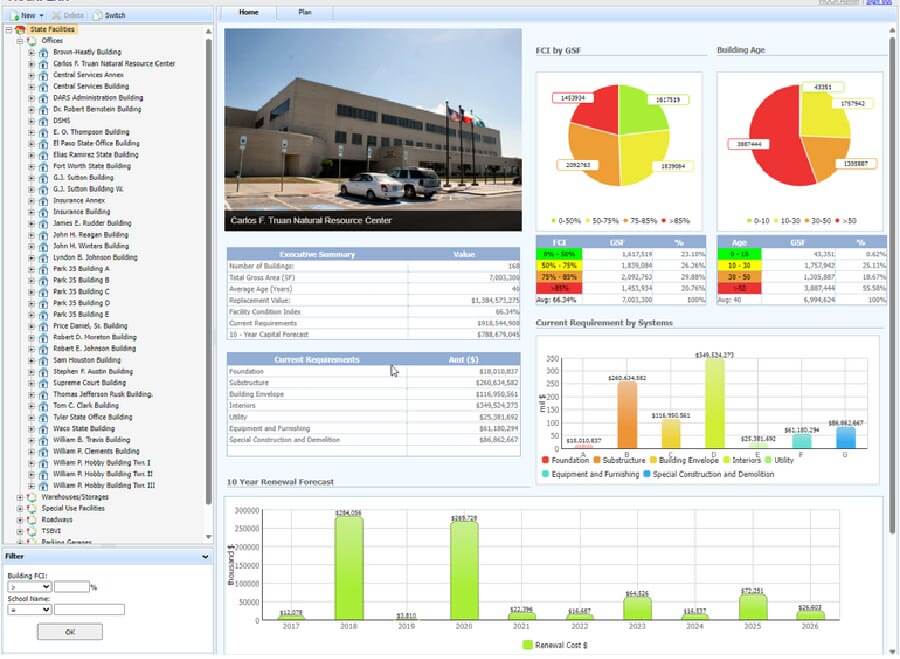
Today, services include owner’s representation, cost and schedule management, early planning, facility condition assessments, economic analysis and MOCA911 project rescue. The software side has two main products. Touchplan handles collaborative production planning. MOCAPlan organizes the less photogenic but expensive work of inspecting buildings, forecasting system replacements and turning facility conditions into capital budgets.
The sticky-note wall gets a memory
Touchplan’s central metaphor is familiar to anyone who has attended a pull-planning session: a wall covered in color-coded notes, each one representing work a trade promises to finish. Teams plan backward from a milestone, expose dependencies, name constraints and then compare promises with what happened. Touchplan puts that ritual in a shared cloud workspace and adds analytics without making the field team speak like database administrators.
The production-planning loop
That distinction matters. Primavera P6 is widely used for the master schedule, but a master schedule is not the same as Tuesday morning’s conversation among the superintendent, electrician and mechanical contractor. In 2024, MOCA added synchronization between P6 and Touchplan. Its design keeps a person in control of what moves between the systems. Automation removes reformatting; it does not get to invent construction logic.
The company’s 2025 acquisition of QuikCal tightened the loop. QuikCal began as a Duke engineering-class project that used image recognition to move handwritten planning information from the field to digital systems. In May 2026, that idea appeared inside Touchplan as BoardScan. A user photographs a physical planning board, reviews the extracted tasks, roles and dates, and posts them into the plan. Illegible handwriting still gets a human review. The feature is included for Touchplan customers rather than sold as an AI toll booth.
“It’s like trading the sundial for the atomic clock.”Brett Adamczyk, on Precision Time Planning
Two months later, MOCA commercialized Precision Time Planning. Standard construction plans often stop at days. Shutdowns, rail closures, utility tie-ins and commissioning windows do not. The new capability schedules work by hour or minute so crews, equipment and deliveries can occupy a narrow space without stacking on top of one another. It is a specialized feature, which is exactly why it makes sense: on a routine job it may be unnecessary; during a six-hour cutover, a day-sized box is nearly useless.
What customers are really buying
MOCA sells to owners, public agencies, architecture and engineering firms, general contractors and specialty trades. Named customers and users include Boldt, Jacobsen, Suffolk, DPR and Shawmut, along with P&G, airports and universities. In 2023, Touchplan reported more than 59,000 professionals on 4,600 projects representing $93 billion in construction costs. The company now says 21 of the ENR Top 25 general contractors use it and that Touchplan has appeared on more than 300 major data-center projects.
Those are company-reported figures, but they reveal the target: complex work with enough handoffs that coordination itself becomes a material cost. Touchplan is enterprise SaaS with quote-based pricing. MOCAPlan follows a software model around facility data. The services division charges for professional engagements. That combination lets MOCA enter before design, stay through delivery or arrive after a project has begun to fail.
Competitors approach from different directions. Procore and Autodesk offer broad construction-management suites. Primavera owns the master-scheduling conversation. Outbuild, vPlanner, Planera and Hoylu compete closer to Lean production planning. Traditional program managers and owner’s representatives compete with MOCA’s consultants. MOCA’s difference is not that it replaces all of them. It often sits between them, translating the official schedule into field commitments and feeding field reality back to the people controlling scope, money and risk.

The copyable part costs less than the software
A team can borrow MOCA’s operating logic before it buys anything. Begin by writing the owner’s vision as testable priorities. Convert those priorities into an implementation plan with scope, budget and schedule attached. Bring the people who make and inherit commitments into the same planning session. Work backward from milestones. Make constraints visible. Measure whether promises were kept, then ask why misses happened without turning the review into a trial.
This approach will not travel equally well everywhere. A tiny, repetitive project may not justify an enterprise platform or a formal owner’s representative. A team that refuses regular updates will produce precise-looking stale data. If trades are invited only to receive instructions, collaborative planning becomes theater. And when contracts punish candor, people have rational reasons to hide constraints until they become delays. MOCA’s method needs participation, decision rights and enough project complexity for coordination savings to exceed the process cost.
Its services business partly exists because those conditions cannot be configured in a settings menu. Consultants can clarify authority, rebuild a budget or mediate scope. Software can preserve decisions, highlight variance and show where promises repeatedly break. Keeping the two disciplines under one roof gives MOCA a feedback loop many software vendors lack, though it also makes the company harder to describe in one tidy category.
The critical path moves upstream
MOCA has added another lens through its quarterly construction-economy reports. In August 2026, chief economist Brandon Michalski argued that headlines about robots and data-center pauses were missing the durable constraints: power-grid access, tariff-driven materials costs and tight labor in selected regions. Data-center construction spending was still rising, but interconnection queues increasingly decided when a project could move.
That observation is useful because it puts software in its place. Touchplan can sequence a commissioning crew to the minute. It cannot create a megawatt, settle a tariff or train 349,000 additional workers. MOCA’s market position depends on being precise about that boundary. The company is most valuable where a project is complicated but still governable - where clearer promises, faster feedback and better decisions can change the outcome.
The lesson of the Wyoming Capitol was not that every overrun can be erased. It was that a project can recover when the participants stop defending incompatible versions of it. MOCA built a business around that awkward moment, where math meets trust. Sometimes it supplies a planning board with a memory. Sometimes it supplies the people who ask everyone to sit down and make the plan true again.