A winning lottery ticket ought to be the easy part. Then comes the business of checking it, keeping it safe and redeeming it. In May 2026, mkodo described a small improvement with an immediately understandable purpose: users of Western Canada Lottery Corporation’s Lotto Spot app could add eligible winning tickets to Apple Wallet or Google Wallet and redeem them at participating retailers. The phone already held the wallet. Now it could hold the win.
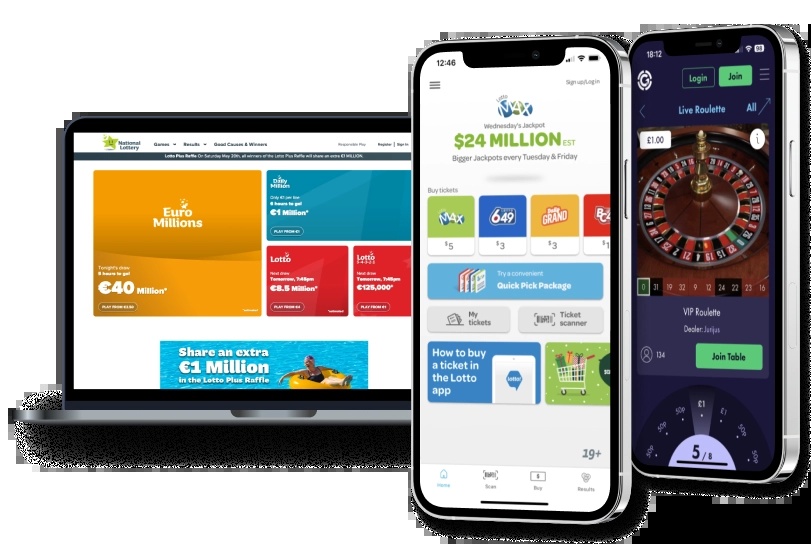
That is a useful introduction to mkodo, a British software company whose work usually appears under somebody else’s name. It builds the apps and websites through which lottery, casino, sportsbook and bingo operators meet their customers. Its less visible products handle connections between systems and verify where players are. The visible result might be a button. The work behind it involves considerably more people than the button suggests.
For operators, the appeal is a supplier accustomed to the peculiar demands of real-money gaming. A retail app can recommend a jacket almost anywhere. A gambling app must operate within its permitted territory, connect to player accounts and keep pace with the platforms distributing it. mkodo has spent years making that combination its business.
A scanner earns its place on the phone
The company’s Canadian lottery projects show how it works. WCLC hired mkodo to redesign its native apps, improve usability and introduce features. Before development, mkodo ran a three-day on-site workshop. The agenda ranged from ticket scanners and winning numbers to middleware, testing, deployment and the mundane question of how project meetings would run. The resulting package included user flows, designs, user stories and a project plan.
Lotto Spot launched in July 2020. According to mkodo’s case study, delivery was on time and within budget. The app went transactional in November 2022; the same account reports player registrations rising from 10,000 to 100,000 in under a year. That is a vendor-reported before-and-after figure, rather than proof that software alone produced the increase. It nevertheless shows the commercial importance of moving beyond checking a ticket to buying one.
Under a year after the November 2022 transactional launch, according to mkodo’s case study. Account totals, not revenue or active users.
The 2026 wallet feature extends the same idea into redemption. It connects the app to a familiar phone feature while preserving a role for physical retailers. This is a more specific proposition than telling a lottery to “go digital”: decide which step causes trouble, then make that step easier.
Keep the old app running. Build the next one beside it.
British Columbia Lottery Corporation offers a second example. mkodo began working with BCLC in 2012 and delivered a native lottery app in 2017. It scanned ticket barcodes and displayed draw information. Positive feedback encouraged BCLC to commission a transactional successor connected to its player account management system.
mkodo maintained the existing app while assigning a separate team to the new project. The replacement integrated Scientific Games’ APIs for accounts, wallet functions and transactions. It launched in July 2019 with registration, deposits, withdrawals and ticket purchases alongside scanning and results. In its July 2020 account, mkodo reported a 4.6-out-of-five rating from 35,200 reviews and an update cycle of six to eight weeks.
The sequence is worth copying: establish a useful habit, expand what the product can do, and protect existing users during the rebuild. A scanner gave people a reason to open the app before it became a checkout. The second team made continuity an explicit delivery decision. Both details matter more than the usual launch-day promise of a better experience.
The border check behind the screen
GeoLocs addresses a different obstacle: establishing that a player is in the right place. Offered as a software development kit for web, iOS and Android, it lets operators integrate location verification into their own products. Its portal also allows them to manage geographic boundaries. The intended experience avoids sending players away to install a separate companion app.
The product’s public expansion came in January 2023, after roughly a decade of use with selected partners. “Our GeoLocs solution is a mature and proven product,” co-founder Stuart Godfree said at the launch. That history gives the offering an unusual position: a challenger sold to new customers with experience accumulated inside existing relationships.
What changed was the commercial opportunity. In an October 2023 interview, commercial director Will Whitehead linked the wider push to newly regulated markets, including Ontario. More operators needed location technology. A capability developed alongside app projects could now be sold to a broader audience.
“Our GeoLocs solution is a mature and proven product.”
Stuart Godfree / January 2023
mkodo’s competitive commentary names GeoComply, Xpoint, Radar and LocationPoint. Its own pitch includes quick integration and contracts without restrictive exclusivity clauses. Those are supplier claims buyers can test in procurement, alongside accuracy and service quality. GeoLocs also announced a Superbet partnership for Brazil in November 2024, extending the story beyond Canadian lotteries.
A location check has a deliberately limited job. It helps establish where a device is; the operator still needs the surrounding account, payments and player-protection arrangements. A buyer expecting one SDK to settle every compliance question would be buying the wrong thing.
One screen, several companies
Ontario Lottery and Gaming Corporation’s transactional app launched in July 2021, with mkodo working alongside platform supplier Bede Gaming. Players could buy and scan tickets and access casino games. Accessibility formed part of the design, including support for assistive technologies such as screen readers. The project makes clear that interface work includes who can use a service, as well as how it looks.
In Ireland, the division of labour was equally revealing. A December 2024 announcement paired a new mkodo-built mobile app for Premier Lotteries Ireland with 11 eInstant games from Pollard Banknote. The games connected to Intralot’s central gaming system. mkodo had already worked on the National Lottery website; the app added another part of the operator’s customer-facing estate.
Neither example is a solitary supplier replacing everything. The practical expertise lies in making different systems behave coherently through one interface. For the person holding the phone, the boundaries between vendors should be far less noticeable than the buttons.
Phone or browser↓mkodo front end
App, website, UX↓Operator systems
Accounts, wallet, games
Alongside the journey: GeoLocs checks location. mCloud Gateway offers API routing and authentication. Deployments vary by operator.
The economics of doing it again
mkodo packages its accumulated app code into customisable frameworks. Customers can commission their own branded front ends while drawing on pre-developed foundations. Its published proposition is that subsequent apps and updates can cost less after the initial build, with development spending focused on customisation.
Alongside that work sits mCloud Gateway, an API management product offering routing, authentication and tools for monitoring and protecting services. It can be deployed on premise or in the cloud. Discovery, design, development, quality assurance, consultancy and continuing roadmaps complete a business built around both software and the expertise required to keep it useful.
The economic logic is straightforward: repeated engineering problems create reusable work. Operators still need distinctions that matter to their brands and customers. mkodo sells a way to combine the two. The relevant alternatives include an operator’s internal team, an agency or the front end supplied by a gaming platform. Which option makes sense depends on the existing technology and how much control the operator wants.
What £7.8 million bought Pollard
Stuart Godfree and Sue Yoxall founded mkodo in 2001. Pollard Banknote announced an acquisition agreement in December 2019 and completed its purchase of the entire company on February 3, 2020. The disclosed consideration was £7.8 million before working-capital adjustments and potential earn-outs tied to earnings targets.

Pollard said the transaction would be funded from existing cash resources and senior credit facilities. At completion, mkodo employed approximately 60 full-time staff across London and Newcastle. The acquisition added a specialist in digital customer interfaces to a group with an established lottery business. The price belongs to that transaction; it is neither an app development budget nor a present-day valuation.
The relationship is now visible in mkodo’s own positioning: its website says lottery products sit within Pollard Digital Solutions’ wider offering. The Irish project shows the practical fit, with interface development and digital games contributing to the same customer launch.
Experience is also a staffing decision
Continuing development requires people who remember why a product works the way it does. mkodo advertises hybrid working, a bonus and profit-share scheme, volunteer days and a graduate developer programme. Its October 2024 Great Place To Work announcement reported that 94% of employees said it was a great place to work. That is a dated employee-survey result, rather than a permanent verdict.

The company also announced ISO 27001:2022 certification in March 2024. For a supplier handling connections to player data, information-security processes are part of the product relationship. In November that year, a Future Anthem partnership added another direction: exploring real-time personalisation through Amplifier AI. The announcement described an intended collaboration, not a measured improvement in customer results.
mkodo’s August 2026 retrospective looks back on 25 years of changing devices, fragmented systems and rising operational demands. Its customer examples offer a grounded way to read that history. The recurring problem is the handoff: between a ticket and a phone, an app and an account system, a device and a permitted territory. For an operator with those problems, mkodo has relevant work to show. The useful lesson for everyone else is to make the awkward handoff the starting point of the design.