The pocket is an unusually modest unit of ambition. It cannot hold a clinic, a classroom or much of a library. It can hold a phone. For Miriam Manela Frankel, that was enough. After more than two decades spent turning close observation into practical advice, the Passaic founder gave her online company a name that described both its size and its purpose: OT in Your Pocket.
The name arrived after the product. Frankel first called the platform Bloom, a warm and pleasant word that unfortunately shared the internet with a small botanical garden of other businesses. OT in Your Pocket is less decorative and more precise. It says who built the thing, what it contains and where it belongs. One imagines Oscar Wilde might have objected to the cargo pocket, but even he respected a good epigram.
Frankel is an occupational therapist, author, lecturer and director of three practices, in Passaic, Brooklyn and Lakewood. She is also a mother of five boys and grandmother of two. Her work has gathered several titles and credentials over the years, yet its public vocabulary remains deliberately ordinary: tools, exercises, conversations, daily life. The grand theory is asked to make itself useful before dinner.
The inheritance was an open door
Her founder story begins in 1963, before she was born. That year her grandparents helped establish HASC in New York, an early school and camp created for people who had too often been shut away from public life. Frankel grew up in Brooklyn with that community close at hand. Children and adults visited the family home. Summers were spent at Camp HASC, playing, walking and entertaining campers. Service did not arrive as an abstract virtue. It came through the front door and stayed for the weekend.
That history is central to the way Frankel tells her own life. She does not present the choice of career as a sudden bolt from the sky. It looks more like an inheritance she decided to practice. At Kean University she studied occupational therapy, graduating magna cum laude. The profession gave structure to instincts learned much earlier: watch carefully, find the obstacle beneath the visible struggle, then work with the whole setting around a person.
In 2012 she founded The Thrive Group. The business eventually expanded to three locations. Frankel also served seven years as legislative co-chair of the New Jersey Occupational Therapy Association and represented New Jersey in the American Occupational Therapy Association’s Representative Assembly. In those rooms, practical work met policy. Influence could mean helping one family on Tuesday afternoon, or helping shape the rules affecting a profession.
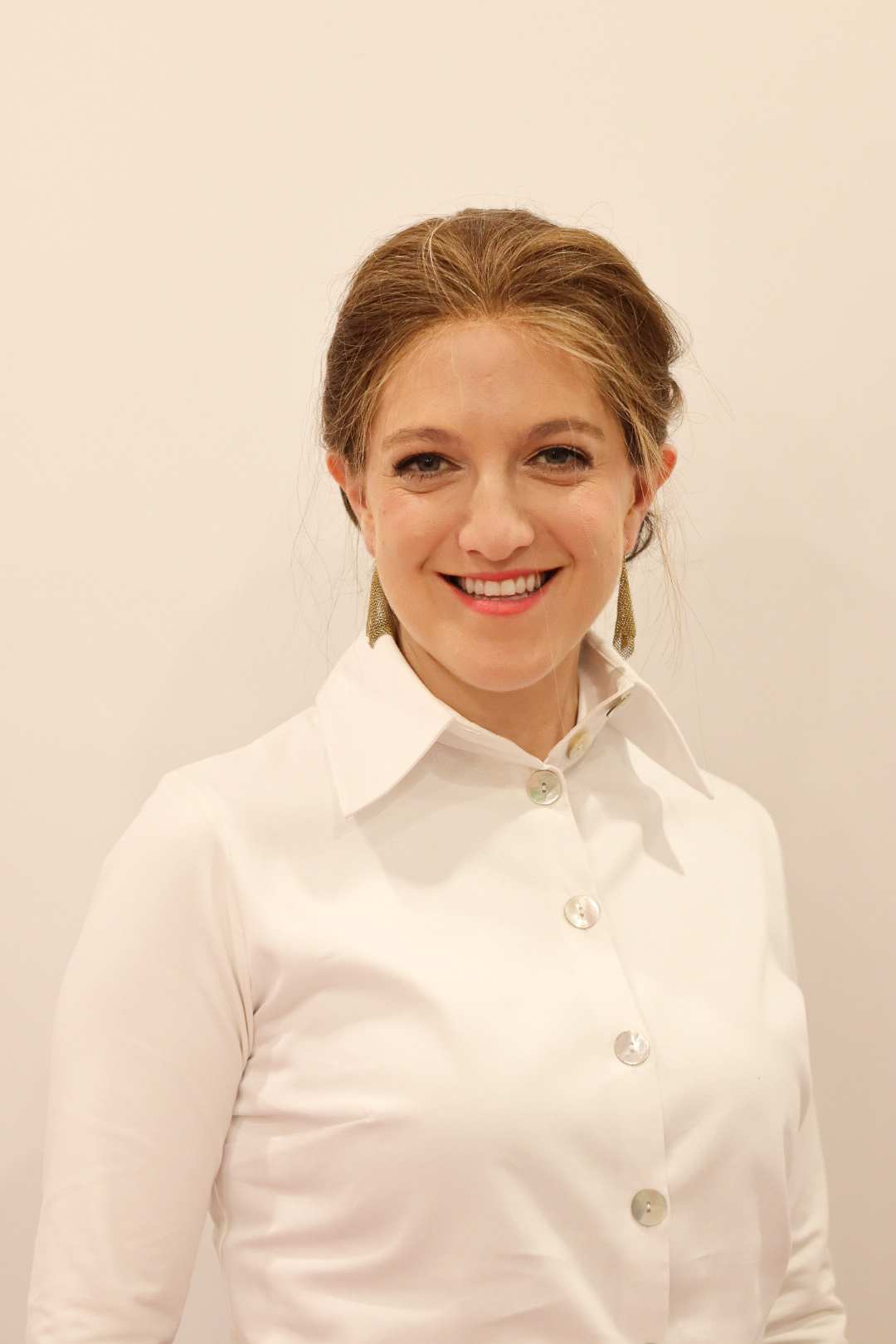
“We each have something to offer. I don’t believe I have more to offer than others, I’ve just taken it and jumped with it.”Miriam Manela Frankel
The book learned to move
A practice has a stubborn physical limit: only so many people fit into a day. Frankel’s first answer was a book. Published in 2014 and co-authored with C. R. Zwolinski, The Parent-Child Dance gathered her framework into 117 pages. The title is a good clue to her style. A dance is mutual, physical and responsive. Nobody improves it by shouting the choreography from another room.
The book organized more than 80 ideas and activities, many with names that sound closer to a rainy-day game than a lecture: Hat Trick, Climbing and Crashing, The Pizza Massage and Blow the House Down. This is translation as a professional discipline. A useful idea must survive the trip from specialist language to the kitchen floor. If a parent needs three dictionaries and a quiet weekend to begin, the idea has missed its appointment.
The volume also reveals a habit that would later define the online platform: demonstration over abstraction. Frankel’s workshops follow the same logic. Hosts describe her as warm, humorous and practical. Her speaking program is designed for schools, professional groups and parent circles, with sessions that can take place in person or online. The promise is that people leave with something they can actually use. Applause is pleasant; Tuesday morning is the test.
Close observation in the room
Ideas demonstrated for a group
More than 80 activities on paper
Short lessons available online
Chocolate, slippers, internet
Then the rooms closed. During the COVID-19 pandemic, Frankel moved sessions to Zoom and found herself facing the old problem in a sharper form. A video call could cross distance, but it still happened one appointment at a time. She wanted her teaching to be available when people needed it, wherever they happened to live. The crisis supplied the deadline for an idea she had carried for years.
Her official account wisely preserves the domestic details. She sat down with a warm drink in one hand, a slab of chocolate in the other and her favorite fluffy slippers on her feet. Thus are companies born: rarely in a shaft of celestial light, frequently near snacks. She began building the online project that became Bloom and, later, OT in Your Pocket.
The platform offers self-paced courses and a library of short videos. Its design follows the same progression as the book. A large field of knowledge is broken into small, named, visible actions. Frankel did not begin with software and hunt for material to put inside it. She began with years of material and searched for a container. The distinction explains why the pocket metaphor feels earned.
It also changed her reach. The Thrive Group remains rooted in specific communities in New Jersey and New York. A course has no commute. Frankel could move from one family in one room to parents and educators who might never visit Passaic. In a 2022 interview, she described that expansion plainly: the pandemic made her realize she wanted to help more people, more conveniently, all the time.
The discipline of closing time
There is another line in that interview worth keeping. Frankel said she created a clear separation between work and family life and declines requests for sessions outside working hours. This is not the customary founder folklore. No sleeping under a desk. No calendar presented as a crime scene. She describes a border and the willingness to defend it.
The boundary has context. Frankel’s husband is, in her telling, her most reliable cheerleader. When appreciation letters arrive, he tells her to hang them up. Her parents, sister Yael and nieces have tried the online platform and supplied feedback. Family life is present in the enterprise, but it has not been asked to disappear into it. The same person who wants useful knowledge to travel also insists that work know when to go home.
“I created a clear separation between my work and family life so that I have a balanced lifestyle and that I don’t get burnt out.”Miriam Manela Frankel
That restraint may be part of her broader method. Look closely before responding. Respect the whole context. Choose an intervention that fits the actual day. Frankel applies those habits in her professional teaching, but they make sense as operating principles for a company too. Growth is useful when it extends the work without swallowing the worker.
A career built by changing the container
Frankel’s career can be read as a succession of containers. The family home, where service first became familiar. The university, where instinct acquired a discipline. The practice, where observation became method. The workshop, where method met an audience. The book, where an audience could carry it home. The phone, where a library could wait quietly in a pocket.
The contents evolved, but the basic movement stayed consistent: make close knowledge easier to reach. Her 2013 WCBS Women’s Achievement Award and five years of recognition in New Jersey, as listed in her professional biography, mark public approval along the route. Her association roles show a willingness to work beyond her own office. Yet the charming clues remain small: the named games, the husband with the letters, the chocolate at the improvised desk.
They matter because public biographies tend to sand away the domestic grain. Frankel has kept hers. The result is a founder story that does not require a myth. She had a long apprenticeship, wrote down what she knew, opened more doors, recognized a constraint and chose a new form. The pocket came last.
By 2025, the new name was carrying a steady stream of short articles too. Frankel wrote about empathetic listening in September and about looking relaxed under pressure in October. The subjects fit the pattern established by the book: take an experience that feels large, identify the small action inside it, and give that action a memorable shape. A blog post is lighter than a course and far lighter than a hardback. It is another doorway, suitable for the person who has five minutes rather than an afternoon.
Her range as a communicator is literal as well as figurative. Frankel lists Yiddish and Hebrew at native or bilingual proficiency, along with Spanish. Her speaking work moves among professional audiences, schools and community groups. Different rooms require different language, even when everybody technically speaks English. The useful speaker notices where the audience is standing before inviting it to move. Frankel’s career suggests she has been practicing that courtesy for years.
Frankel’s story is a lesson in distribution with its feet on the ground: keep the knowledge specific, change the container when the room becomes too small, and leave enough of the day for dinner.