He could have spent his life arguing oil-and-gas tax law. Instead he spent it learning what a shrub needs to survive a truck ride across the country.
Miles Rosedale - the lawyer who learned to grow
For 34 years the buck at Monrovia stopped with Miles Rosedale. He ran one of the largest wholesale nurseries in America - the kind of operation that ships roughly 22 million plants a year to more than 5,000 garden centers - and he ran it as a second-generation owner of a company his father built on ten acres in 1926.
At the end of 2020 he handed over the CEO title and slid one seat over, to co-chairman of the board. The timing was his own. Gardening had just had its biggest year in memory, with homebound Americans rediscovering their yards, and Rosedale called it "one of Monrovia's most rewarding" seasons even as he stepped back from the day-to-day.
What he leaves behind is less a balance sheet than a method. Rosedale belongs to a small group of people who decided that a plant was not a commodity to be dug up and sold bare-root, but a living product that deserved a container, a custom soil blend, a patent, a brand name and a label that told you how to keep it alive. That argument - plants are a craft, not a crop - is the one he spent four decades winning.
While 2020 has been an extremely challenging year, it has also been one of Monrovia's most rewarding.- Miles Rosedale, announcing his transition, Nov 2020
Rosedale did not grow up assuming he would inherit a nursery. He went to the Webb School of California, then to Stanford, where he read History - not botany, not business. From there to the University of Southern California's Gould School of Law, and a Juris Doctor in 1977.
For four years he practiced as a corporate attorney in Southern California. His beat was taxation and oil-and-gas law: leases, depletion allowances, the dry arithmetic of extraction. It is hard to imagine a profession further from a greenhouse. Then, in 1981, he joined the company that carried his name.
The company was Monrovia, named not for a person but for the California town where his father, Harry E. Rosedale, had started it in 1926. Harry arrived in America in 1923 with nursery experience already in his hands. He believed, in a phrase that outlived him, that growing plants was "a true craft." A 1938 flood wiped out his entire stock; he bought ten more acres and rebuilt. That stubbornness was the inheritance.
Miles took over as CEO in 1986. The lawyer's training did not go to waste. If anyone was going to look at a new flowering shrub and think, we should patent that, it would be the tax attorney in the family.
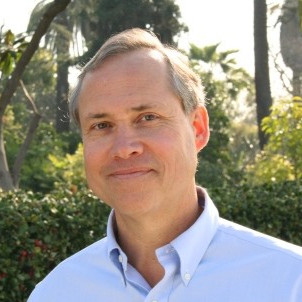
A non-linear path: four years of oil-and-gas law before the first soil mix.
None of these will trend. All of them changed an industry. Monrovia, through the Rosedale era, made each one ordinary.
Growing plants in containers instead of digging them bare-root spared the plant the shock of being uprooted for sale. The customer got something that lived. The nursery got a year-round product.
Not one potting mix but dozens, each customized to what a given plant actually wants. Paired with water recycling, it turned soil itself into a competitive advantage.
Monrovia pushed plant patenting well beyond roses - hundreds of protected varieties. The lawyer's instinct, applied to leaves.
Set shipping schedules and nationwide distribution meant a garden center in Georgia could count on a delivery from a grower in Oregon. Logistics as a feature.
Plant-finder tools, informational labels, consumer branding. Monrovia taught shoppers that the green tag meant something - that a plant could be a brand, not an anonymous commodity.
Under his watch the operation spread across four states and thousands of acres, supplying more than 5,000 garden centers from coast to coast.
Ten acres in Monrovia, California. Named for the town, not the man.
A flood destroys the entire stock. Harry buys ten more acres and starts again.
Begins practicing corporate, tax and oil-and-gas law in Southern California.
Trades the law office for the nursery his father built.
The second generation takes the helm.
A major relocation of the company's growing footprint.
Effective Dec 31, he becomes co-chairman of the board after the industry's biggest year in memory.
Jonathan Pedersen becomes CEO on Jan 1; Rosedale stays on the board.
Rosedale's name turns up on the rosters of community institutions, not just trade groups. He served on the board of the YMCA of Metropolitan Los Angeles from 2001 to 2008, and on the boards of the Methodist Hospital Foundation, the Canyon City Foundation and the Webb Schools - the prep school where his own education began. He kept ties to peer-CEO networks like YPO.
The throughline is patience. Nurseries are a long-horizon business: you plant something today that a customer buys in three years and a homeowner enjoys for thirty. It is not an industry for people in a hurry, and Rosedale's career - four decades in one company, much of it spent making slow, durable things slightly better - reads like a long argument for staying put.
His induction into the Green Industry Hall of Fame is the field's way of saying the argument landed. Monrovia's tagline, "Growing Beautifully," has survived nearly a hundred years and two generations of Rosedales. He is the reason the middle chapter held.
Second generation of Rosedales to run Monrovia - his father Harry started it in 1926.
Studied History at Stanford. Not horticulture, not an MBA.
Spent four years as an oil-and-gas tax lawyer before his first day at the nursery.
"Growing Beautifully" has carried through almost a century of family ownership.
"Now is the right time for this transition to take place."
- MILES ROSEDALE, ON STEPPING ASIDE AFTER 40 YEARS
Sources: Green Industry Hall of Fame, Garden Center Magazine, Nursery Management, Digger Magazine, Lawn & Garden Retailer, FundingUniverse, Monrovia.