He spent two years on Presidio Medical's board before deciding to run it. This is what happens next when a longtime neuromodulation operator returns to the segment that made his name.
Presidio Medical is 42 people in San Mateo working on a waveform that runs at ultra-low frequency, and its CEO is the guy who once ran the Neuromodulation division at Boston Scientific, and before that led a chunk of Advanced Bionics, and before that sat on the executive committee at Alcon. The way the company describes his arrival, in September 2021, is "coming full circle." That is a nice phrase. What it actually means is that Michael Onuscheck spent 20 years working on ways to make nerves stop transmitting pain, then took a detour into ophthalmic surgery for six years, then came back.
The job he came back for is small in headcount and specific in ambition. Presidio's platform is built on axonal conduction blockade, a bit of physiology that traces back to Nobel Prize-winning basic science and, in the neuromodulation industry, has largely been a research curiosity rather than a commercial product. The bet is that if you can inhibit nerve signals reversibly, at frequencies well below what current spinal cord stimulators use, you can treat chronic pain in patients the current devices don't reach. It is a specific and testable claim. The FDA has granted the company an IDE to test it.
Onuscheck did not stumble into this. He joined Presidio's board in 2019 as an independent director, sat on it for two years, watched the science mature, watched the team execute, and then, when the outgoing CEO Michael Ackermann decided to step aside, took the job. Ackermann, in the press release announcing the transition, called Onuscheck "the LeBron James of neuromodulation." Founders do not usually pass their companies to people they think are pretty good.
What Onuscheck brings, more than any single credential, is the memory of what it looks like to launch a category. In 2004, at Boston Scientific, he was VP of Sales and Marketing for the Pain Management business when the company launched the Precision Spinal Cord Stimulation System — a device that helped establish rechargeable SCS as a market. He learned, at industrial scale, how a novel neuromodulation product moves through clinicians, payors, and patients. That is the kind of institutional knowledge you cannot buy with a search fund.
He is, in some sense, a builder without a signature product of his own. His career reads as a sequence of platforms he shepherded rather than invented: Precision at Boston Scientific, the global surgical business at Alcon, Boston Scientific's European operations during a period of turnaround. He is a builder of teams and commercial engines, not of waveforms. Which is exactly what a 42-person clinical-stage company needs. Presidio has the physics. It needed an operator.
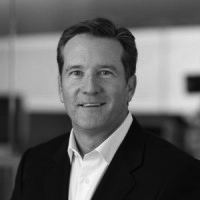
Returning to this segment with another opportunity to reshape this industry is incredibly exciting.— Michael Onuscheck, on joining Presidio Medical, June 2021
Onuscheck's career is unusually consistent for a medical device executive. Almost every role has involved either a nerve, a spine, or a sensory organ. He started at Pfizer selling pharmaceuticals, moved to Medtronic to work in spinal reconstructive surgery and stereotactic image-guided surgery, then joined Advanced Bionics in 2001, where he eventually ran the Pain Management division. When Boston Scientific acquired Advanced Bionics in 2004, he stayed. He spent a decade there.
Inside Boston Scientific, the trajectory was steep. VP of Sales and Marketing for Pain Management. Then Senior Vice President and President of the Neuromodulation division, from 2008 to 2011. Then Senior Vice President and President of the EMEA region, from 2011 to 2015 — a role that involved untangling and rebuilding a large multinational business.
Then, in 2015, the detour. Alcon, the Novartis ophthalmic subsidiary, brought him in to run Global Surgical. He stayed six years, eventually rising to Executive Committee Member and President, Global Businesses and Innovation. Then he left.
Existing spinal cord stimulators operate at frequencies measured in the hundreds or thousands of Hz. Presidio's platform runs far below that. The intended effect is reversible inhibition of nerve signal transmission — a different mechanism, aimed at a different patient population.
The physics traces back to Nobel Prize-winning basic science on how action potentials propagate along nerves. Presidio's engineering translates that into an implantable therapy for chronic pain.
In 2023 the FDA granted Presidio an Investigational Device Exemption. That unlocked a broader clinical trial testing safety and efficacy of the ULF platform in patients with persistent pain.
The company has not commercialized a product. It is running trials, refining hardware, and building the regulatory and commercial infrastructure to eventually launch. Onuscheck has done all three phases before, elsewhere.
The June 2023 raise was led by Deerfield Management, a healthcare-focused investor. Total funding to date: about $102M. That is enough runway for a pivotal-scale study without needing an immediate follow-on.
Presidio remains a small, focused company. Onuscheck's leadership includes Scott Salys (R&D & Operations), Katherine Neuenfeldt (Commercial Strategies), Valerie Lucero-Cimmarusti (Regulatory & Quality), and CFO Dimas Jiménez.
Our approach is founded on Nobel Prize-winning basic science principles and brought to life through advances in engineering sciences and a relentless research and development effort.— Michael Onuscheck
That was outgoing CEO Michael Ackermann's public description of Onuscheck at the moment of the handoff. It is the kind of endorsement that is either wildly generous or accurately calibrated. Presidio's investors bet on the latter.
Most CEOs interview for their jobs. Onuscheck sat on the board for two years first. It is hard to think of a longer, better-informed interview process.
He lives in Fort Worth, Texas. The company sits at 1800 Gateway Drive in San Mateo, California. He does the commute.
His undergraduate combination — business administration and psychology, at a Pennsylvania liberal arts college of about 1,300 students — is a reasonable preview of a career spent selling technologies aimed at the human nervous system.
He was in the room, running commercial, when Boston Scientific launched the Precision SCS system in 2004. That launch reshaped a market. He is trying to be in the room for it again.
Leaving an executive committee seat at a public multinational to run a 42-person startup is a specific kind of choice. It suggests conviction about the science.
The CEO and Chairman of Presidio Medical, a clinical-stage neuromodulation company in San Mateo, California, developing an ultra-low-frequency waveform platform for chronic pain.
As CEO on September 1, 2021. He had served on the board as an independent director since roughly 2019.
Alcon (Executive Committee Member; President, Global Businesses and Innovation), Boston Scientific (President of Neuromodulation, then EMEA), Advanced Bionics, Medtronic, and Pfizer.
An implantable neuromodulation system that uses ultra-low-frequency waveforms to reversibly inhibit nerve signal transmission - an approach founded on axonal conduction blockade physiology.
Washington & Jefferson College, B.A. in Business Administration and Psychology, class of 1989.
Facts assembled from public press releases, industry trade coverage, and company communications. Where the record is silent, so is this page.