The man who turned market chaos into a framework - then walked away to write about it.
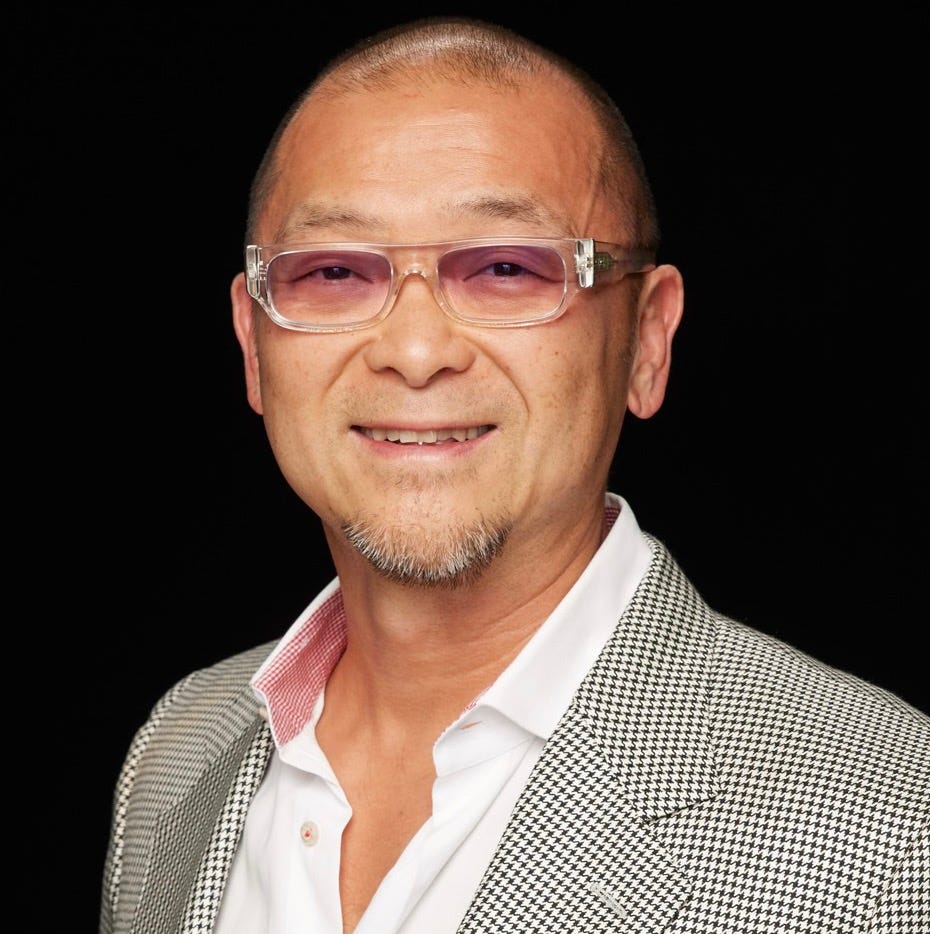
In 2019, Michael Kao did something most fund managers can't imagine: he returned external capital and walked away from managing other people's money. Not because he failed. Because he won. Seventeen years at the helm of Akanthos Capital Management, a firm he built from a blank page in Los Angeles using a proprietary approach he'd been developing since the tail end of the dot-com bubble.
The conventional story ends there - another hedgie riding off into a quiet sunset. Kao's story goes the opposite direction. Free from investor letters and quarterly pressures, he became more prolific, more pointed, and arguably more influential as a private investor writing and thinking in public than he ever was running institutional capital.
Today, Kao publishes Kaoboy Musings on Substack, co-hosts the KAOS THEORY podcast with the respected macro thinker Grant Williams, and commands a following of market professionals who tune in specifically because he doesn't cater to anyone. No compliance department, no investor relations, no softening of views. Just the raw thinking of someone who built a 17-year track record using a framework most Wall Street institutions still don't fully understand.
His core framework is called "Alpha With Asymmetry" - and it's not a slogan. It's a structural philosophy for portfolio construction that he first codified in 1998-1999 while watching the dot-com bubble inflate. The idea is simple enough to explain and genuinely hard to execute: engineer your trades so that potential gains structurally exceed potential losses, not by accident but by design. Weave options and relative value strategies through the portfolio so you're not just right or wrong - you're asymmetrically right.
He is, perhaps uniquely among serious macro thinkers, also a self-described headbanger, a SCUBA diver, a cocktail enthusiast, a Star Wars devotee, and a globetrotter. His newsletter tagline reads: "Finance, Macroeconomics, Geopolitics, and Thrash Metal." He means all of it.
"Generally accurate rather than precisely wrong."
In 1998 and 1999, watching the dot-com bubble from his seat at Canyon Capital, Michael Kao noticed something that would shape every investment decision he made for the next two decades. The market wasn't just mispricing stocks - it was systematically mispricing the shape of potential outcomes. Most portfolios were built to be right. His would be built to be asymmetrically right.
The "Alpha With Asymmetry" framework isn't a single strategy. It's an architectural principle. You don't just pick good bets - you structure them so gains outrun losses by design, not luck. Options and relative value strategies become load-bearing elements, not decorations.
By 2009, the approach had evolved further. Kao dropped the "capital structure arbitrage" label entirely. Akanthos became capital structure-agnostic, holding whatever part of a company's balance sheet offered the best asymmetric exposure - debt, equity, or derivatives, depending on where the fulcrum point sat.
"I Call Trump 2.0 A Long Gamma Administration."
Kao's most widely cited macro thesis is built around a counterintuitive claim: American economic strength is itself the weapon that breaks small export-driven economies. He calls it the "USD Wrecking Ball."
The mechanism is precise. A depreciating Chinese yuan puts pressure on smaller emerging market economies whose exporters compete with China. Those economies carry heavy USD-denominated debt. As defaults rise, dollar supply contracts, which strengthens the USD further. The Fed, chasing domestic inflation targets, becomes what Kao calls the "Uneven Distributor of Pain" - not deliberately, but structurally.
He anchored the thesis with a historical reference: the 1985 Plaza Accord, when the USD Index sat at 165. The current environment around 110 is structurally different - and in his view, more durable. The "Wrecking Ball 2.0" update reflects the post-pandemic fiscal and monetary landscape.
The "Four Horsemen of US Economic Resilience" underpin the whole thing: specific forces he identifies that keep the US economy outperforming consensus expectations, forcing the rest of the world to absorb the consequences of Fed policy rather than the US itself.
US labor market structural resilience exceeds consensus models
Fiscal spending keeps nominal GDP elevated regardless of rate environment
Energy independence insulates the US from commodity price shocks
USD safe-haven demand intensifies precisely when global stress rises
His framing of Trump's second term as a "Long Gamma Administration" is a precise options analogy: the policy environment generates high realized volatility, wide dispersion of outcomes, and asymmetric payoffs for those positioned correctly. Not a value judgement. A structural observation. When the administration itself is the volatility source, you don't short gamma. You buy it.
Kao has been consistently skeptical of crypto as an asset class. He labeled Michael Saylor of MicroStrategy "the Lord of Cyber Hornets" and wrote a widely-circulated piece titled "BTC/Crypto: The Beginning of the End of the Liquidity Lottery." His argument isn't moral panic - it's liquidity mechanics: crypto rallied on excess liquidity, and the structural conditions that made it possible are being systematically withdrawn.
Kao is explicit that the best market insights come from outside finance. His newsletter tagline isn't accidental - "Thrash Metal" is listed alongside macroeconomics as a serious lens. He pulls frameworks from engineering, physics, geopolitics, and behavioral psychology. The EE/CS background from Berkeley shows up in how he models systems and feedback loops, not just in his options pricing.
"Generally accurate rather than precisely wrong."On market forecasting philosophy
"History doesn't repeat itself, but it does rhyme."On learning from financial history
"Alpha With Asymmetry - potential gains must structurally exceed downside risks."Core investment framework, codified 1998-1999
"The Four Horsemen of US Economic Resilience would lead to Bifurcations with RoW which would in turn lead to USD Wrecking Ball 2.0."USD Wrecking Ball thesis update
The EE/CS background is not decorative. Systems thinking, signal processing, feedback loops - these concepts show up in how Kao analyzes markets. The technical rigor is structural, not incidental.
Summer internship at Harvard Management Company under Jack Meyer - a formative experience that introduced him to Jon Jacobson's asymmetric portfolio construction approach. Jacobson later founded Highfields Capital. Kao built his entire career on this idea.
"Finance, Macroeconomics, Geopolitics, and Thrash Metal."