A map was folded incorrectly. According to Western Wireless, that was enough for an Irish local authority to return one of Meteor’s planning applications in 2001. The company was trying to build a mobile network. Someone was apparently checking the stationery.
It is a small detail, but a useful place to begin. A cheaper mobile service needs customers, certainly. It also needs permission to put equipment in places where customers might wish to make a call. The advertisement can be funny. The tariff can be generous. Neither will help much when the phone cannot find a signal.
- Meteor entered Ireland’s mobile market in 2001, after a contested licence award.
- A 2004 roaming deal with O2 helped fill its coverage gaps.
- Eircom agreed to buy the operator for €420 million in 2005.
- The Meteor name disappeared into eir Mobile in September 2017.
A network delayed by paper
Meteor began as an Irish-US consortium. RF Communications joined Western Wireless and the Walter Group to pursue Ireland’s third GSM licence. Sean Finlay, RF’s chief executive and chairman, described an effort that had already consumed almost £750,000 preparing the bid by June 1998. Before the first customer could spend a penny, the contestants had spent rather a lot.
The promise was straightforward: cheaper calls and mobile phones within reach of more people. The consortium pledged a reduction of around 20% in call charges. Its initial rollout would concentrate on major cities. This was a challenge to a market already occupied by two operators, rather than a proposal to invent a new use for the telephone.
Meteor ranked first in the licence competition in June 1998. Losing bidder Orange challenged the decision. The licence finally arrived in June 2000; commercial service followed in February 2001. The gap matters. A mobile entrant cannot simply open its doors while the paperwork catches up. Permission and infrastructure precede the sale.
By November 2001, Western Wireless reported more than 70,000 subscribers and over £120 million invested in developing Meteor. Its complaint about the planning system was therefore more than an executive’s colourful grumble. Delays affected the expensive part of the business: getting the network built.
The missing counties
Two years later, Meteor still had only about 4% of the market. Western Wireless planned almost €40 million of investment during 2003, while Meteor sought access to rival networks. The obvious weakness was coverage. A customer buying a cheaper service also had to consider whether it would work away from familiar streets.
In August 2004, Meteor announced a roaming agreement with O2. It allowed customers to make and receive calls using O2’s network in counties including Donegal, Mayo, Cavan, Sligo, Leitrim and Kerry, plus parts of several others. Meteor could offer national coverage while completing its own rollout. Around 222,000 customers were reported at that point.
The arrangement is the hinge in the story. A competitor could also supply a missing ingredient. Meteor continued building a network of its own, but customers did not have to wait for every piece of it to be finished.
The lesson is specific enough to borrow. Find the objection that makes your attractive offer feel risky. Then see whether a supplier, even a rival, can remove it sooner than you can. That requires access on workable terms. Without a willing partner, or without the money to keep improving the underlying service, the same approach may leave a challenger dependent and squeezed.
An expensive route back into mobile
For eircom, Meteor offered something different: a way back into a business it had left. Eircom sold its previous mobile subsidiary, Eircell, to Vodafone in 2001. By 2005, buying Meteor would give the fixed-line operator a mobile business alongside its broadband and landline services.
Western Wireless announced the sale agreement in July 2005, expressing the price as approximately $500 million at the exchange rate then prevailing. Regulatory approval followed in November, with commitments including operating Meteor as a standalone subsidiary. The purchaser was buying an operating network and a customer base, with all the complications that accompany both.
There is a temptation to read a large acquisition price as the cost of creating the company. It is a different number. Meteor had needed investment to build coverage and systems before the sale. Eircom’s payment bought the business from its owner. Neither figure tells you what an individual customer paid for a call.
The joke the competitors learned
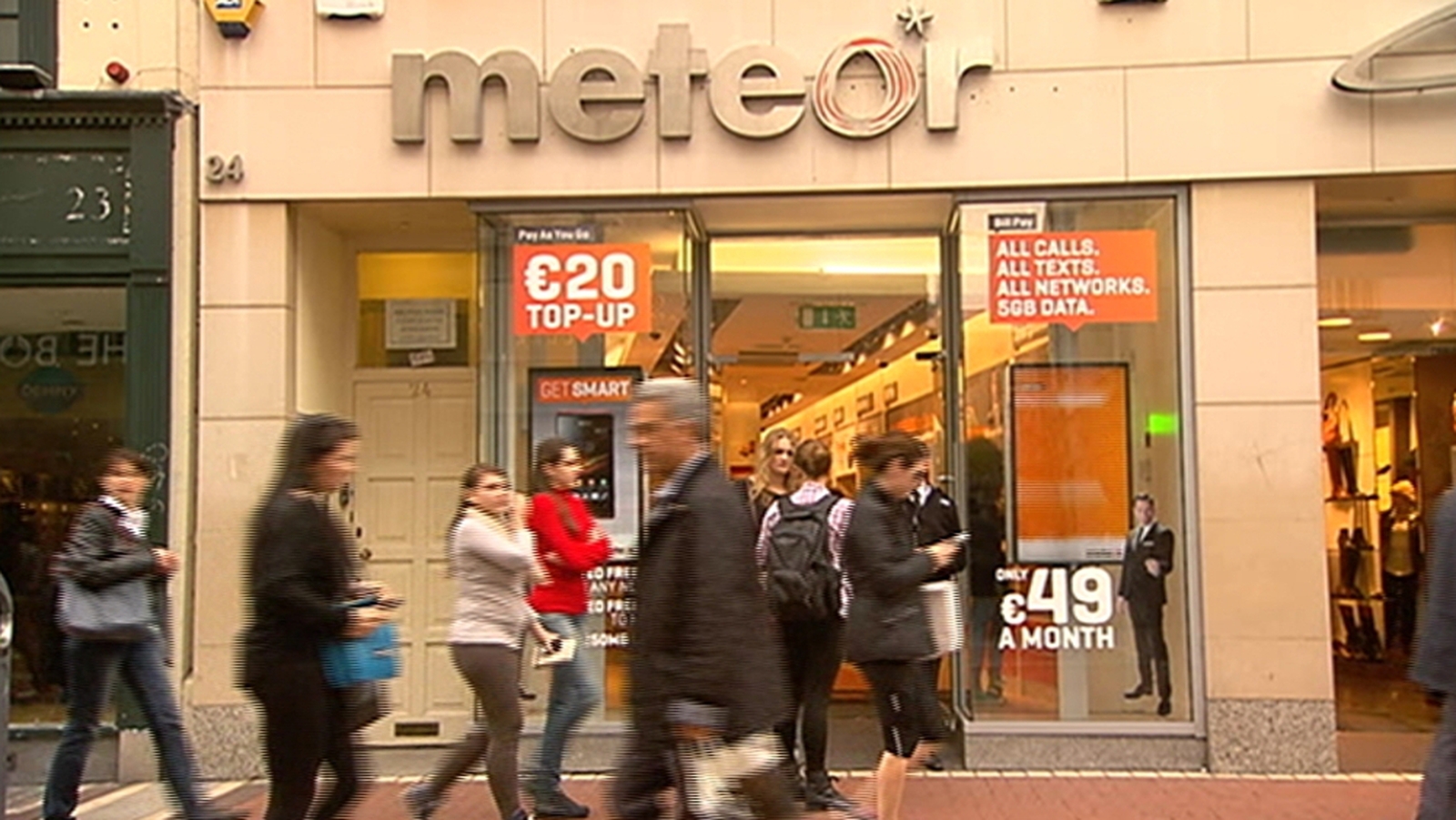
Meteor sold prepay credit, monthly mobile plans, handsets and, as internet use grew, mobile data. The prepay customer could control spending through top-ups; the bill-pay customer bought a recurring allowance. Behind the friendly shopfront was the familiar operator’s task of earning enough recurring revenue to support equipment, spectrum, distribution and customer service.
Its advertising gave that task a personality. Publicis QMP’s account of the 2009 Christmas campaign describes a brand built on price, a distinctive character and conspicuous advertising. It reports one million customers by September 2008. It also records the uncomfortable sequel: Vodafone and O2 sharpened their prices and adopted warmer communications.
For Christmas 2009, the agency staged a “Carol Off”. Meteor’s outnumbered singers used free calls and texts to summon reinforcements. The product benefit became part of the plot. The case study reports 73% advertising recall against a 53% target. Those are the agency’s reported results, rather than proof that one advertisement alone caused customer growth.
This is the second useful complication in Meteor’s history. A price advantage invites a price response. A popular tone invites imitation. Humour can make an offer memorable, but the offer must still make financial sense when the other shops start smiling too.
First to 4G, with conditions
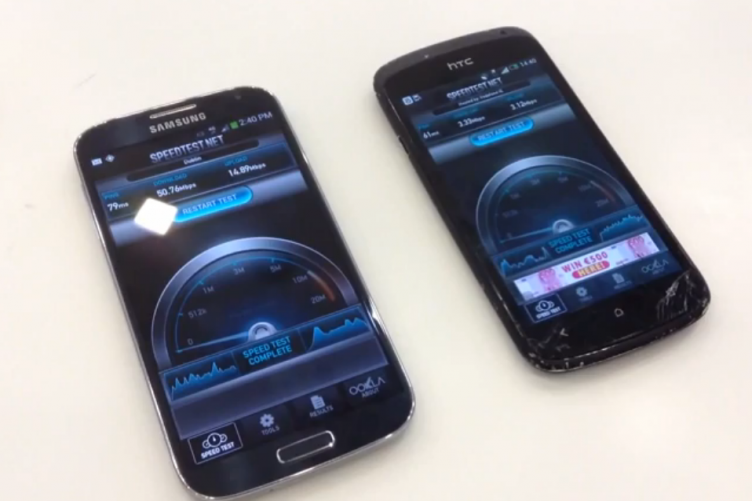
On 26 September 2013, eircom launched Ireland’s first commercial 4G mobile service through Meteor and eMobile. Faster data meant more practical video streaming, uploads and browsing. The opening footprint covered Dublin, Carlow and Athlone, reaching almost 30% of the population. First did not mean everywhere.
The group attached a €330 million, five-year mobile investment commitment to the launch. Meteor’s Smart Essential offer started at €49 a month, including unlimited calls and texts and a normal 3GB monthly data allowance. Promotional unlimited 4G data ran until March 2014. These are launch-era terms, not an offer available to buy today.
Customers needed a compatible device and a 4G SIM. There were 19 handsets at launch, alongside MiFi devices and dongles. The requirement was mundane and decisive: a faster network does little for a handset that cannot use it. For a consumer, the meaningful comparison includes coverage, equipment and allowances as well as the headline monthly price.
The name that outlived the reason for it
In September 2015, eircom became eir. Its announcement explicitly said Meteor would remain a standalone brand. The parent could modernise its own name while keeping the mobile challenger’s identity.
By July 2017, the decision had changed. Eir announced that Meteor would become eir Mobile in September. Chief executive Richard Moat pointed to the duplication involved in supporting two mobile brands. Contracts and mobile plans would remain unchanged as part of the rebrand.
“By focusing on a single mobile brand and reducing the duplication of supporting two brands”
Richard Moat, eir CEO, July 2017
Eir’s combined mobile base stood at 1,061,000 customers at June 2017. That is a group mobile figure, not a final count for Meteor alone. The business had become part of a larger proposition, where mobile could be sold alongside fixed services and a common brand could carry both.
Today, the route for a former Meteor customer is eir Mobile. Meteor’s distinctive achievement sits earlier in the story: it gave Ireland another network to choose, then worked through the costly conditions that made that choice credible. The folded map is amusing. The roaming agreement is useful. Between them lies a question worth asking of any bargain: what has to happen behind the price before a customer can trust it?